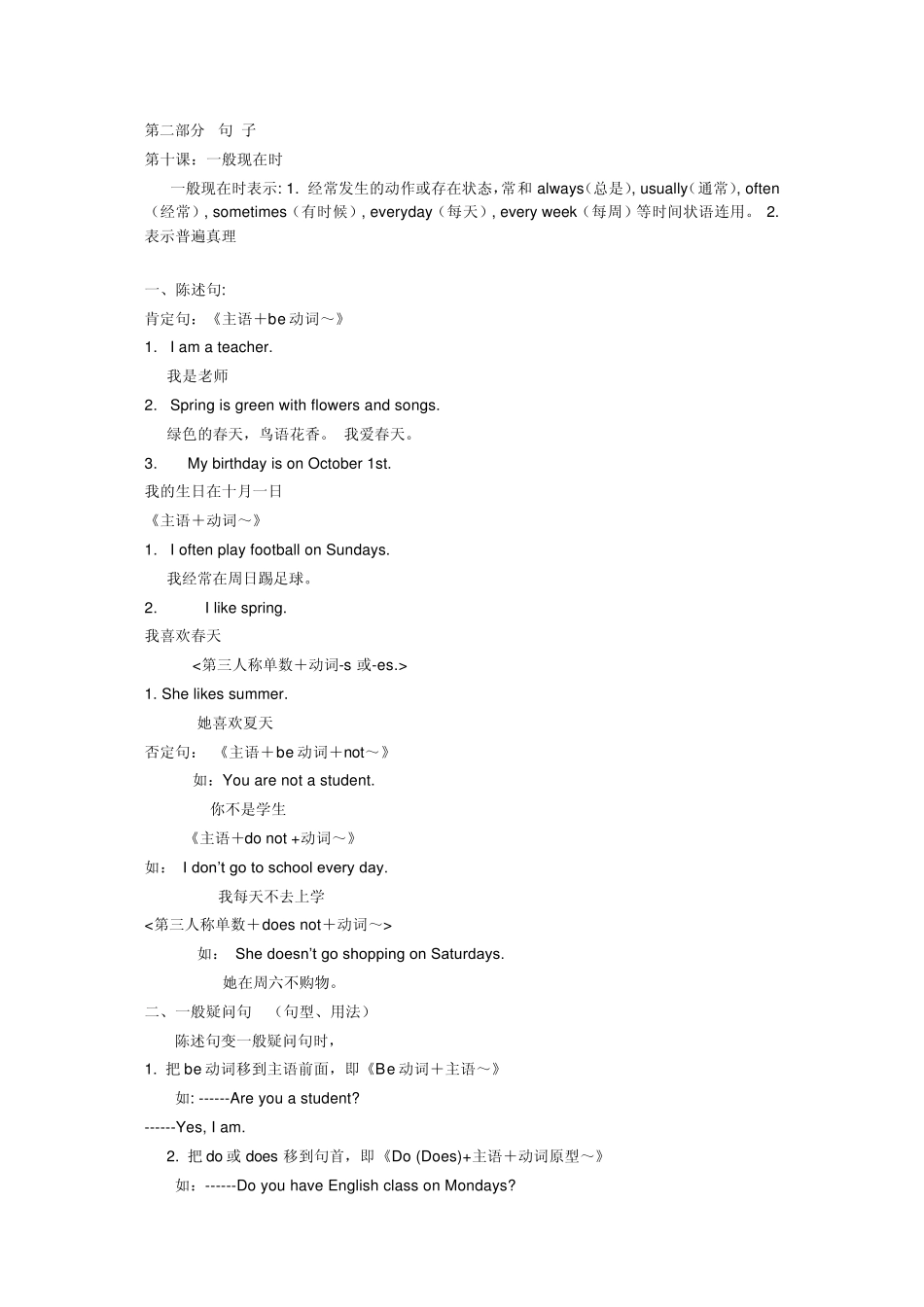
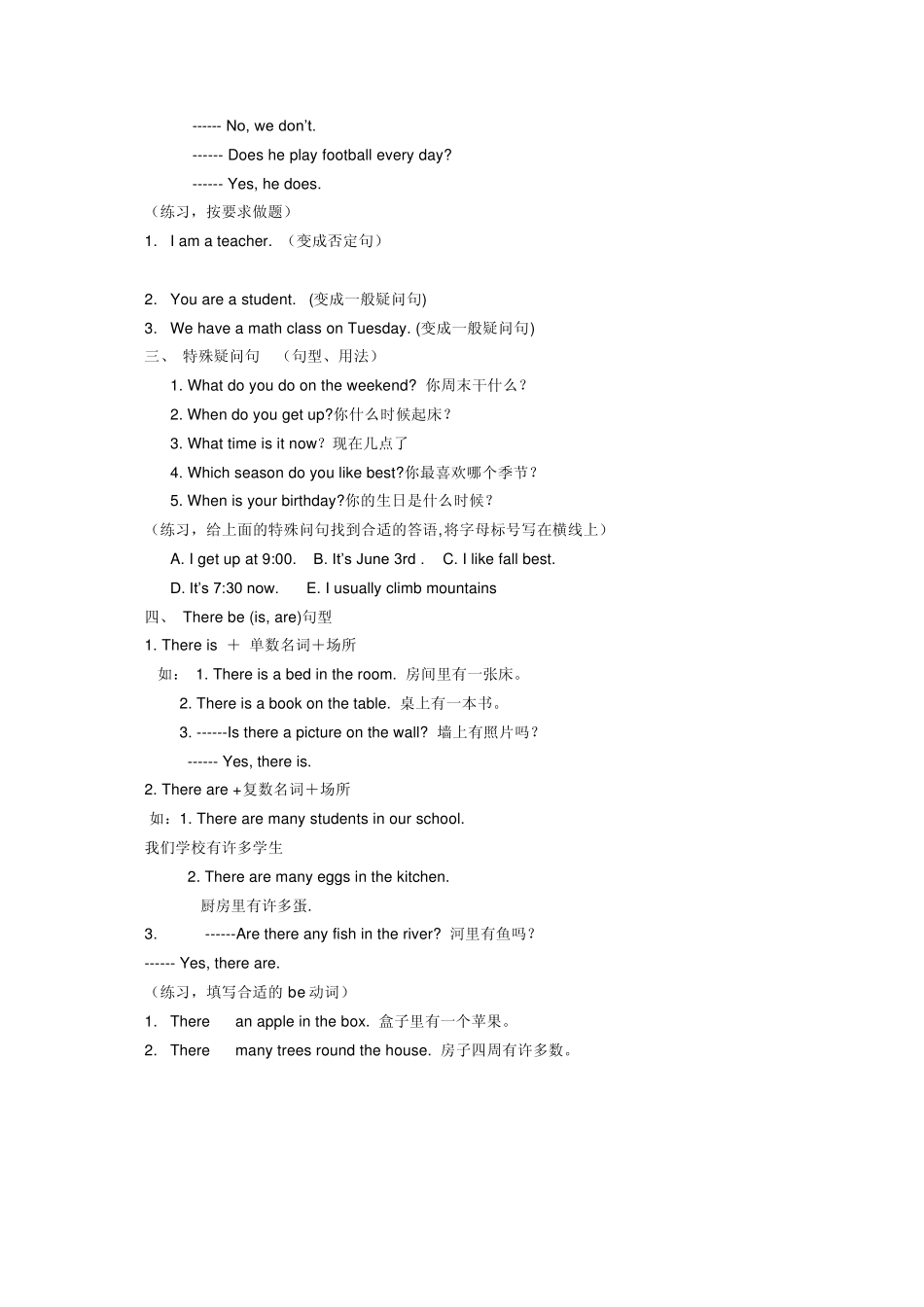
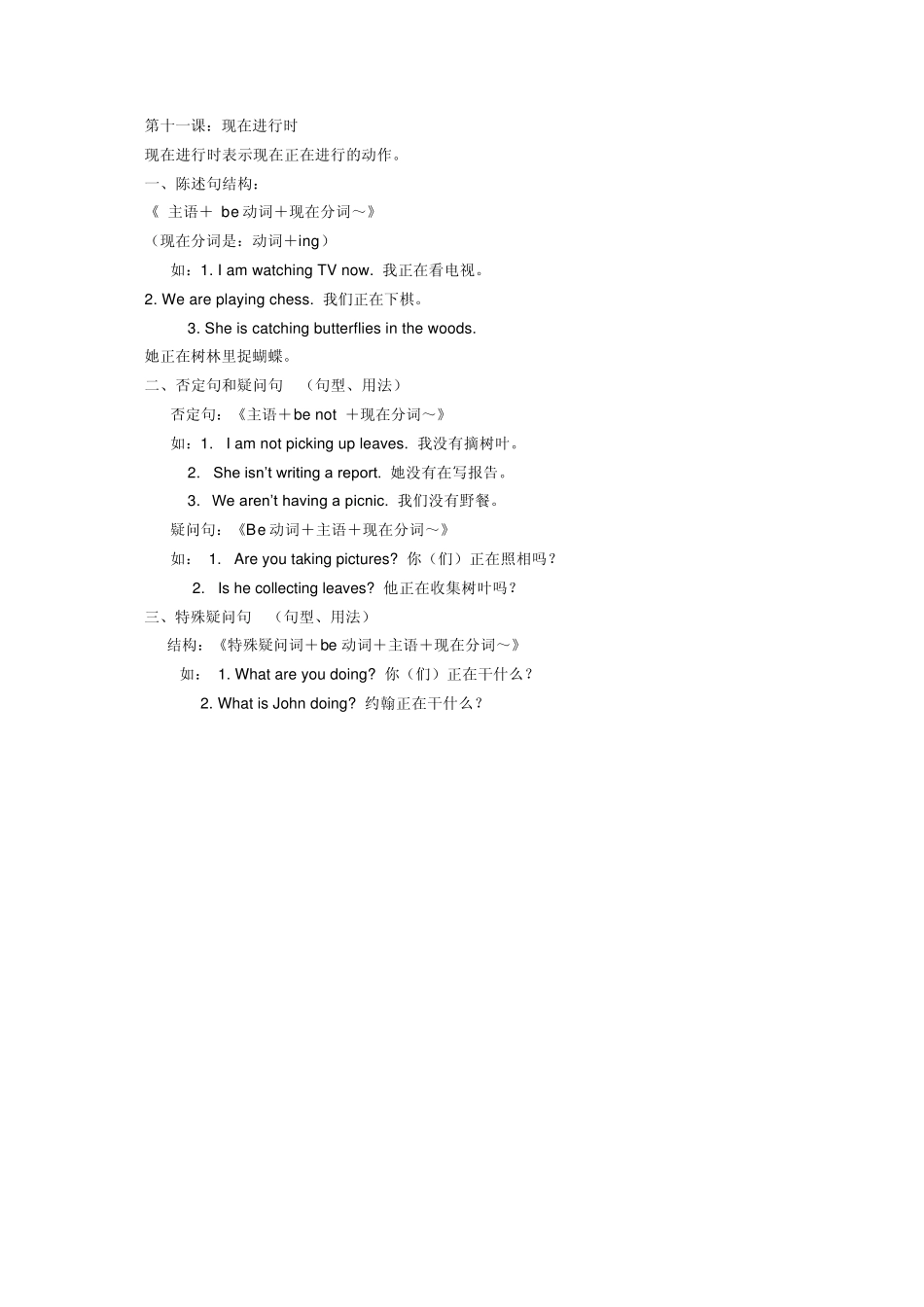
第二部分 句 子 第十课:一般现在时 一般现在时表示: 1
经常发生的动作或存在状态,常和always(总是), usually(通常), often(经常), sometimes(有时候), everyday(每天), every week(每周)等时间状语连用
表示普遍真理 一、陈述句: 肯定句:《主语+be 动词~》 1
I am a teacher
我是老师 2
Spring is green with flowers and songs
绿色的春天,鸟语花香
My birthday is on October 1st
我的生日在十月一日 《主语+动词~》 1
I often play football on Sundays
我经常在周日踢足球
I like spring
我喜欢春天 1
She likes summer
她喜欢夏天 否定句: 《主语+be 动词+not~》 如:You are not a student
你不是学生 《主语+do not +动词~》 如: I don’t go to school every day
我每天不去上学 如: She doesn’t go shopping on Saturdays
她在周六不购物
二、一般疑问句 (句型、用法) 陈述句变一般疑问句时, 1
把 be 动词移到主语前面,即《Be 动词+主语~》 如: ------Are you a student
------Yes, I am
把 do 或does 移到句首,即《Do (Does)+主语+动词原型~》 如:------Do you have English class on Mondays
------ No, we don’t
------ Does he play foo