主谓一致—-就近原则
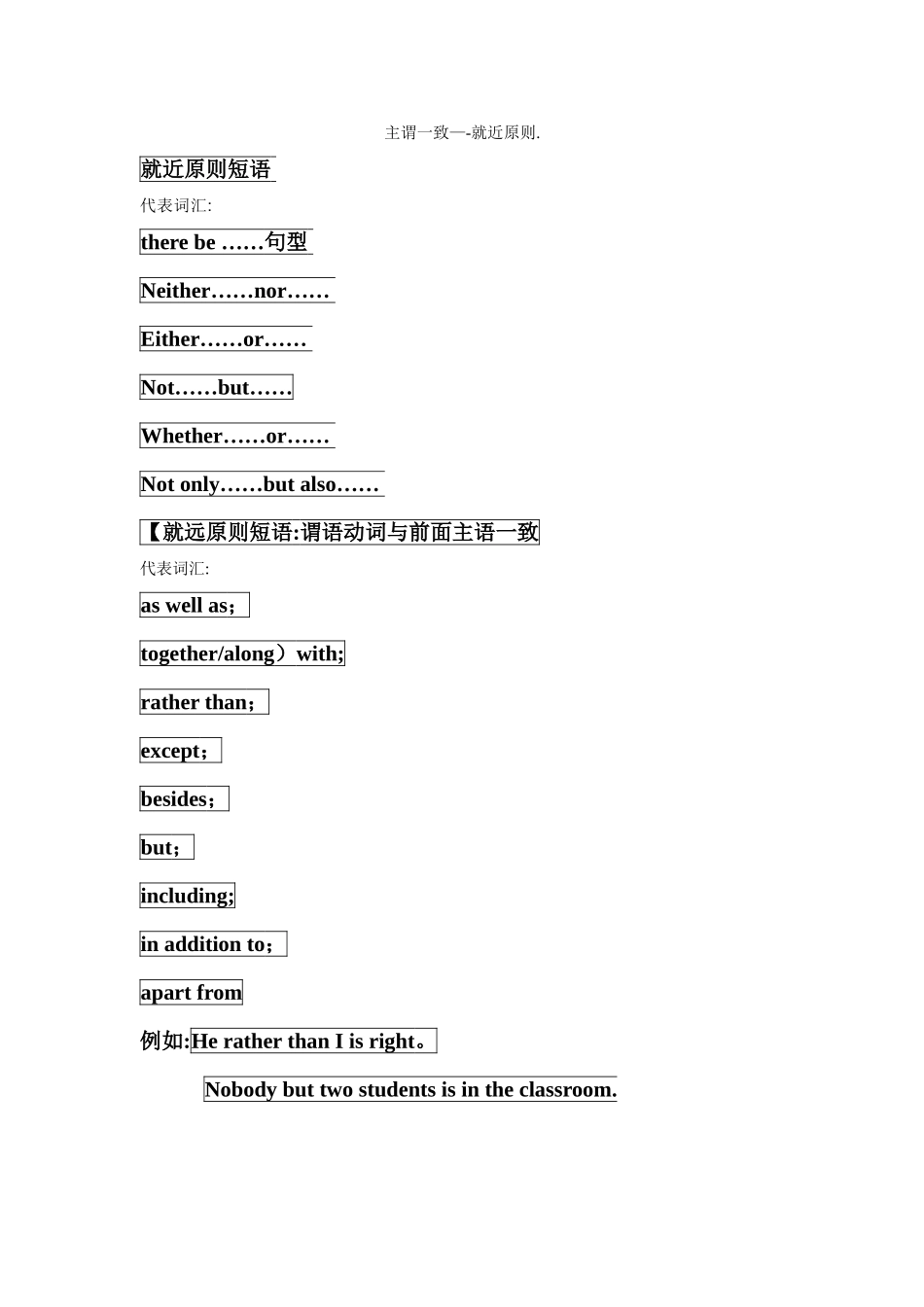
就近原则短语 代表词汇:there be ……句型 Neither……nor…… Either……or…… Not……but……Whether……or…… Not only……but also…… 【就远原则短语:谓语动词与前面主语一致代表词汇:as well as;together/along)with;rather than;except;besides;but;including;in addition to;apart from例如:He rather than I is right
Nobody but two students is in the classroom
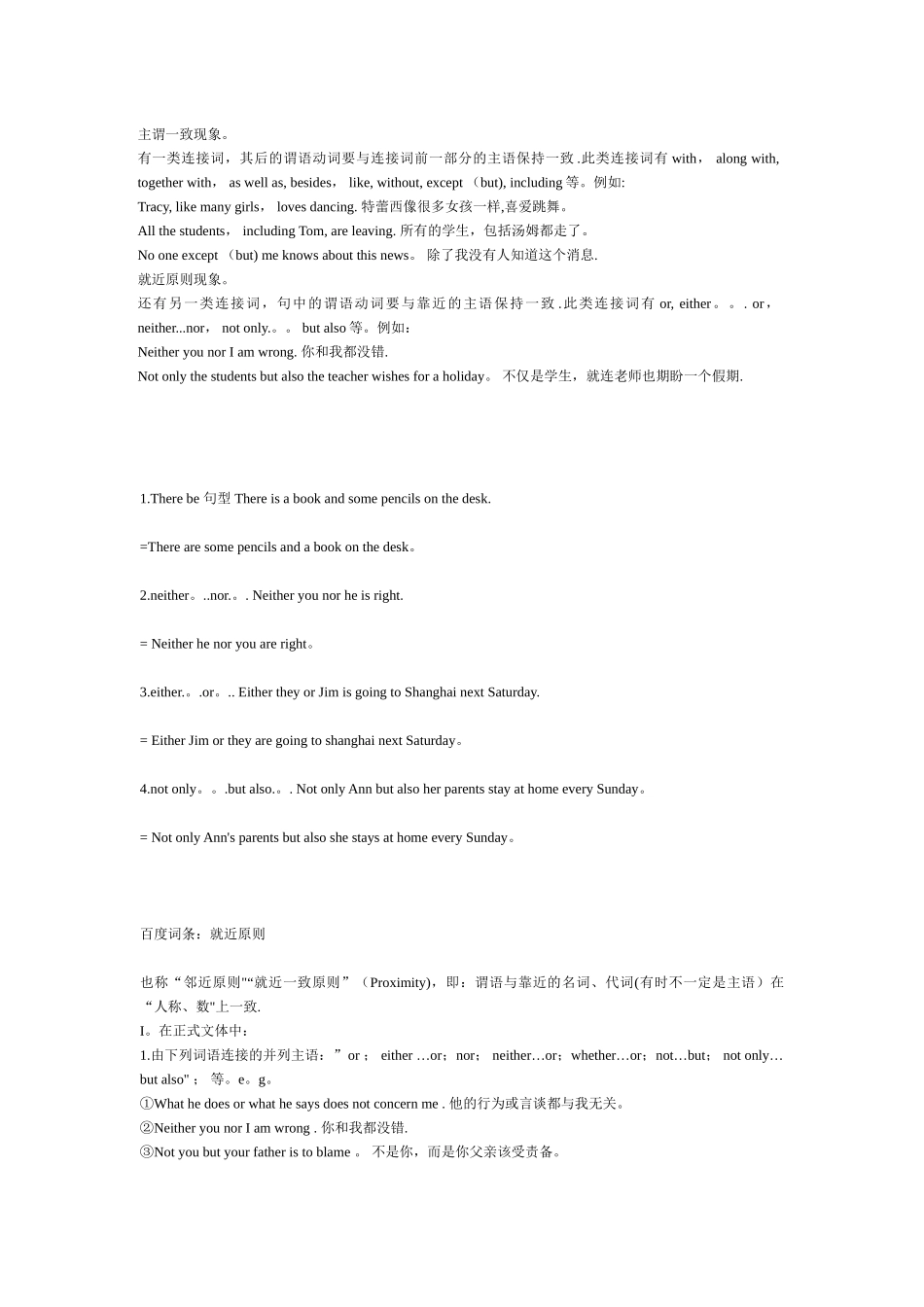
主谓一致现象
有一类连接词,其后的谓语动词要与连接词前一部分的主语保持一致
此类连接词有 with, along with, together with, as well as, besides, like, without, except (but), including 等
例如:Tracy, like many girls, loves dancing
特蕾西像很多女孩一样,喜爱跳舞
All the students, including Tom, are leaving
所有的学生,包括汤姆都走了
No one except (but) me knows about this news
除了我没有人知道这个消息
就近原则现象
还有另一类连接词,句中的谓语动词要与靠近的主语保持一致
此类连接词有 or, either
or, neither
nor, not only
but also 等
例如:Neither you nor I am wrong
你和我都没错
Not only the students but also the teache