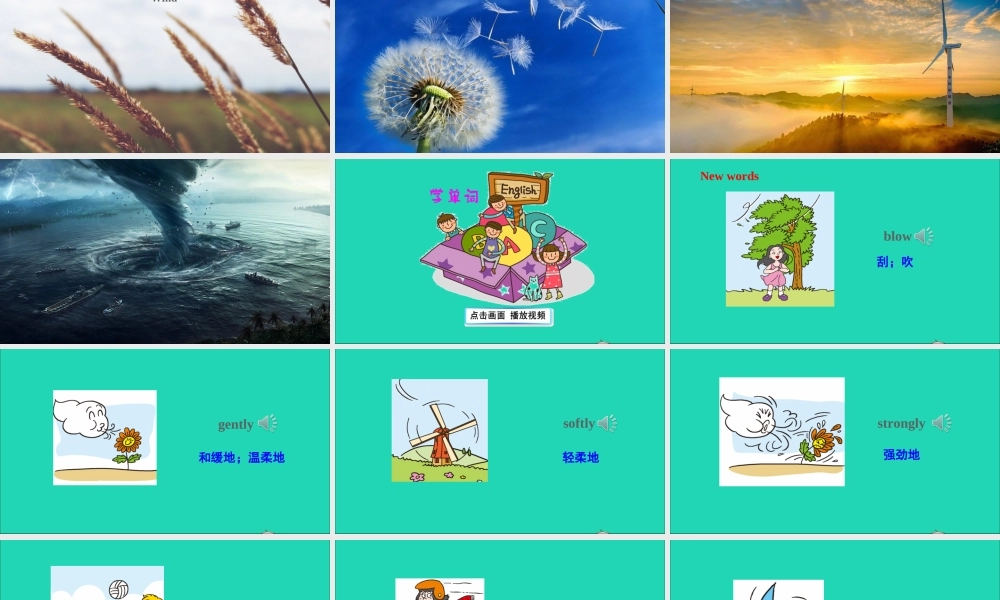
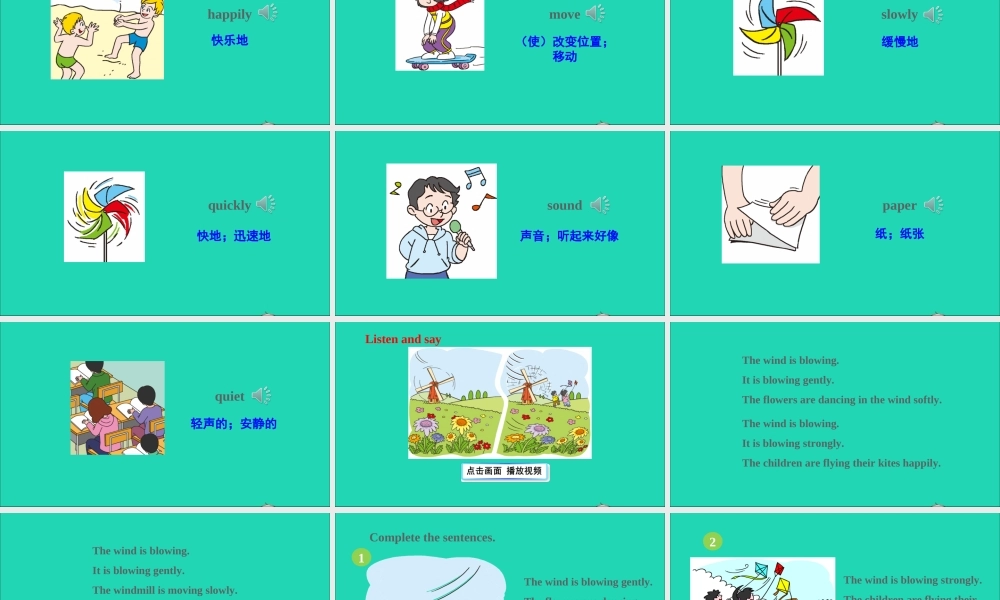
Unit 10 WindLead-in WindNew wordsblow刮;吹gently和缓地;温柔地softly轻柔地strongly强劲地happily快乐地move(使)改变位置;移动slowly缓慢地quickly快地;迅速地sound声音;听起来好像paper纸;纸张quiet轻声的;安静的Listen and sayThe wind is blowing
It is blowing gently
The flowers are dancing in the wind softly
The wind is blowing
It is blowing strongly
The children are flying their kites happily
The wind is blowing
It is blowing gently
The windmill is moving slowly
The wind is blowing
It is blowing strongly
The windmill is moving quickly
The wind is blowing gently
The flowers are dancing _______
softly 1Complete the sentences
The wind is blowing strongly
The children are flying their kites __________
2happily3 The wind is blowing _________
The windmill is moving _______
stronglyquickly4 The wind is blowing ________
The windmill is m