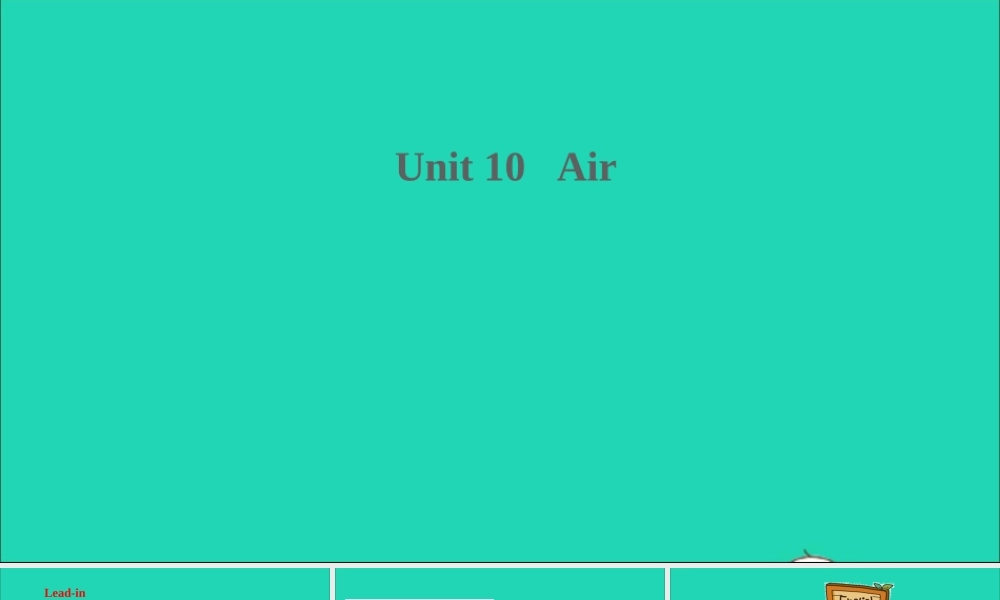
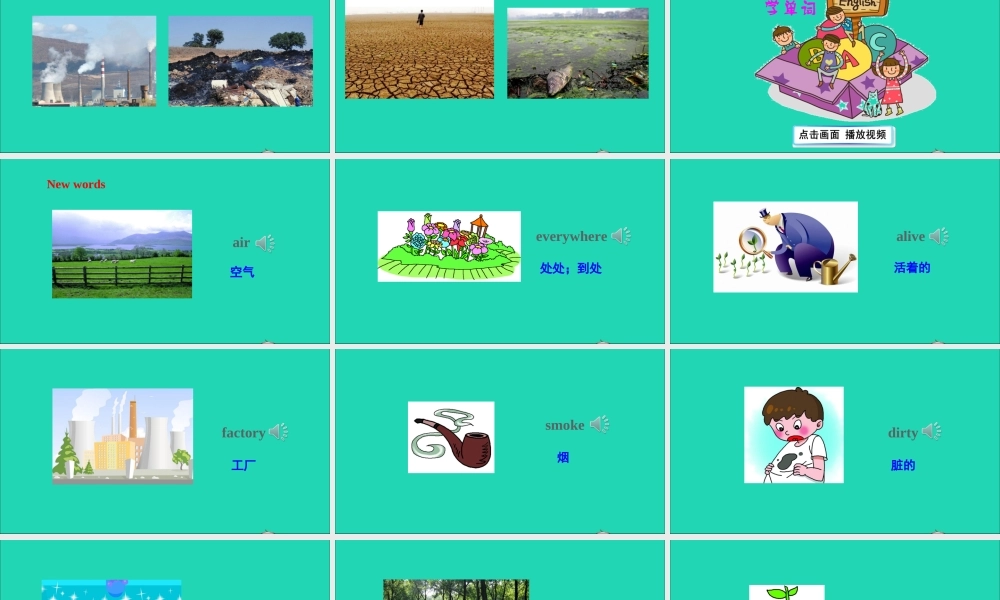
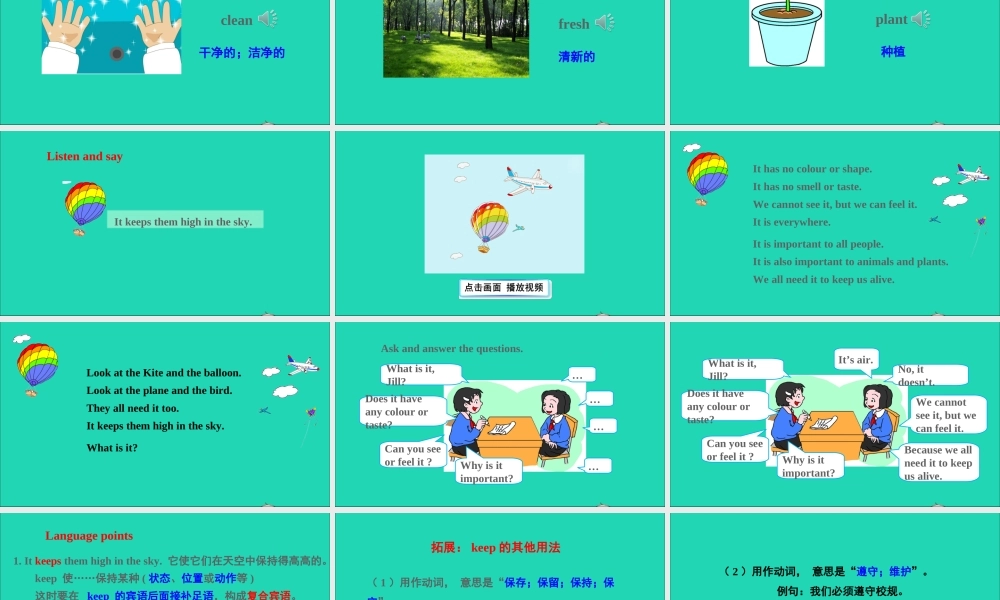
Unit 10 AirLead-inNew wordsair空气everywhere处处;到处alive活着的factory工厂smoke烟dirty脏的clean干净的;洁净的fresh清新的plant种植Listen and say It keeps them high in the sky
It has no colour or shape
It has no smell or taste
We cannot see it, but we can feel it
It is everywhere
It is important to all people
It is also important to animals and plants
We all need it to keep us alive
Look at the Kite and the balloon
Look at the plane and the bird
They all need it too
It keeps them high in the sky
What is it
Ask and answer the questions
What is it, Jill
…Does it have any colour or taste
…Can you see or feel it
…Why is it important
…What is it, Jill
It’s air
Does it have any colour or taste
No, it doesn’t
Can you see or feel it
We cannot see it, but we can feel it
Why is it important
Because we all need i