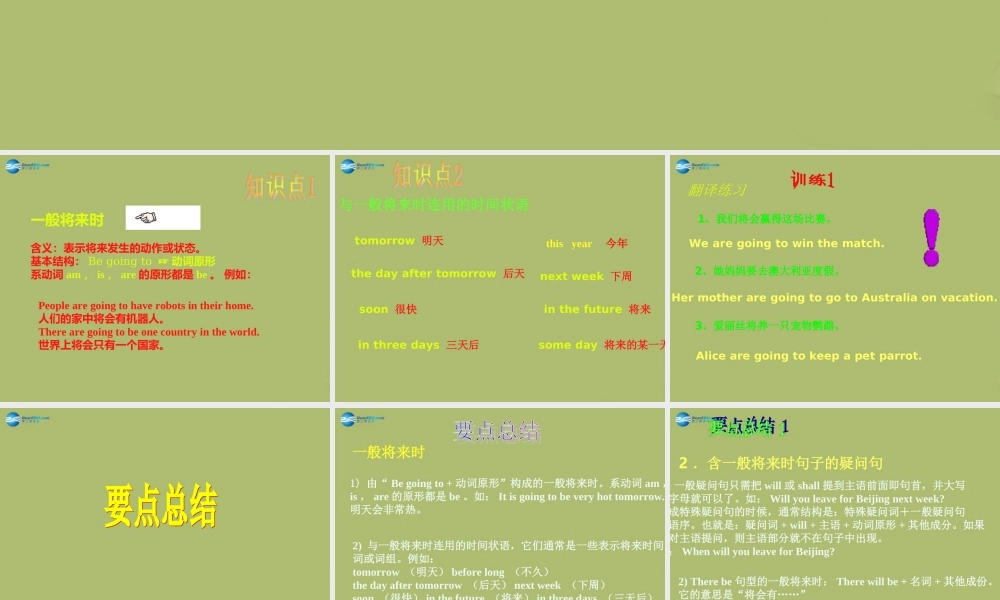
一般将来时含义:表示将来发生的动作或状态
基本结构: Be going to + 动词原形系动词 am , is , are 的原形都是 be
例如:People are going to have robots in their home
人们的家中将会有机器人
There are going to be one country in the world
世界上将会只有一个国家
与一般将来时连用的时间状语tomorrow 明天the day after tomorrow 后天soon 很快in three days 三天后next week 下周in the future 将来some day 将来的某一天this year 今年翻译练习1
我们将会赢得这场比赛
她妈妈要去澳大利亚度假
爱丽丝将养一只宠物鹦鹉
We are going to win the match
Her mother are going to go to Australia on vacation
Alice are going to keep a pet parrot
一般将来时1) 由“ Be going to + 动词原形”构成的一般将来时
系动词 am ,is , are 的原形都是 be
如: It is going to be very hot tomorrow
明天会非常热
2) 与一般将来时连用的时间状语,它们通常是一些表示将来时间的词或词组
例如:tomorrow (明天) before long (不久)the day after tomorrow (后天) next week (下周)soon (很快) in the future (将来) in three days (三天后)some day (将来的某一天)2 .含一般将来时句子的疑问句1) 一般疑