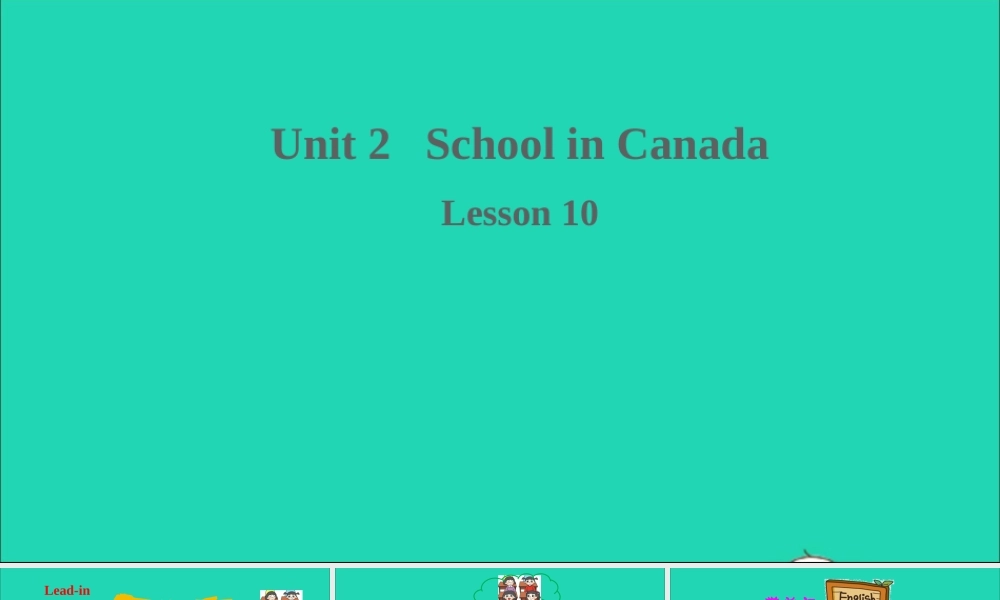
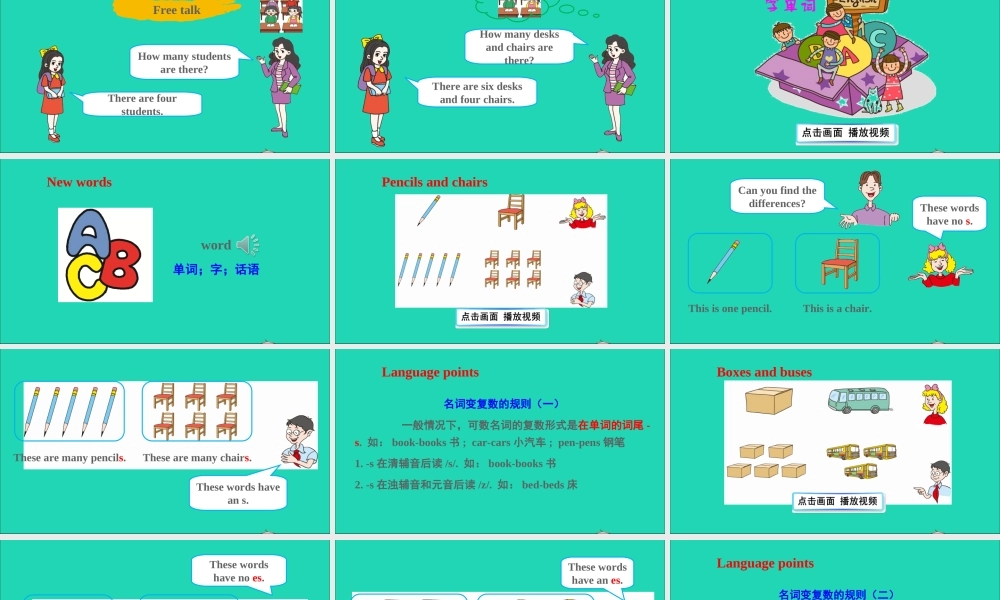
Unit 2 School in CanadaLesson 10Lead-inFree talkHow many students are there
There are four students
How many desks and chairs are there
There are six desks and four chairs
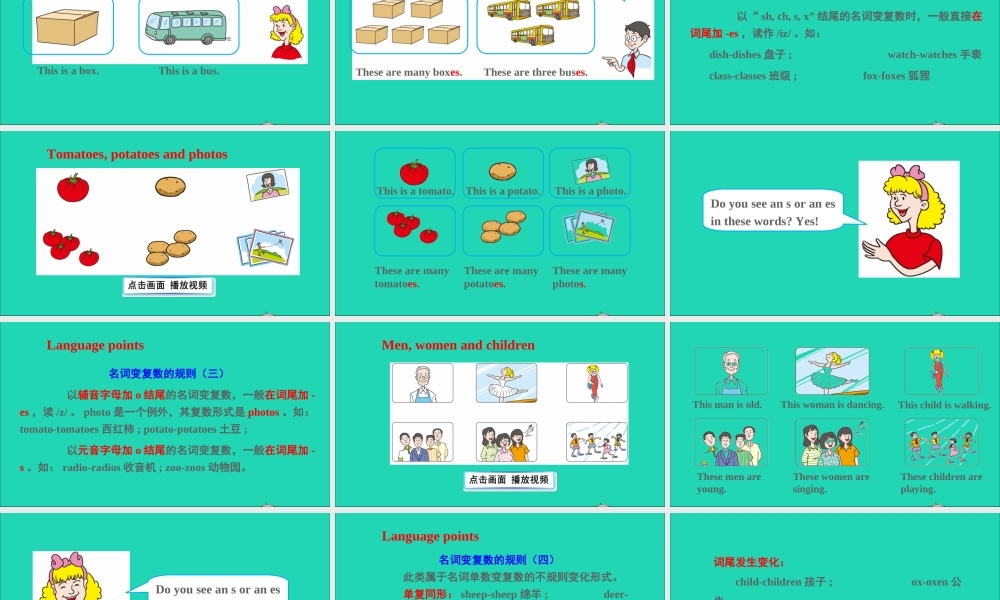
New wordsword单词;字;话语Pencils and chairsCan you find the differences
These words have no s
This is one pencil
This is a chair
These words have an s
These are many pencils
These are many chairs
Language points名词变复数的规则(一) 一般情况下,可数名词的复数形式是在单词的词尾 -s
如: book-books 书 ; car-cars 小汽车 ; pen-pens 钢笔1
-s 在清辅音后读 /s/
如: book-books 书2
-s 在浊辅音和元音后读 /z/
如: bed-beds 床Boxes and busesThese words have no es
This is a box
This is a bus
These are many boxes
These are three buses
These words have an es
Language points名词变复数的规则(二) 以“ sh, ch, s, x” 结尾的名词变复数时,一般直接在词尾加 -es ,读作 /iz/
如: dish-dishes 盘子 ;watch-watches 手表 class-classes 班级 ;fox-foxes