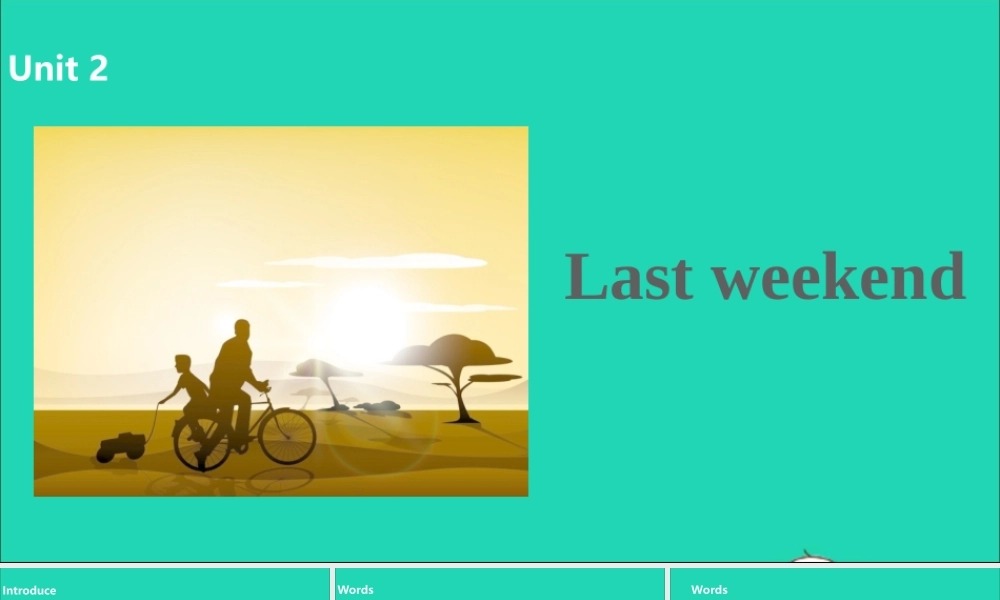
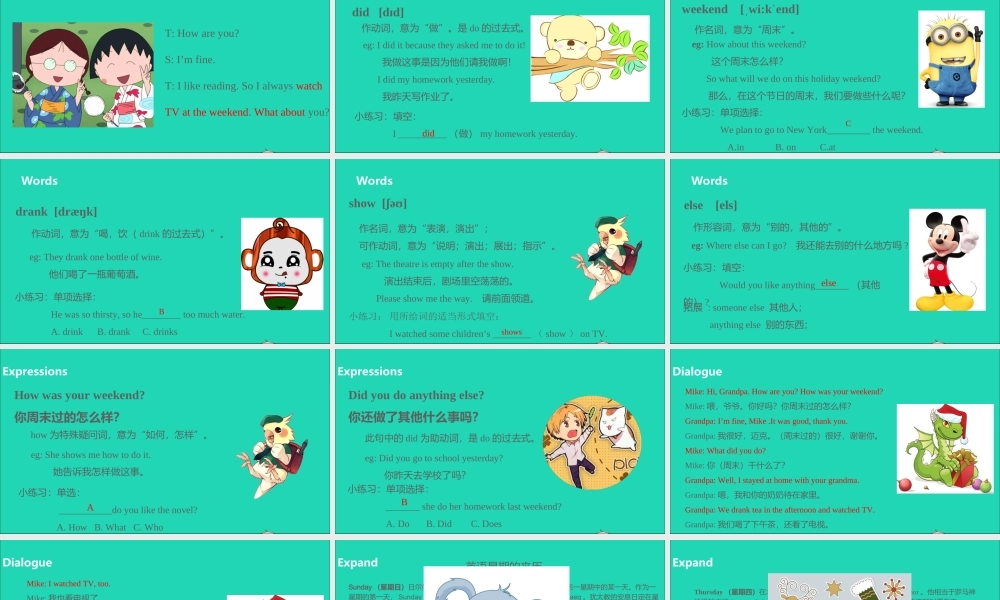
Unit 2 Last weekendIntroduceT: How are you
S: I’m fine
T: I like reading
So I always watch TV at the weekend
What about you
Wordsdid [dɪd]作动词,意为“做”
是 do 的过去式
eg: I did it because they asked me to do it
我做这事是因为他们请我做啊
I did my homework yesterday
我昨天写作业了
小练习:填空: I __________ (做) my homework yesterday
didWordsweekend [ˌwi:kˈend] 作名词,意为“周末”
eg: How about this weekend
这个周末怎么样
So what will we do on this holiday weekend
那么,在这个节日的周末,我们要做些什么呢
小练习:单项选择: We plan to go to New York_________ the weekend
atCWordsdrank [dræŋk] 作动词,意为“喝,饮( drink 的过去式)”
eg: They drank one bottle of wine
他们喝了一瓶葡萄酒
小练习:单项选择: He was so thirsty, so he________ too much water
drink B
drank C
drinks Bshow [ʃəʊ] 作名词,意为“表演,演出”;可作动词,意为“说明;演出;展出;指示”
小练习: 用所给词的适当形式填空: I watched some children’s ________ ( s