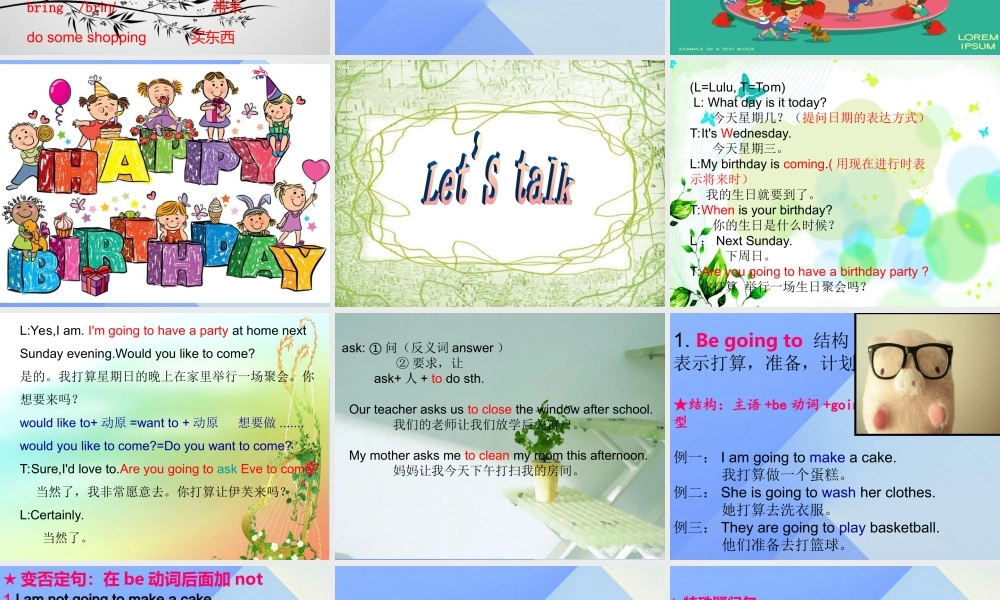
party /'pa:ti/ 聚会weather /'weðə/ 天气sunny /'sʌni/ 晴朗的will /wil/ 将要begin /bi'gin/ 开始bring /briŋ/ 带来do some shopping 买东西(L=Lulu, T=Tom) L: What day is it today
(提问日期的表达方式)T:It's Wednesday
L:My birthday is coming
( 用现在进行时表示将来时) 我的生日就要到了
T:When is your birthday
你的生日是什么时候
L : Next Sunday
T:Are you going to have a birthday party
你打算 举行一场生日聚会吗
L:Yes,I am
I'm going to have a party at home next Sunday evening
Would you like to come
我打算星期日的晚上在家里举行一场聚会
would like to+ 动原 =want to + 动原 想要做
would you like to come
=Do you want to come
T:Sure,I'd love to
Are you going to ask Eve to come
当然了,我非常愿意去
你打算让伊芙来吗
L:Certainly
ask: ① 问(反义词 answer ) ② 要求,让 ask+ 人 + to do sth
Our teacher asks us to close the window after school
我们的老师让我