Lesson 02What are you going to do tomorrow
What are you going to do tomorrow
教学目标:New words :1 、 Read these new words2 、 Remember the new wordsSentences:1
What are you going to do tomorrow
What are you going to buy
How can we get there
Let’s talkLet’s learn— What are you going to do tomorrow
— I’m going to do some shopping
— What’s he going to do
— He’s going to buy some school things
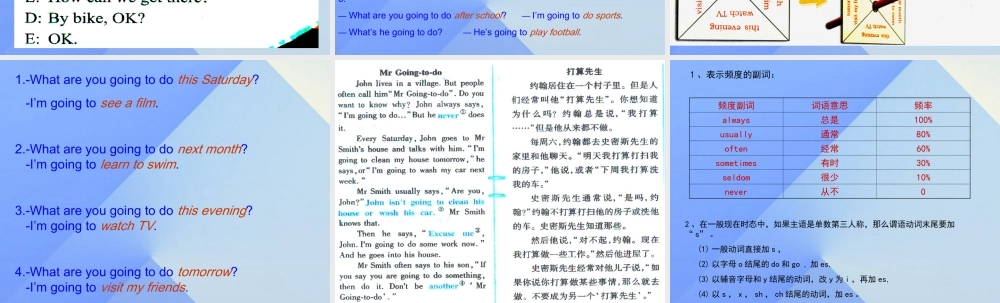
— What are you going to do this evening
—I’m going to see a film
— What’s he going to do
— He’s going to listen to music
-What are you going to do next Sunday
— I’m going to wash some clothes
— What’s he going to do
— He’s going to clean his room
— What are you going to do after school
— I’m going to do sports
— What’s he going to do
— He’s going to play football
-What are you going t