句型转换规则归纳1
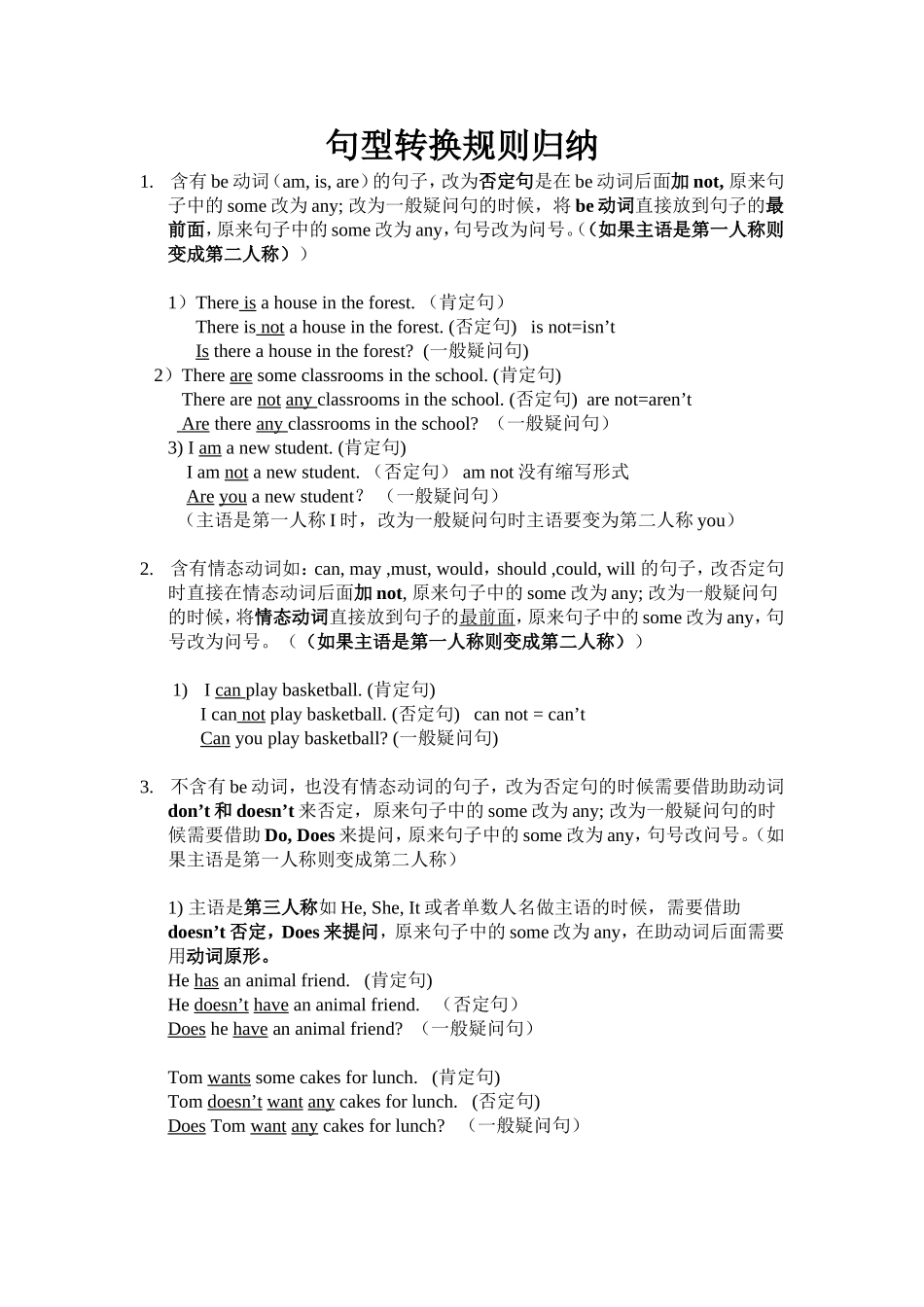
含有be动词(am,is,are)的句子,改为否定句是在be动词后面加not,原来句子中的some改为any;改为一般疑问句的时候,将be动词直接放到句子的最前面,原来句子中的some改为any,句号改为问号
((如果主语是第一人称则变成第二人称))1)Thereisahouseintheforest
(肯定句)Thereisnotahouseintheforest
(否定句)isnot=isn’tIsthereahouseintheforest
(一般疑问句)2)Therearesomeclassroomsintheschool
(肯定句)Therearenotanyclassroomsintheschool
(否定句)arenot=aren’tArethereanyclassroomsintheschool
(一般疑问句)3)Iamanewstudent
(肯定句)Iamnotanewstudent
(否定句)amnot没有缩写形式Areyouanewstudent
(一般疑问句)(主语是第一人称I时,改为一般疑问句时主语要变为第二人称you)2
含有情态动词如:can,may,must,would,should,could,will的句子,改否定句时直接在情态动词后面加not,原来句子中的some改为any;改为一般疑问句的时候,将情态动词直接放到句子的最前面,原来句子中的some改为any,句号改为问号
((如果主语是第一人称则变成第二人称))1)Icanplaybasketball
(肯定句)Icannotplaybasketball
(否定句)cannot=can’tCanyouplaybasketball
(一般疑问句)3
不含有be动词,也没有情态动词的句子,改为否定句的时候需要借助助动词don’t和doesn’t来否定,原来句子中的so