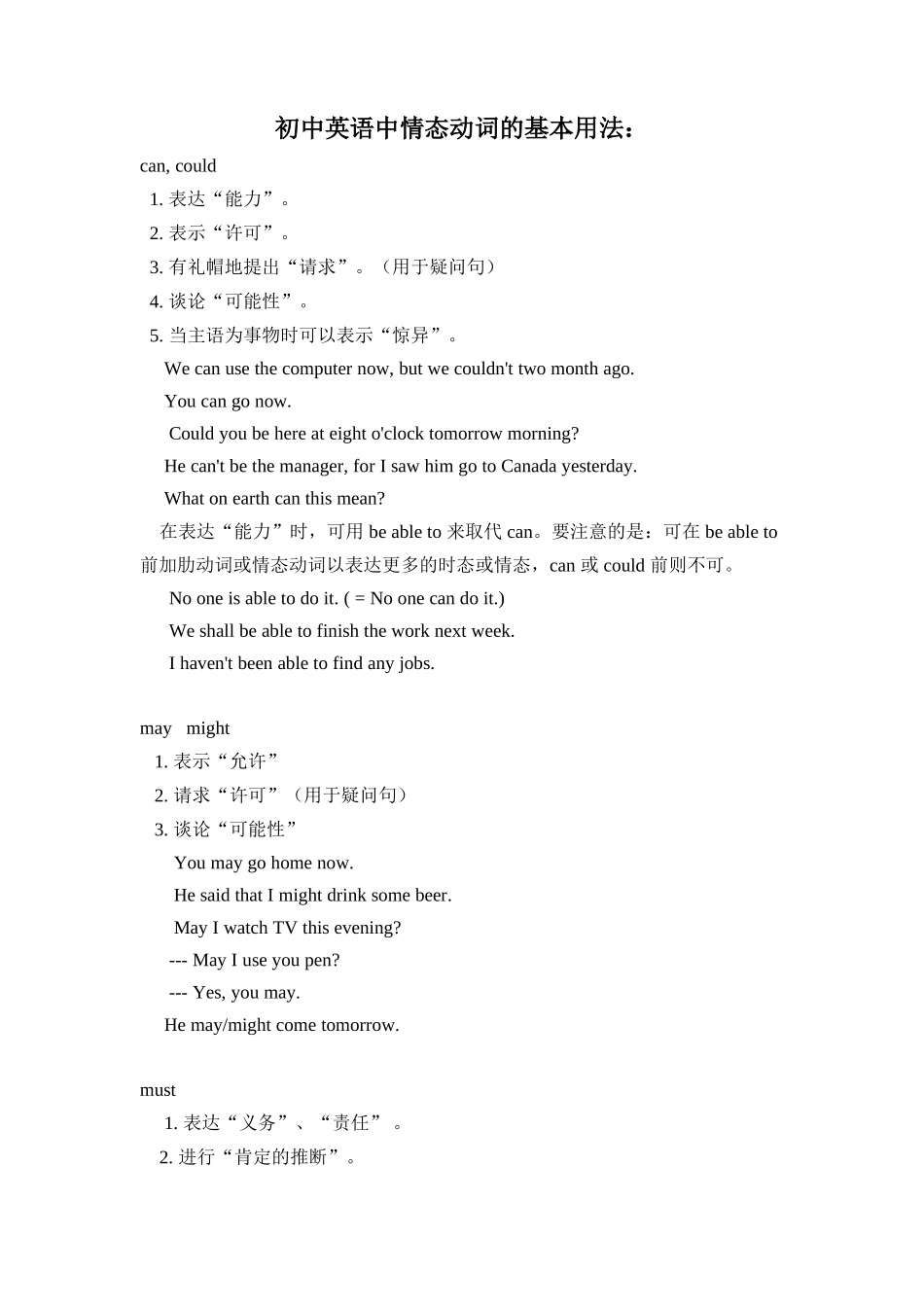
初中英语中情态动词的基本用法:can,could1
表达“能力”
表示“许可”
有礼帽地提出“请求”
(用于疑问句)4
谈论“可能性”
当主语为事物时可以表示“惊异”
Wecanusethecomputernow,butwecouldn'ttwomonthago
Youcangonow
Couldyoubehereateighto'clocktomorrowmorning
Hecan'tbethemanager,forIsawhimgotoCanadayesterday
Whatonearthcanthismean
在表达“能力”时,可用beableto来取代can
要注意的是:可在beableto前加肋动词或情态动词以表达更多的时态或情态,can或could前则不可
Nooneisabletodoit
(=Noonecandoit
)Weshallbeabletofinishtheworknextweek
Ihaven'tbeenabletofindanyjobs
maymight1
表示“允许”2
请求“许可”(用于疑问句)3
谈论“可能性”Youmaygohomenow
HesaidthatImightdrinksomebeer
MayIwatchTVthisevening
---MayIuseyoupen
---Yes,youmay
Hemay/mightcometomorrow
表达“义务”、“责任”
进行“肯定的推断”
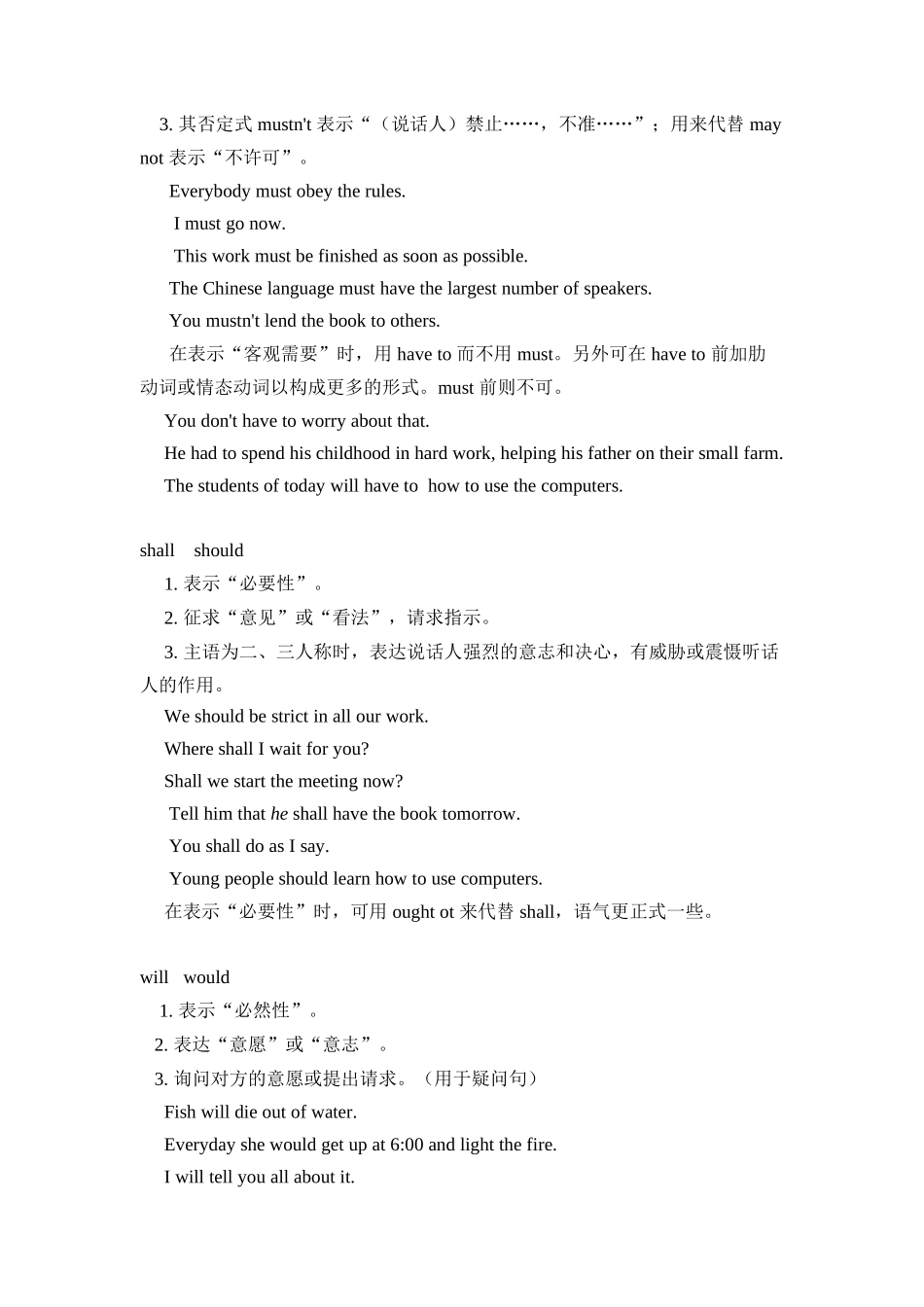
其否定式mustn't表示“(说话人)禁止……,不准……”;用来代替maynot表示“不许可”
Everybodymustobeytherules
Imustgonow
Thisworkmustbefinishedassoonaspossible
TheChineselanguagemusthavethelarge