(1)Doyouoftenplaycomputer
(2)Whataretheydoingnow
(3)Areyouastudentorateacher
(4)Ourclassroomisbig,isn'tit
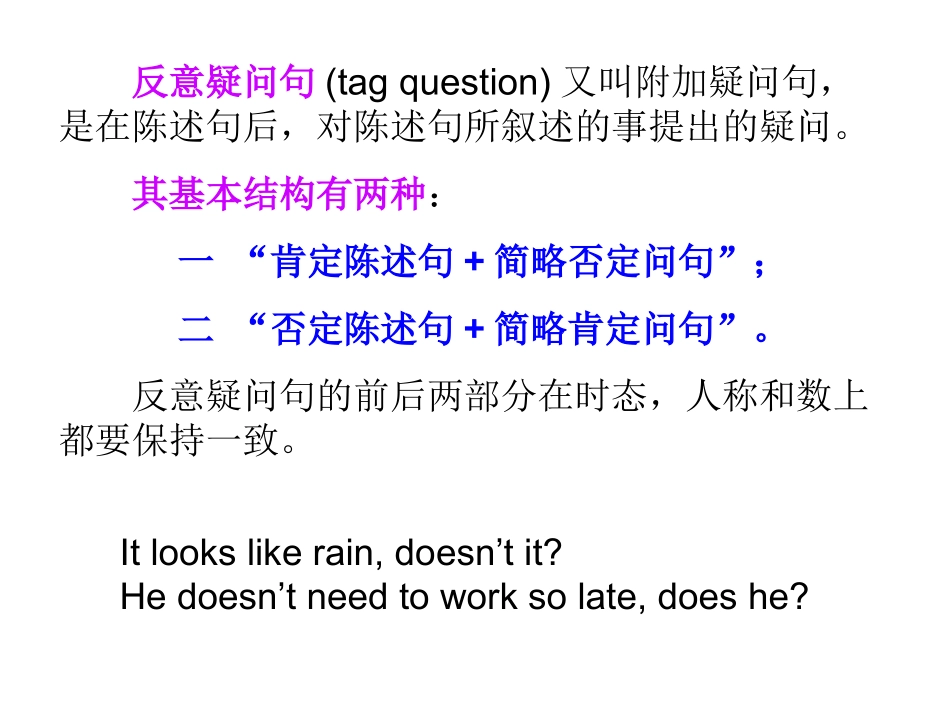
反意疑问句(tagquestion)又叫附加疑问句,是在陈述句后,对陈述句所叙述的事提出的疑问
其基本结构有两种:一“肯定陈述句+简略否定问句”;二“否定陈述句+简略肯定问句”
反意疑问句的前后两部分在时态,人称和数上都要保持一致
Itlookslikerain,doesn’tit
Hedoesn’tneedtoworksolate,doeshe
陈述部分的主语是this,that时,疑问部分的主语多用it;陈述部分的主语是these,those时,疑问部分的主语多用they
Thisisadictionary,isn’tit
Thoseareshelves,aren’tthey
陈述部分是"therebe"结构的,疑问部分用there省略主语代词
Thereissomethingwrongwithyourwatch,isn'tthere
Therewillnotbeanytrouble,willthere
陈述句中含有not,no,hardly,neither,never,few,little,too…to等否定词或具有否定意义的词时,疑问部分常用肯定形式
如:Fewpeopleknewthenews,didthey
TomhasneverbeentoEngland,hashe
如果陈述句的主语是something,nothing,anything,everything等不定代词时,反意疑问部分的主语多用it
如果主语是l’m,后反意部分用aren’tll’mlate,aren’tl
Attention:1
简短问句的否定形式,要用缩写形式,不