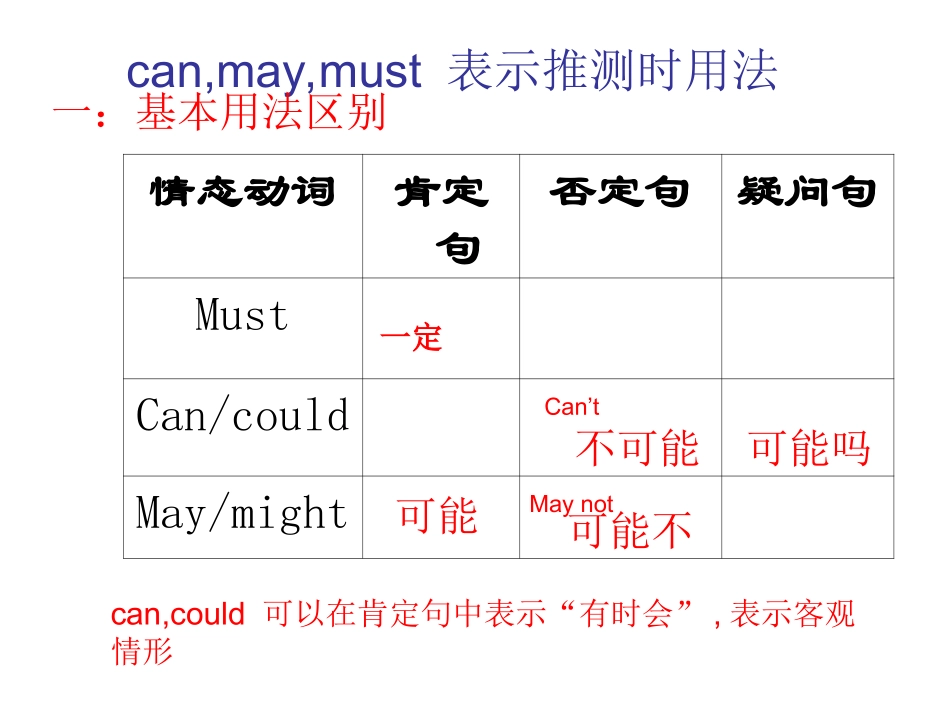
情态动词用法ChristopherYoungcan,may,must表示推测时用法情态动词肯定句否定句疑问句MustCan/couldMay/might一定Can’t不可能可能吗可能Maynot可能不can,could可以在肯定句中表示“有时会”,表示客观情形一:基本用法区别1,对正在进行动作推测:can/could,may/might,must+bedoing他不在教室,一定在操场打球Heisn’tintheclassroom
Hemustbeplayingbasketballintheplayground
2,对过去、已经发生的事进行推测:情态动词+havedone过去一定做过musthavedone过去可能做过(肯定,否定)may/mighthavedone过去可能做过(否定,疑问)can/couldhavedone二、表示推测时的时态Exercise:1,我的书不见了,谁有可能拿走了
Mybookisgone,Who____________itaway
2,我们最好快点
老师一定在等我们
We’dbetterhurryup,ourteacher___________forus
3,李先生上周出国了,所以你不可能在昨天的会议上看到他
MrLiwentabroadlastweek,soyou___________himatthemeeting4,这个咖啡很甜,你一定在里面加了许多糖
Thiscakeisverysweet
You___________alotofsugarinit
5,现在六点了,他可能已经回来
It’ssixnow,Hemighthavecomebackcouldhavetakenmustbewaitingcouldn’thaveseenmusthaveputHemust/maybereading,____he
Youmustdoityourself,