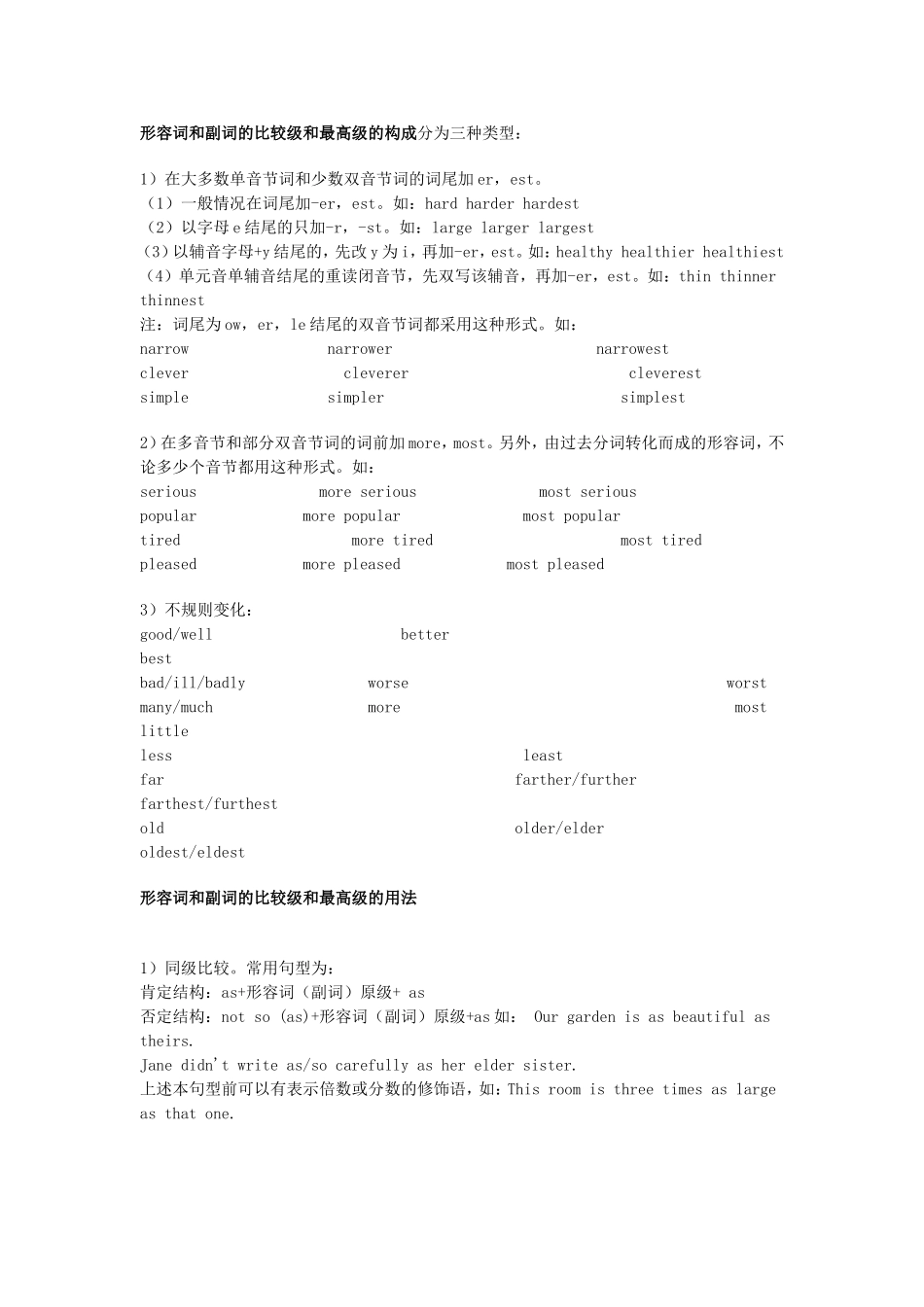
形容词和副词的比较级和最高级的构成分为三种类型:1)在大多数单音节词和少数双音节词的词尾加er,est
(1)一般情况在词尾加-er,est
如:hardharderhardest(2)以字母e结尾的只加-r,-st
如:largelargerlargest(3)以辅音字母+y结尾的,先改y为i,再加-er,est
如:healthyhealthierhealthiest(4)单元音单辅音结尾的重读闭音节,先双写该辅音,再加-er,est
如:thinthinnerthinnest注:词尾为ow,er,le结尾的双音节词都采用这种形式
如:narrownarrowernarrowestclevercleverercleverestsimplesimplersimplest2)在多音节和部分双音节词的词前加more,most
另外,由过去分词转化而成的形容词,不论多少个音节都用这种形式
如:seriousmoreseriousmostseriouspopularmorepopularmostpopulartiredmoretiredmosttiredpleasedmorepleasedmostpleased3)不规则变化:good/wellbetterbestbad/ill/badlyworseworstmany/muchmoremostlittlelessleastfarfarther/furtherfarthest/furthestoldolder/elderoldest/eldest形容词和副词的比较级和最高级的用法1)同级比较
常用句型为:肯定结构:as+形容词(副词)原级+as否定结构:notso(as)+形容词(副词)原级+as如:Ourgardenisasbeautifulastheirs
Janedidn'twriteas/socarefullyasherel