情态动词的用法归纳1
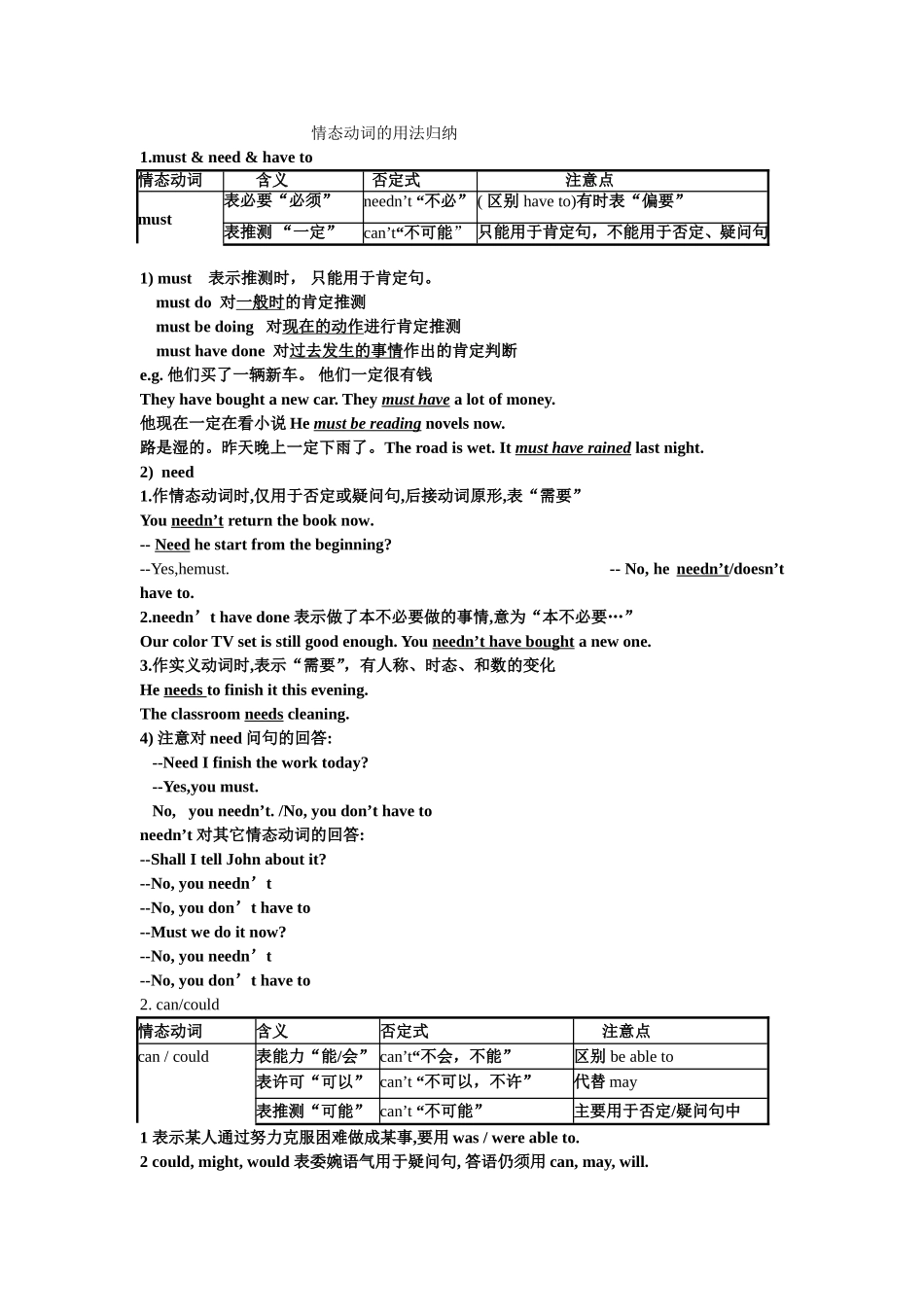
must&need&haveto1)must表示推测时,只能用于肯定句
mustdo对一般时的肯定推测mustbedoing对现在的动作进行肯定推测musthavedone对过去发生的事情作出的肯定判断e
他们买了一辆新车
他们一定很有钱Theyhaveboughtanewcar
Theymusthavealotofmoney
他现在一定在看小说Hemustbereadingnovelsnow
昨天晚上一定下雨了
Theroadiswet
Itmusthaverainedlastnight
2)need1
作情态动词时,仅用于否定或疑问句,后接动词原形,表“需要”Youneedn’treturnthebooknow
--Needhestartfromthebeginning
--Yes,hemust
--No,heneedn’t/doesn’thaveto
needn’thavedone表示做了本不必要做的事情,意为“本不必要…”OurcolorTVsetisstillgoodenough
Youneedn’thaveboughtanewone
作实义动词时,表示“需要”,有人称、时态、和数的变化Heneedstofinishitthisevening
Theclassroomneedscleaning
4)注意对need问句的回答:--NeedIfinishtheworktoday
--Yes,youmust
No,youneedn’t
/No,youdon’thavetoneedn’t对其它情态动词的回答:--ShallItellJohnaboutit
--No,youneedn’t--No,youdon’thaveto--Mustwedoitnow
--No,youneedn’t--No,youdon’thaveto2