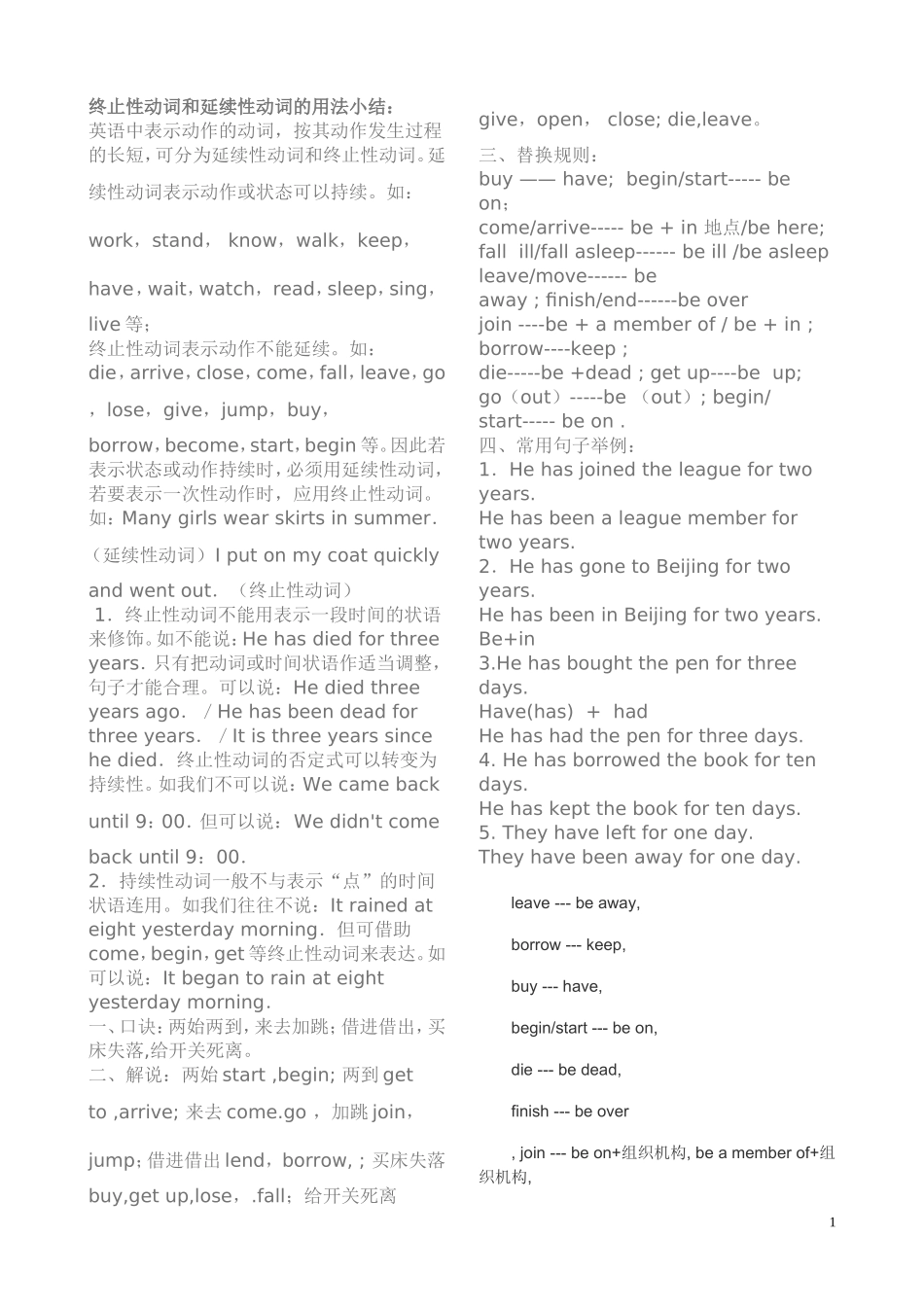
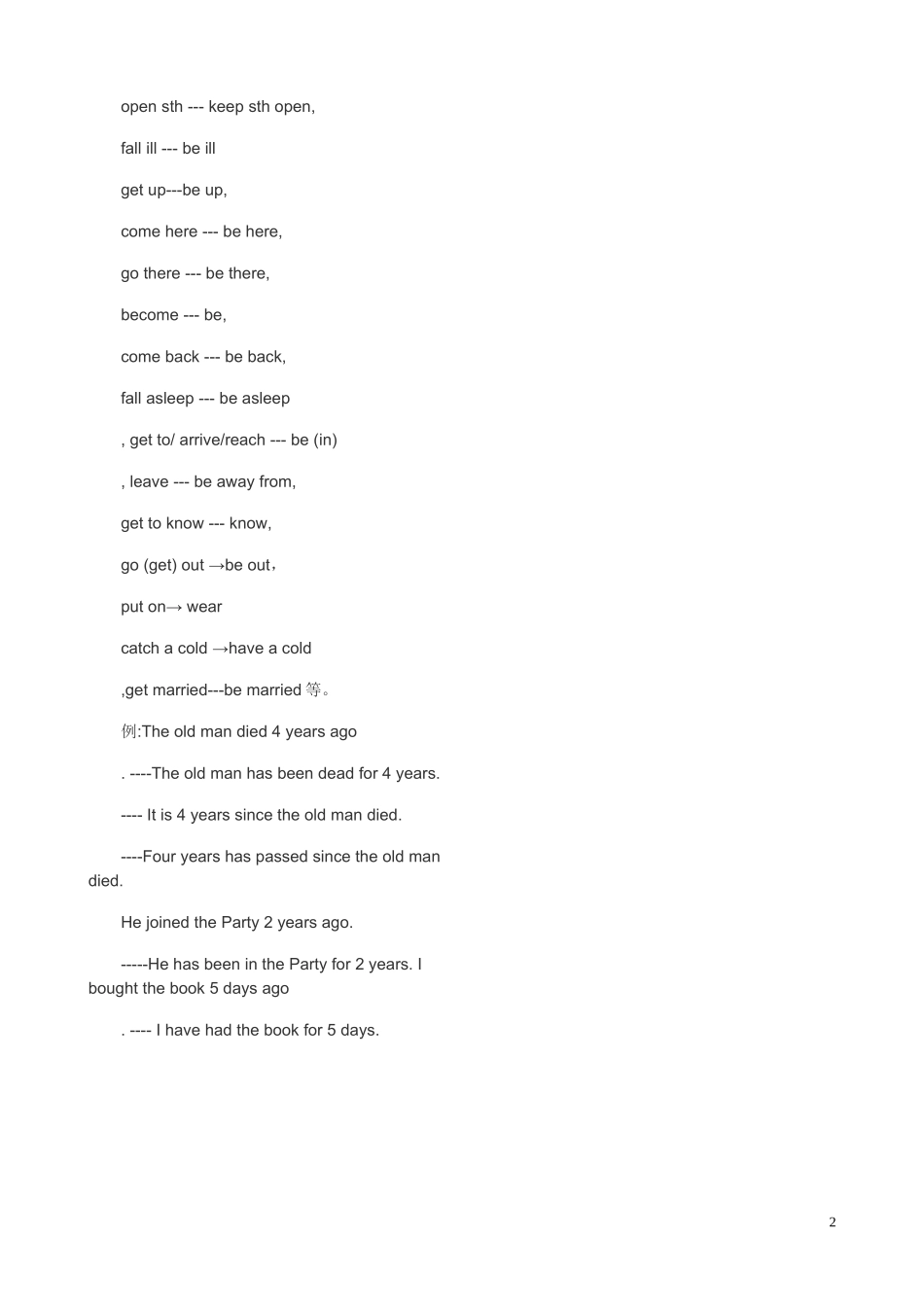
终止性动词和延续性动词的用法小结:英语中表示动作的动词,按其动作发生过程的长短,可分为延续性动词和终止性动词
延续性动词表示动作或状态可以持续
如: work,stand, know,walk,keep, have,wait,watch, read,sleep,sing, live 等;终止性动词表示动作不能延续
如:die,arrive,close,come,fall,leave,go,lose,give,jump,buy, borrow,become,start,begin 等
因此若表示状态或动作持续时,必须用延续性动词,若要表示一次性动作时,应用终止性动词
如:Many girls wear skirts in summer.(延续性动词) I put on my coat quickly and went out.(终止性动词) 1.终止性动词不能用表示一段时间的状语来修饰
如不能说:He has died for three years.只有把动词或时间状语作适当调整,句子才能合理
可以说:He died three years ago./He has been dead for three years./It is three years since he died.终止性动词的否定式可以转变为持续性
如我们不可以说:We came back until 9:00.但可以说: We didn't come back until 9:00.2.持续性动词一般不与表示“点”的时间状语连用
如我们往往不说:It rained at eight yesterday morning.但可借助come,begin,get 等终止性动词来表达
如可以说:It began to rain at eight yesterday morning.一、口诀:两始两到,来去