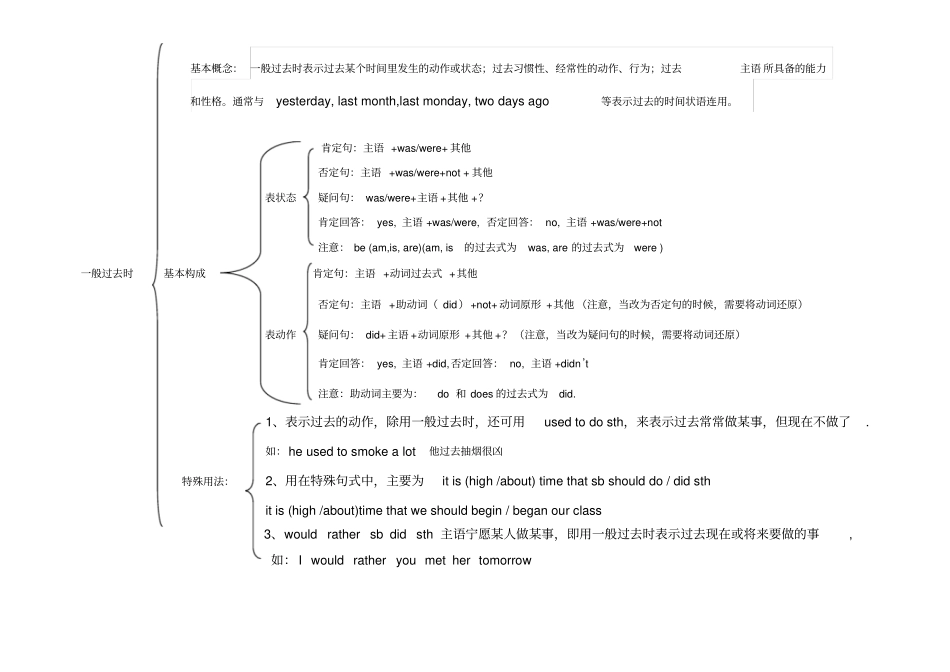
肯定句:主语 +was/were+ 其他否定句:主语 +was/were+not + 其他表状态疑问句: was/were+主语 +其他 +
肯定回答: yes, 主语 +was/were, 否定回答: no, 主语 +was/were+not 注意: be (am,is, are)(am, is 的过去式为was, are 的过去式为were ) 一般过去时基本构成肯定句:主语 +动词过去式 +其他否定句:主语 +助动词( did)+not+ 动词原形 +其他 (注意,当改为否定句的时候,需要将动词还原)表动作疑问句: did+主语 +动词原形 +其他 +
(注意,当改为疑问句的时候,需要将动词还原)肯定回答: yes, 主语 +did,否定回答: no, 主语 +didn’t 注意:助动词主要为:do 和 does 的过去式为did
1、表示过去的动作,除用一般过去时,还可用used to do sth,来表示过去常常做某事,但现在不做了
如: he used to smoke a lot 他过去抽烟很凶特殊用法:2、用在特殊句式中,主要为it is (high /about) time that sb should do / did sth it is (high /about)time that we should begin / began our class 3、would rather sb did sth 主语宁愿某人做某事,即用一般过去时表示过去现在或将来要做的事, 如: I would rather you met her tomorrow 基本概念: 一般过去时表示过去某个时间里发生的动作或状态;过去习惯性、经常性的动作、行为;过去主语 所具备的能力和性格
通常与yesterday, last month,last monday, two days