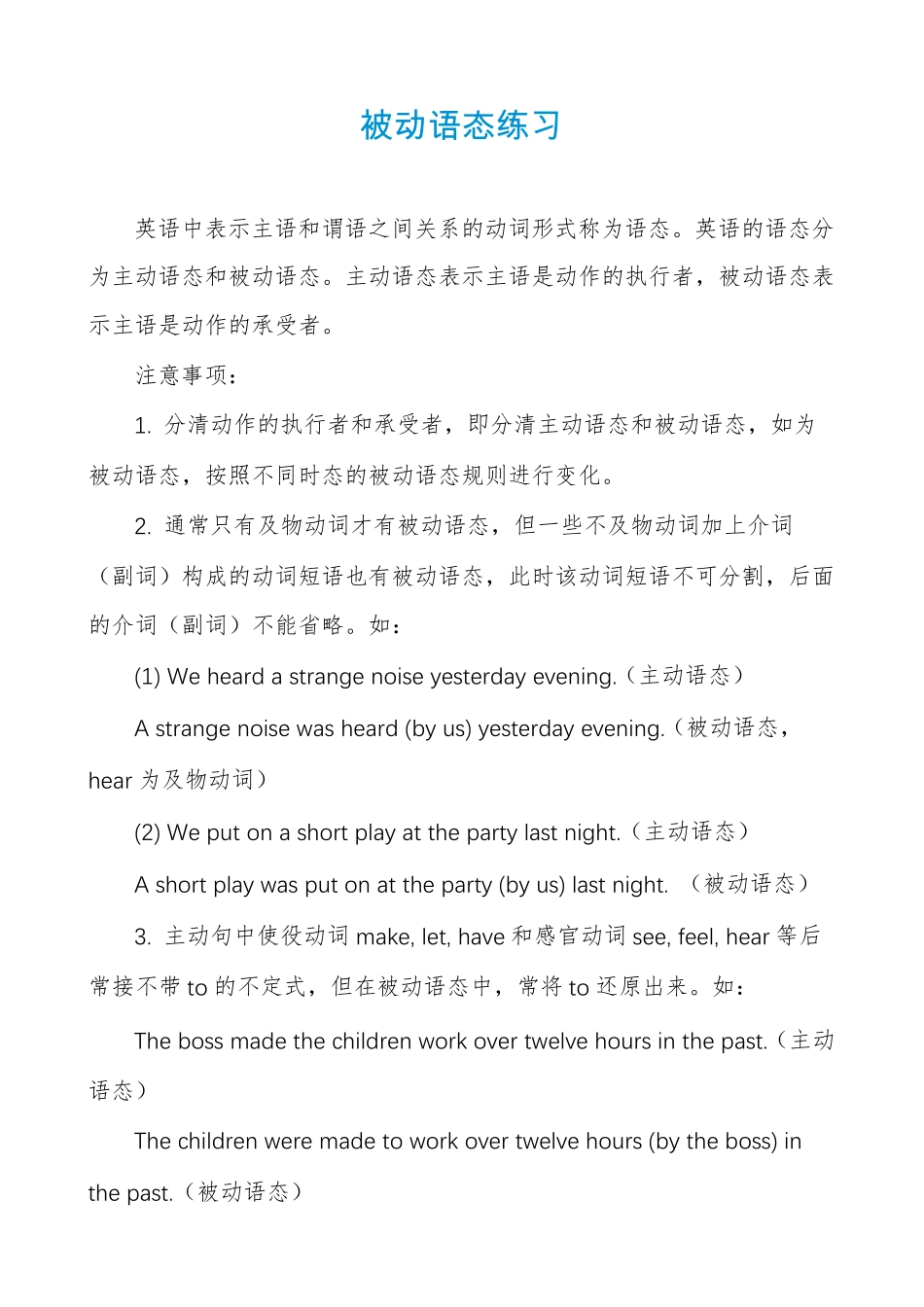
被 动 语 态 练 习 英语中表示主语和谓语之间关系的动词形式称为语态
英语的语态分为主动语态和被动语态
主动语态表示主语是动作的执行者,被动语态表示主语是动作的承受者
注意事项: 1
分清动作的执行者和承受者,即分清主动语态和被动语态,如为被动语态,按照不同时态的被动语态规则进行变化
通常只有及物动词才有被动语态,但一些不及物动词加上介词(副词)构成的动词短语也有被动语态,此时该动词短语不可分割,后面的介词(副词)不能省略
如: (1) We heard a strange noise yesterday evening
(主动语态) A strange noise was heard (by us) yesterday evening
(被动语态,hear 为及物动词) (2) We put on a short play at the party last night
(主动语态) A short play was put on at the party (by us) last night
(被动语态) 3
主动句中使役动词make, let, have 和感官动词see, feel, hear 等后常接不带to 的不定式,但在被动语态中,常将to 还原出来
如: The boss made the children work over twelve hours in the past
(主动语态) The children were made to work over twelve hours (by the boss) in the past
(被动语态) 4
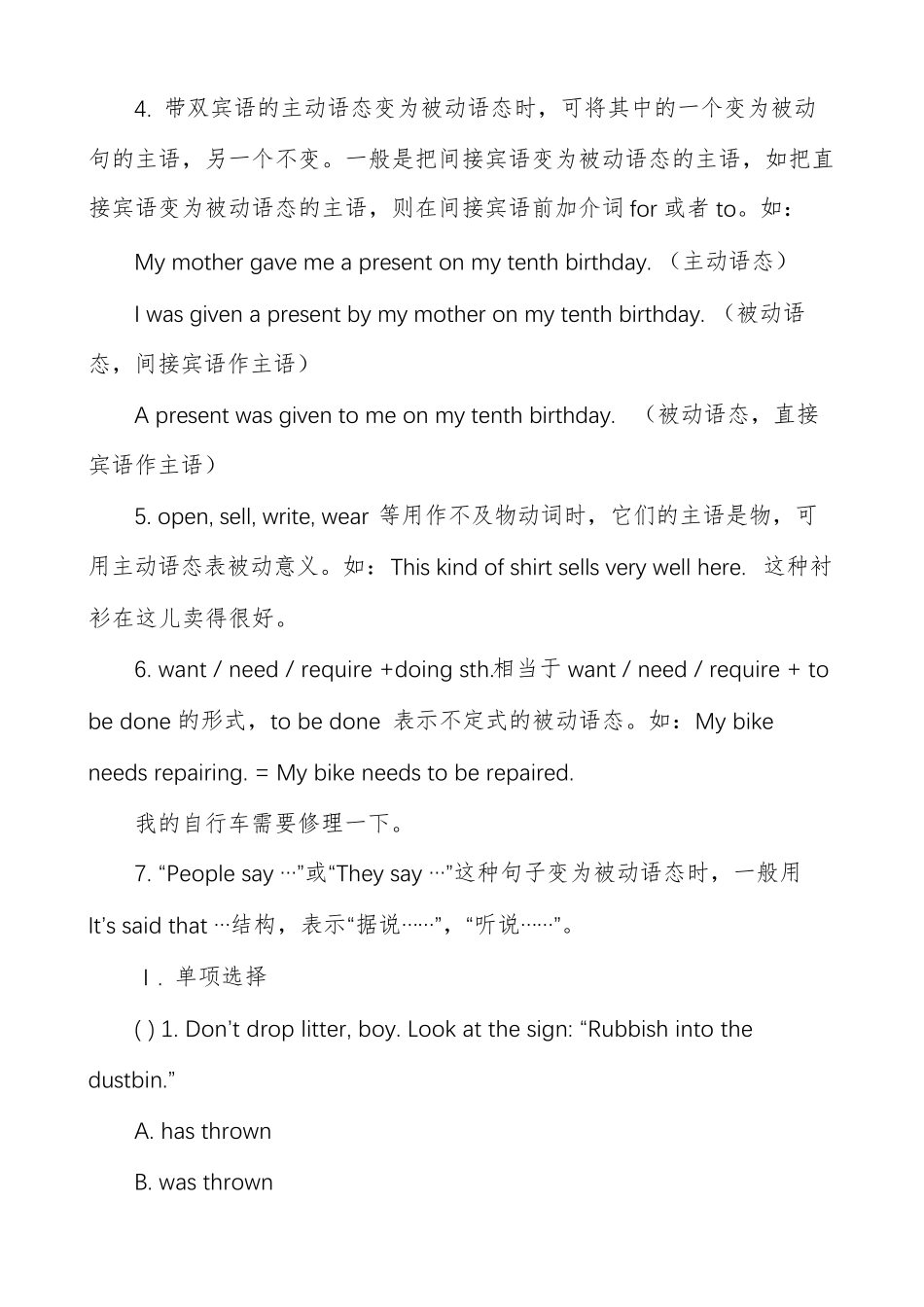
带双宾语的主动语态变为被动语态时,可将其中的一个变为被动句的主语,另一个不变
一般是把间接宾语变为被动语态的主语,如把直接宾语变为被动语态的主语,则在间接宾语前加介词for 或者to