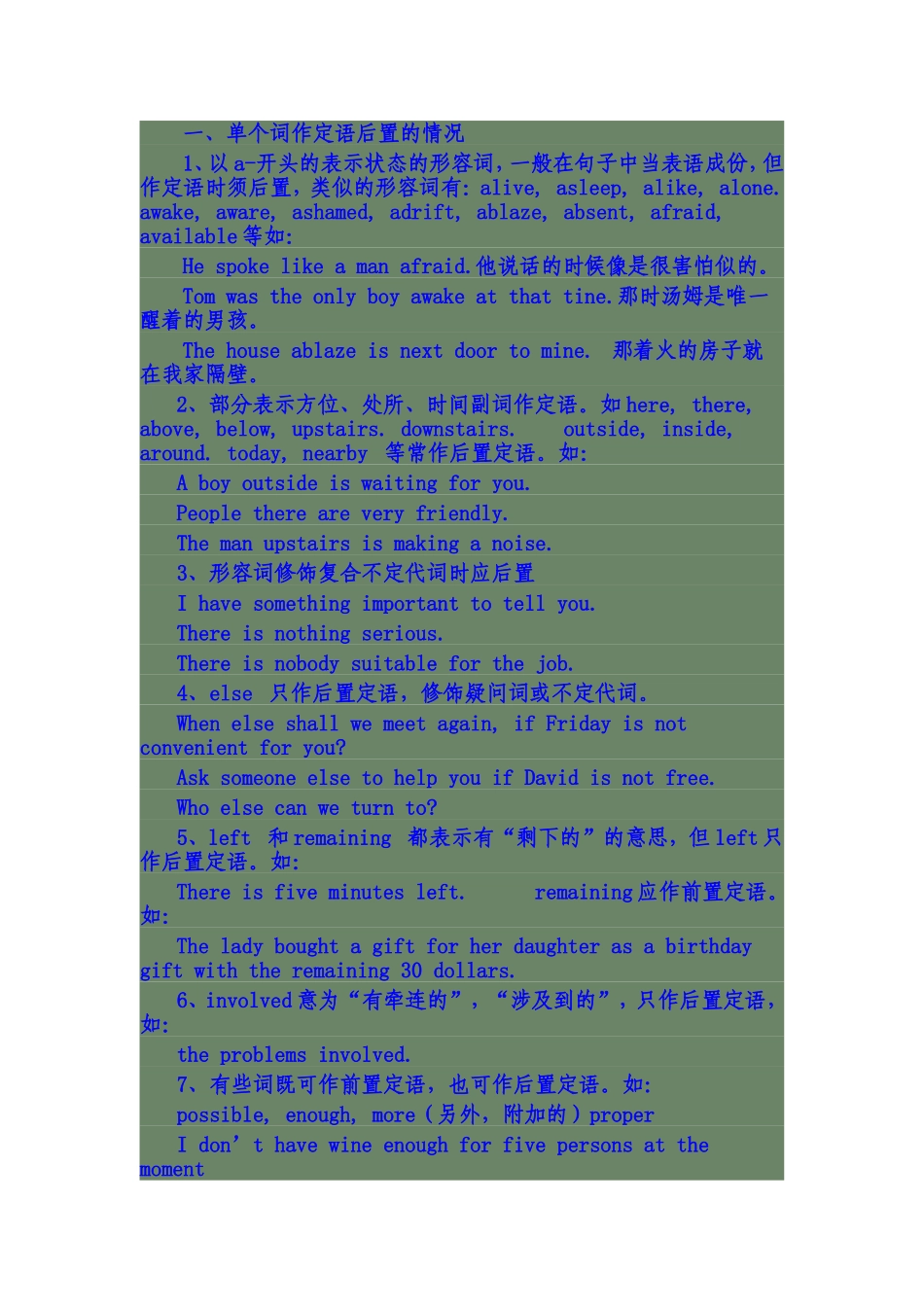
一、单个词作定语后置的情况1、以a-开头的表示状态的形容词,一般在句子中当表语成份,但作定语时须后置,类似的形容词有:alive,asleep,alike,alone
awake,aware,ashamed,adrift,ablaze,absent,afraid,available等如:Hespokelikeamanafraid
他说话的时候像是很害怕似的
Tomwastheonlyboyawakeatthattine
那时汤姆是唯一醒着的男孩
Thehouseablazeisnextdoortomine
那着火的房子就在我家隔壁
2、部分表示方位、处所、时间副词作定语
如here,there,above,below,upstairs
downstairs
outside,inside,around
today,nearby等常作后置定语
如:Aboyoutsideiswaitingforyou
Peoplethereareveryfriendly
Themanupstairsismakinganoise
3、形容词修饰复合不定代词时应后置Ihavesomethingimportanttotellyou
Thereisnothingserious
Thereisnobodysuitableforthejob
4、else只作后置定语,修饰疑问词或不定代词
Whenelseshallwemeetagain,ifFridayisnotconvenientforyou
AsksomeoneelsetohelpyouifDavidisnotfree
Whoelsecanweturnto
5、left和remaining都表示有“剩下的”的意思,但left只作后置定语
如:Thereisfiveminutesleft
remaining应作前置定语
如:Theladyboughtag