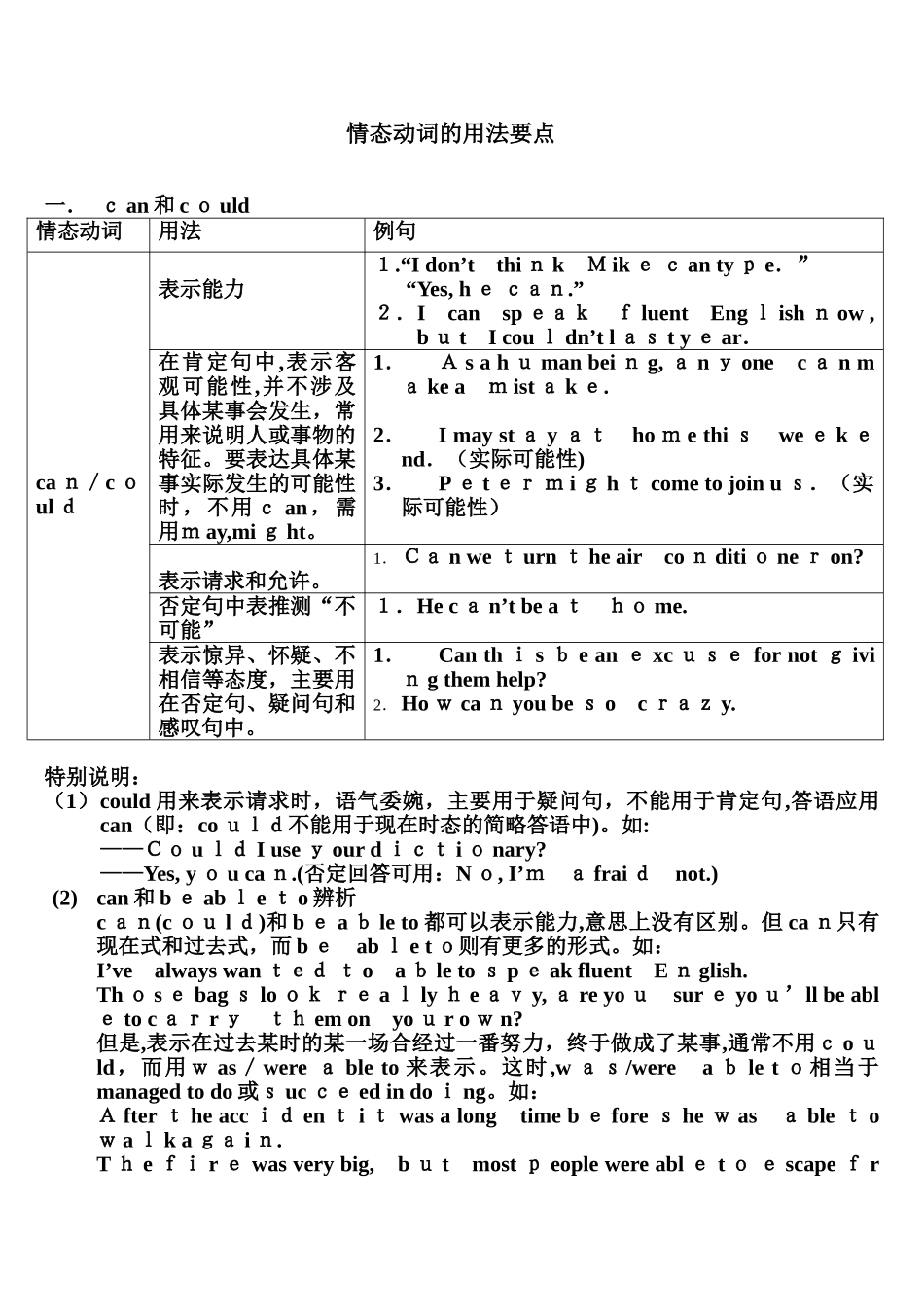
情态动词的用法要点一.can和could情态动词用法例句can/could表示能力1
“Idon’tthinkMikecantype.”“Yes,hecan
”2.IcanspeakfluentEnglishnow,butIcouldn’tlastyear.在肯定句中,表示客观可能性,并不涉及具体某事会发生,常用来说明人或事物的特征
要表达具体某事实际发生的可能性时,不用can,需用may,might
1.Asahumanbeing,anyonecanmakeamistake
2.Imaystayathomethisweekend.(实际可能性)3.Petermightcometojoinus.(实际可能性)表示请求和允许
1.Canweturntheairconditioneron
否定句中表推测“不可能”1.Hecan’tbeathome
表示惊异、怀疑、不相信等态度,主要用在否定句、疑问句和感叹句中
1.Canthisbeanexcusefornotgivingthemhelp
2.Howcanyoubesocrazy
特别说明:(1)could用来表示请求时,语气委婉,主要用于疑问句,不能用于肯定句,答语应用can(即:could不能用于现在时态的简略答语中)
如:——CouldIuseyourdictionary
——Yes,youcan
(否定回答可用:No,I’mafraidnot
)(2)can和beableto辨析can(could)和beableto都可以表示能力,意思上没有区别
但can只有现在式和过去式,而beableto则有更多的形式
如:I’vealwayswantedtoabletospeakfluentEnglish
Thosebagslookreallyheavy,areyousureyou’llbeabletocarrythemonyou