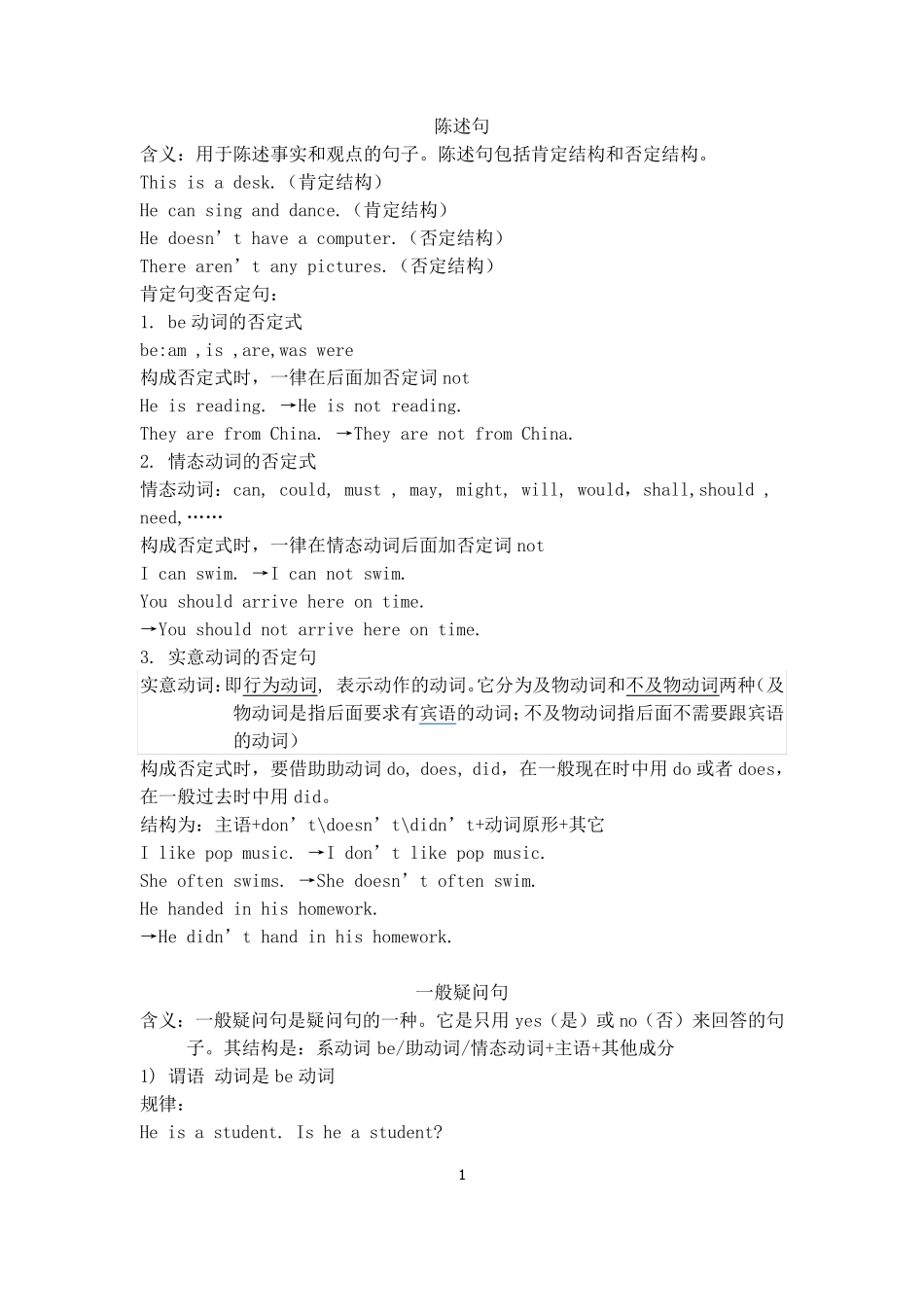
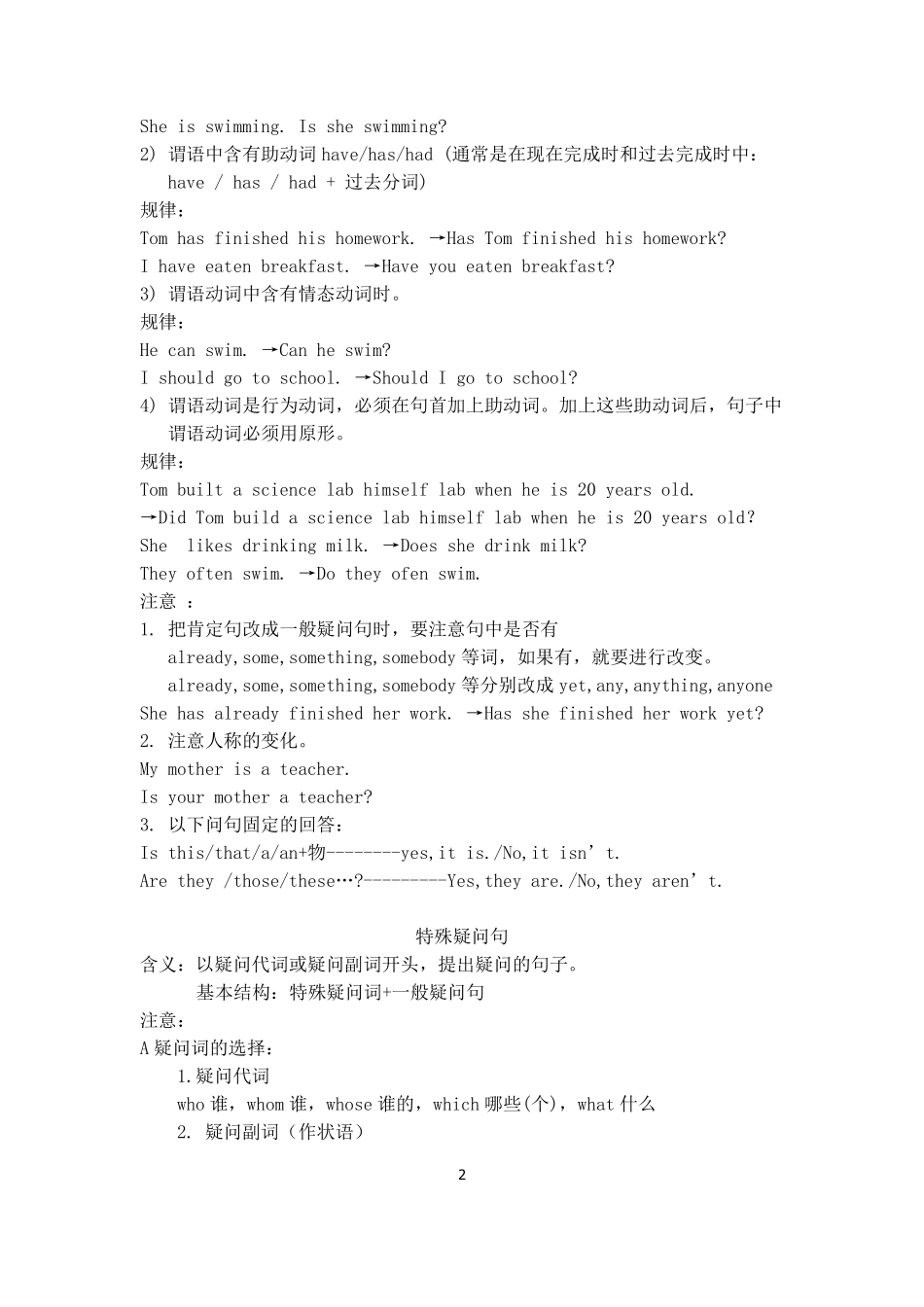
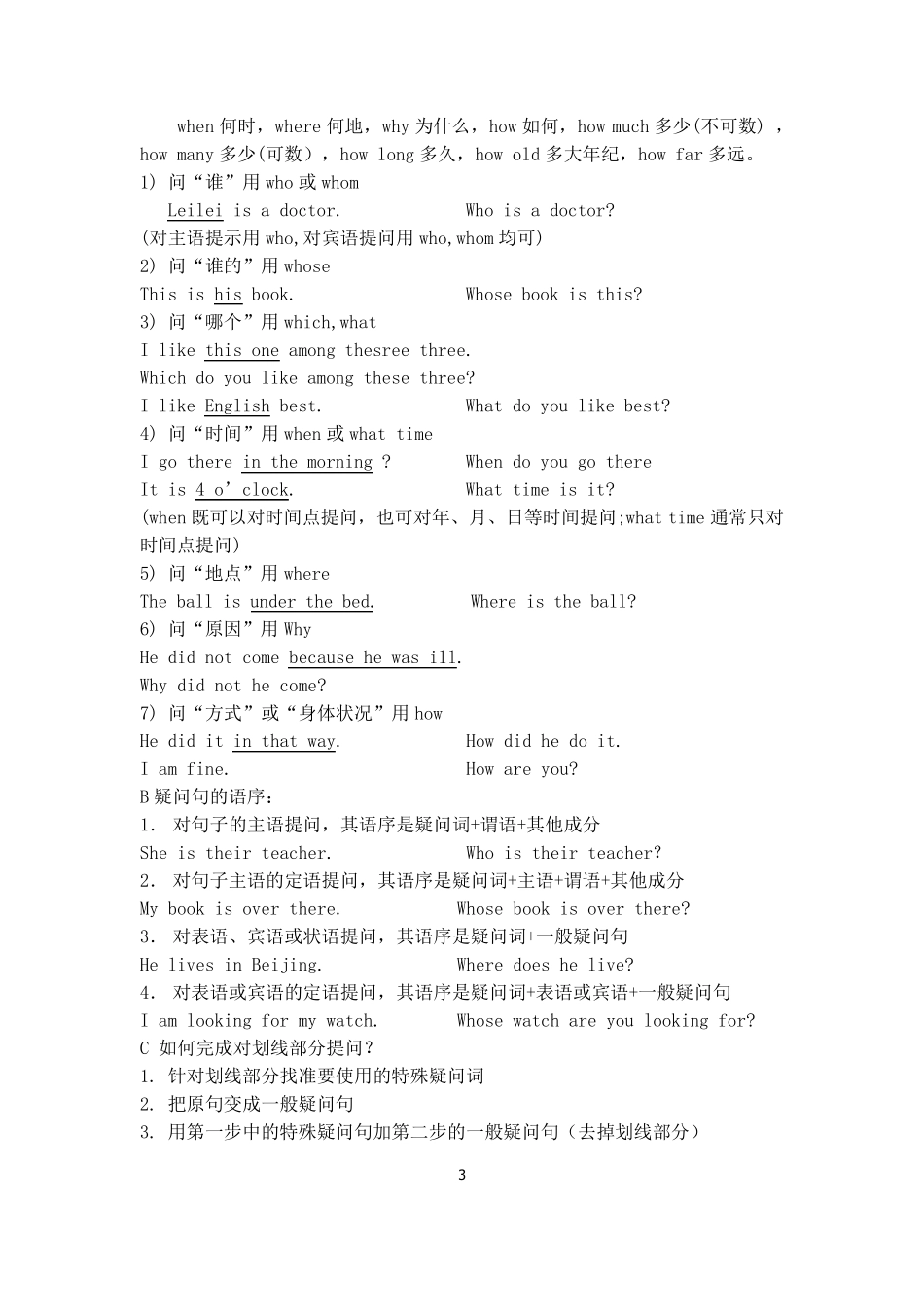
1 陈述句 含义:用于陈述事实和观点的句子
陈述句包括肯定结构和否定结构
This is a desk
(肯定结构) He can sing and dance
(肯定结构) He doesn’t have a computer
(否定结构) There aren’t any pictures
(否定结构) 肯定句变否定句: 1
be 动词的否定式 be:am ,is ,are,was were 构成否定式时,一律在后面加否定词 not He is reading
→He is not reading
They are from China
→They are not from China
情态动词的否定式 情态动词:can, could, must , may, might, will, would,shall,should , need,…… 构成否定式时,一律在情态动词后面加否定词 not I can swim
→I can not swim
You should arrive here on time
→You should not arrive here on time
实意动词的否定句 实意动词:即行为动词, 表示动作的动词
它分为及物动词和不及物动词两种(及物动词是指后面要求有宾语的动词;不及物动词指后面不需要跟宾语的动词) 构成否定式时,要借助助动词 do, does, did,在一般现在时中用do 或者 does,在一般过去时中用did
结构为:主语+don’t\doesn’t\didn’t+动词原形+其它 I like pop music
→I don’t like pop music
She often swims
→She doesn’t often swim
He handed in his homewor