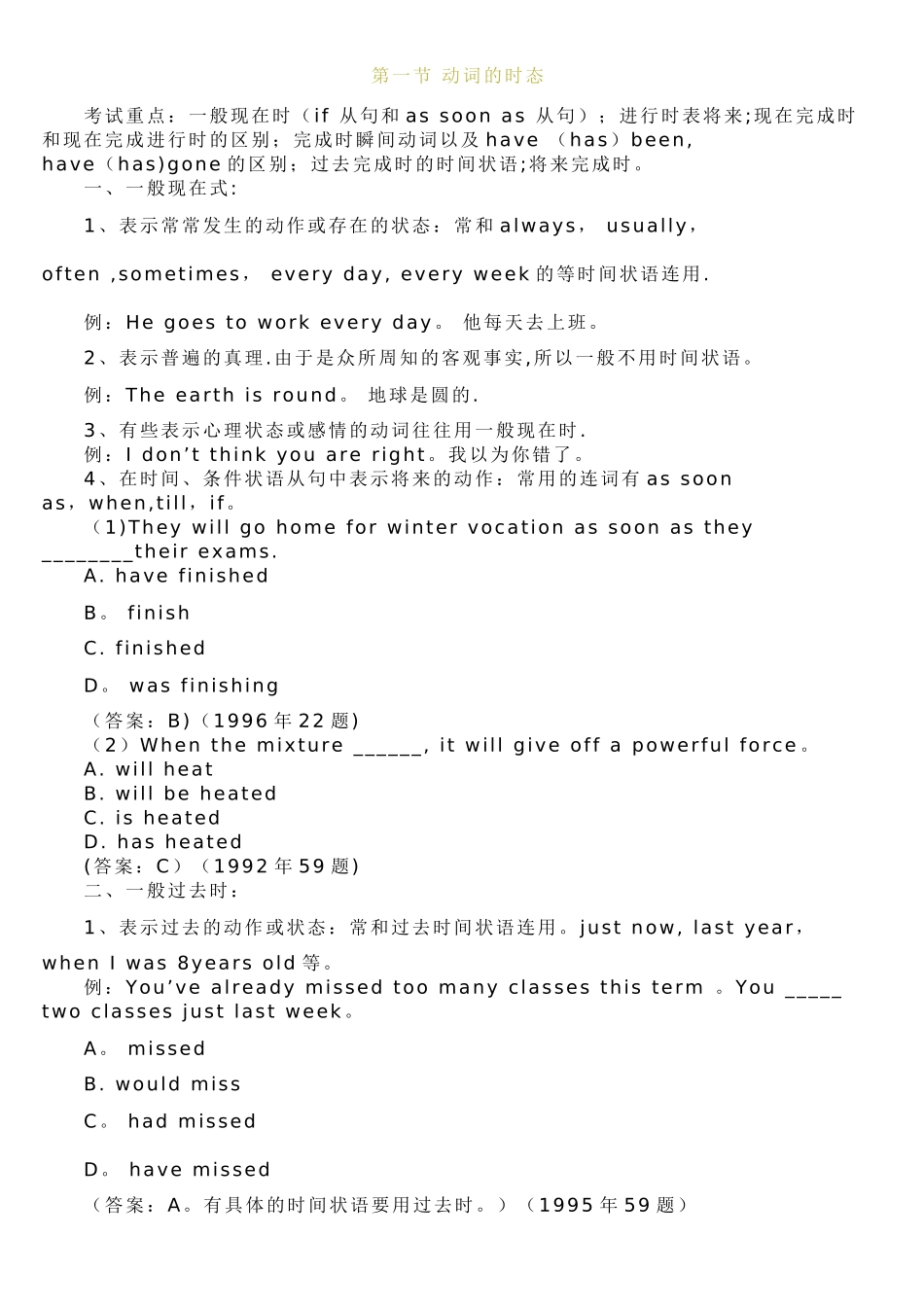
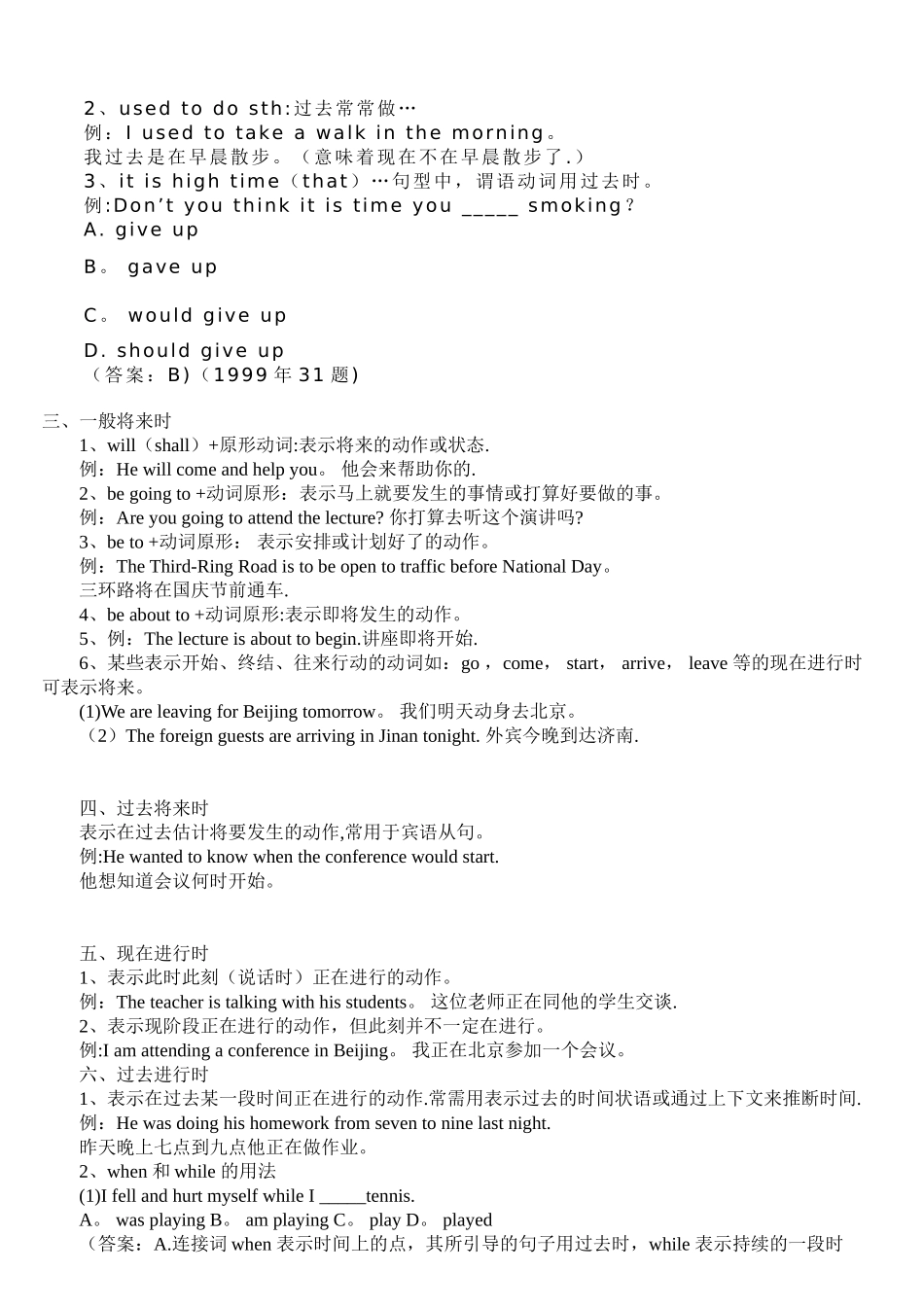
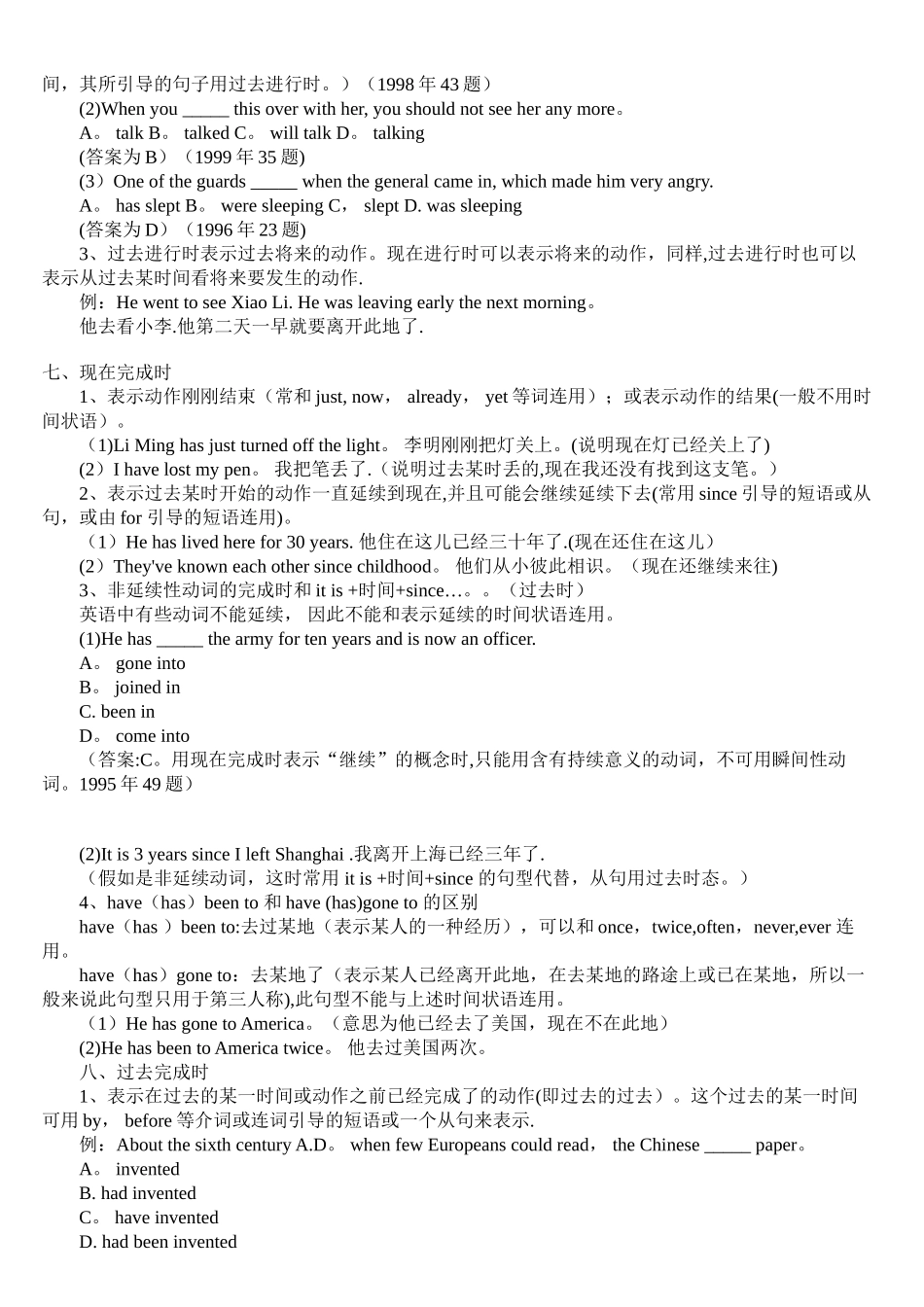
第一节 动词的时态考试重点:一般现在时(if 从句和 as soon as 从句);进行时表将来;现在完成时和现在完成进行时的区别;完成时瞬间动词以及 have (has)been, have(has)gone 的区别;过去完成时的时间状语;将来完成时
一、一般现在式: 1、表示常常发生的动作或存在的状态:常和 always, usually, often ,sometimes, every day, every week 的等时间状语连用
例:He goes to work every day
他每天去上班
2、表示普遍的真理
由于是众所周知的客观事实,所以一般不用时间状语
例:The earth is round
3、有些表示心理状态或感情的动词往往用一般现在时
例:I don’t think you are right
我以为你错了
4、在时间、条件状语从句中表示将来的动作:常用的连词有 as soon as,when,till,if
(1)They will go home for winter vocation as soon as they ________their exams
have finished B
finish C
finished D
was finishing (答案:B)(1996 年 22 题) (2)When the mixture ______, it will give off a powerful force
will heat B
will be heated C
is heated D
has heated (答案:C)(1992 年 59 题) 二、一般过去时: 1、表示过去的动作或状态:常和过去时间状语连用
just now, last year, when