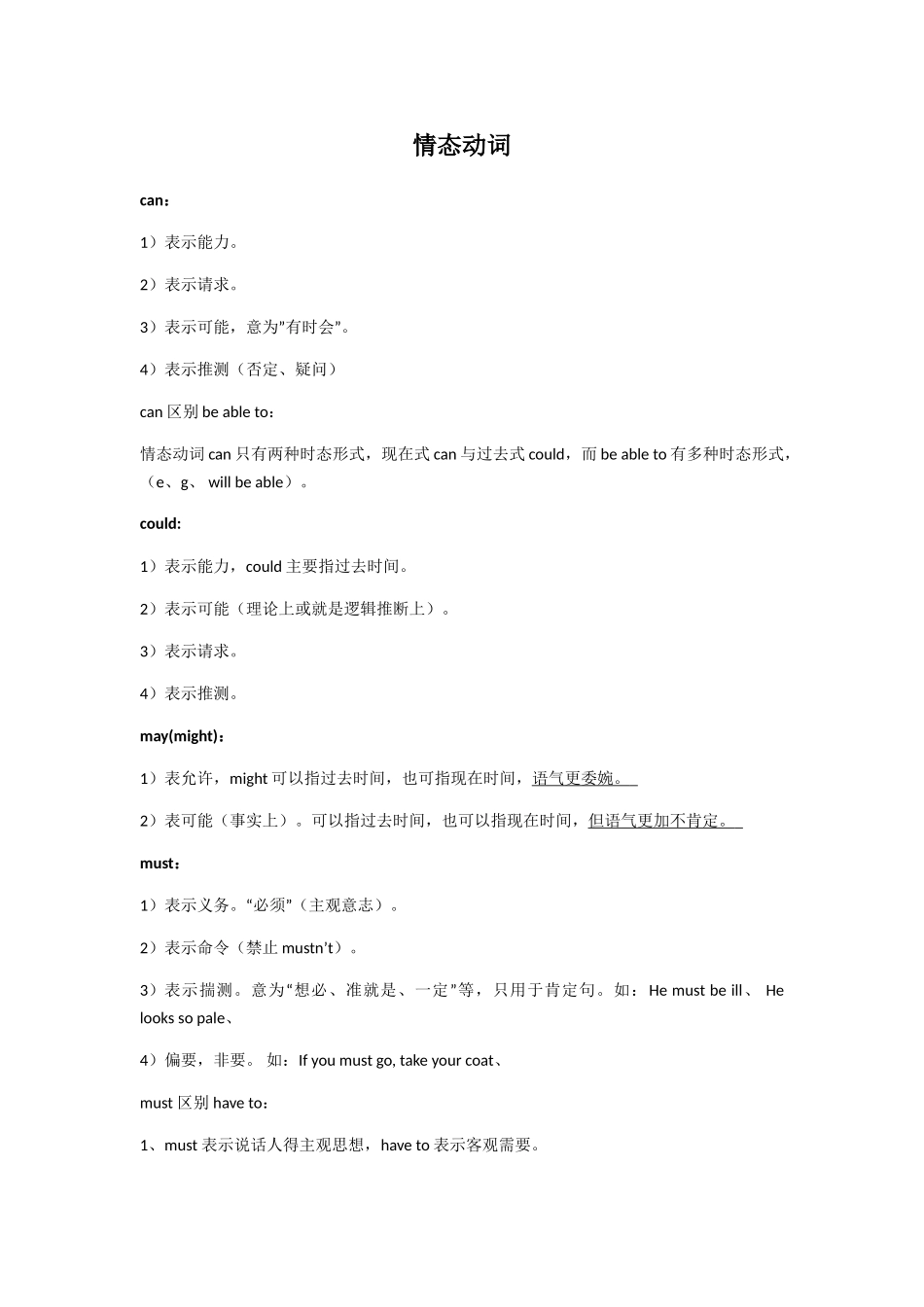
情态动词can: 1)表示能力
2)表示请求
3)表示可能,意为”有时会”
4)表示推测(否定、疑问)can 区别 be able to:情态动词 can 只有两种时态形式,现在式 can 与过去式 could,而 be able to 有多种时态形式,(e、g、 will be able)
could:1)表示能力,could 主要指过去时间
2)表示可能(理论上或就是逻辑推断上)
3)表示请求
4)表示推测
may(might): 1)表允许,might 可以指过去时间,也可指现在时间,语气更委婉
2)表可能(事实上)
可以指过去时间,也可以指现在时间,但语气更加不肯定
must:1)表示义务
“必须”(主观意志)
2)表示命令(禁止 mustn’t)
3)表示揣测
意为“想必、准就是、一定”等,只用于肯定句
如:He must be ill、 He looks so pale、4)偏要,非要
如:If you must go, take your coat、must 区别 have to:1、must 表示说话人得主观思想,have to 表示客观需要
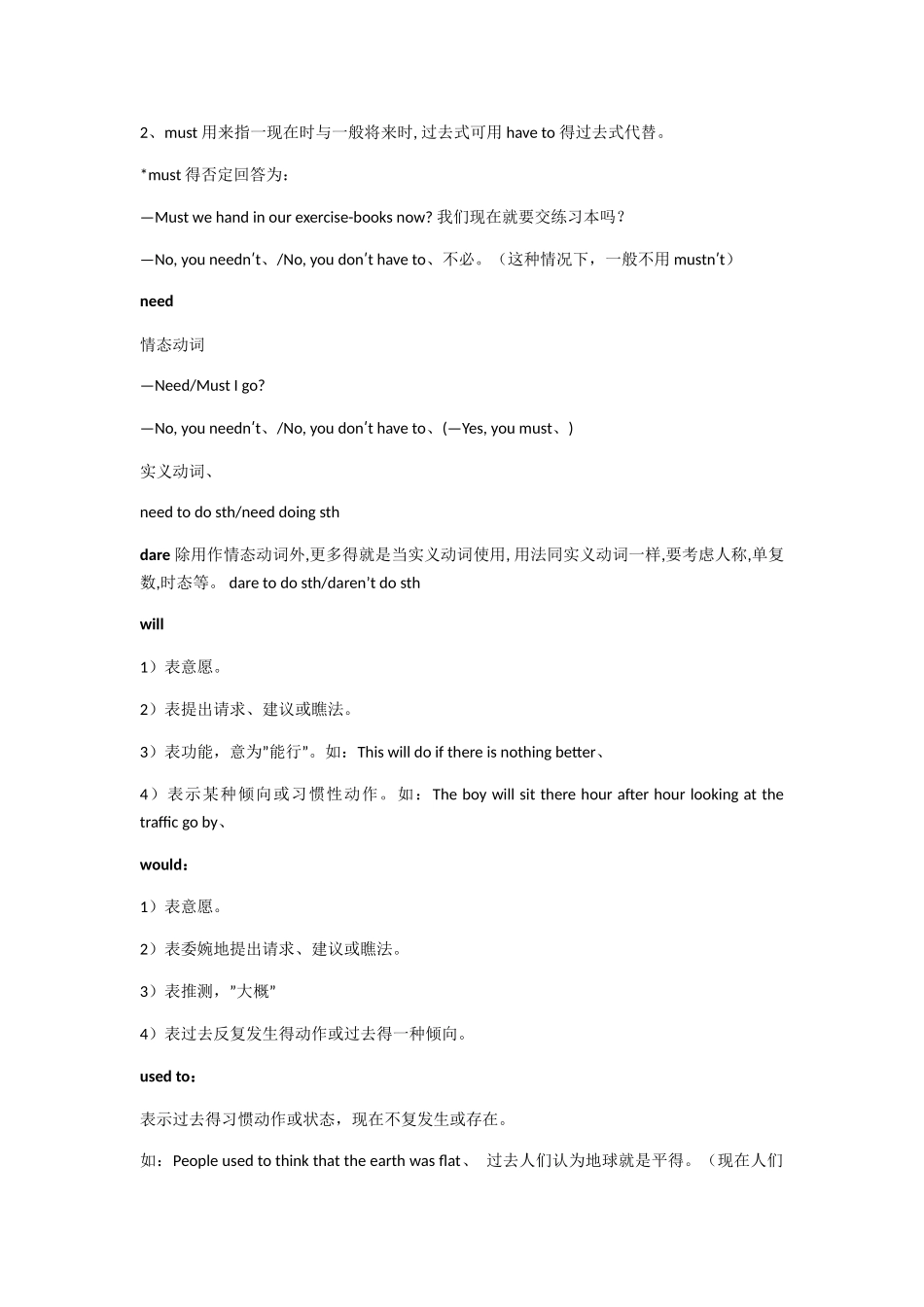
2、must 用来指一现在时与一般将来时, 过去式可用 have to 得过去式代替
*must 得否定回答为:—Must we hand in our exercise-books now
我们现在就要交练习本吗
—No, you needn t′ 、/No, you don t have to′、不必
(这种情况下,一般不用 mustn t′ ) need 情态动词—Need/Must I go
—No, you needn t′ 、/No, you don t have to′、(—Yes, you must、)实义动词、need to do sth/need doing sthdare