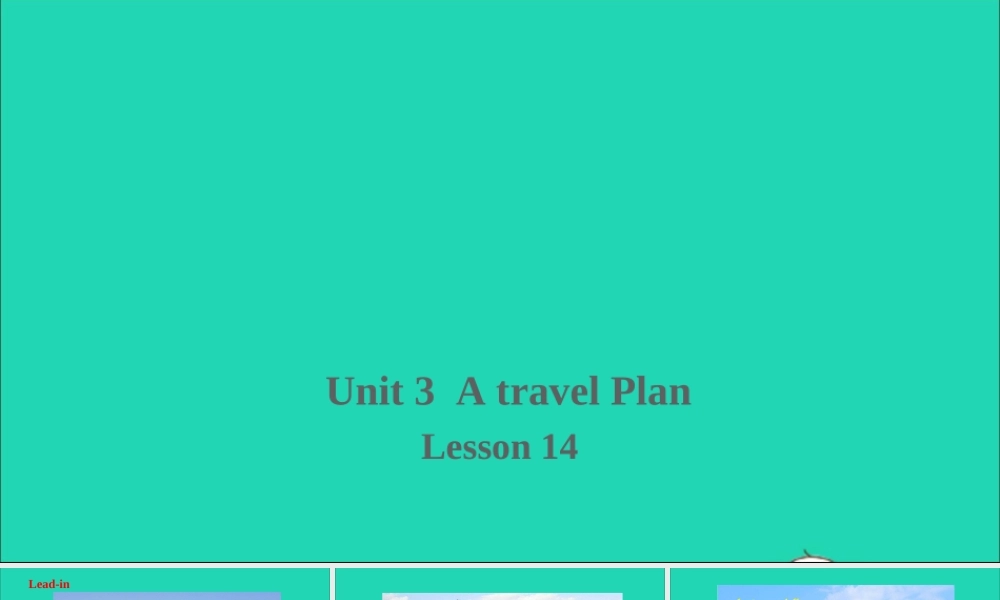
Unit 3 A travel PlanLesson 14Lead-inthe Palace MuseumTian’anmen Squarethe Great WallDo you want to travel to Beijing
What will you say to your mother or father
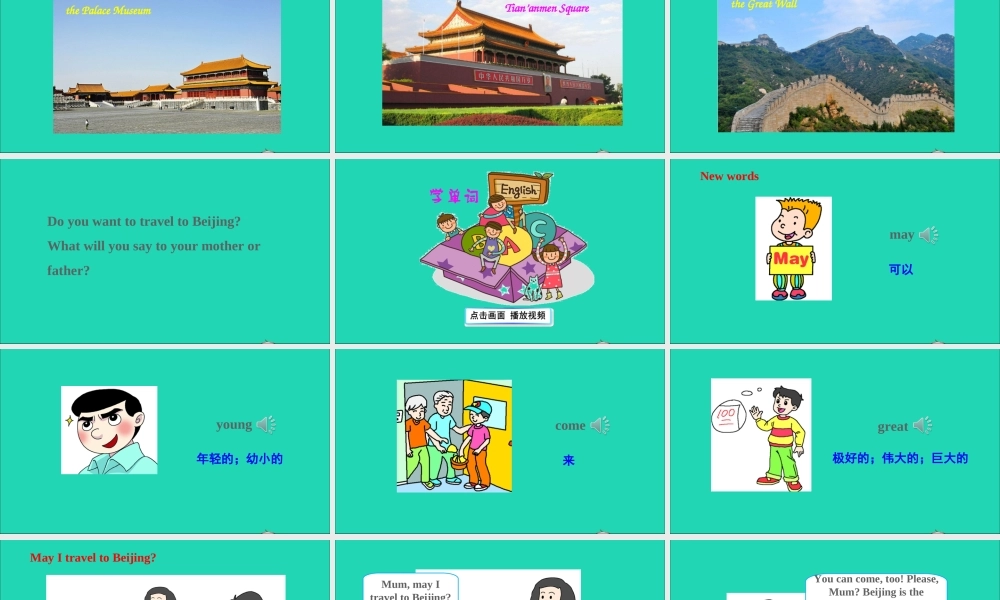
New wordsmay可以young年轻的;幼小的come来great极好的;伟大的;巨大的May I travel to Beijing
Mum, may I travel to Beijing
To Beijing
I’m afraid not
You’re too young, Li Ming
You can come, too
Please, Mum
Beijing is the capital city of our country
Okay, Li Ming
You are a good boy
You work hard in school
You may go
And I can come with you
Thanks, Mum
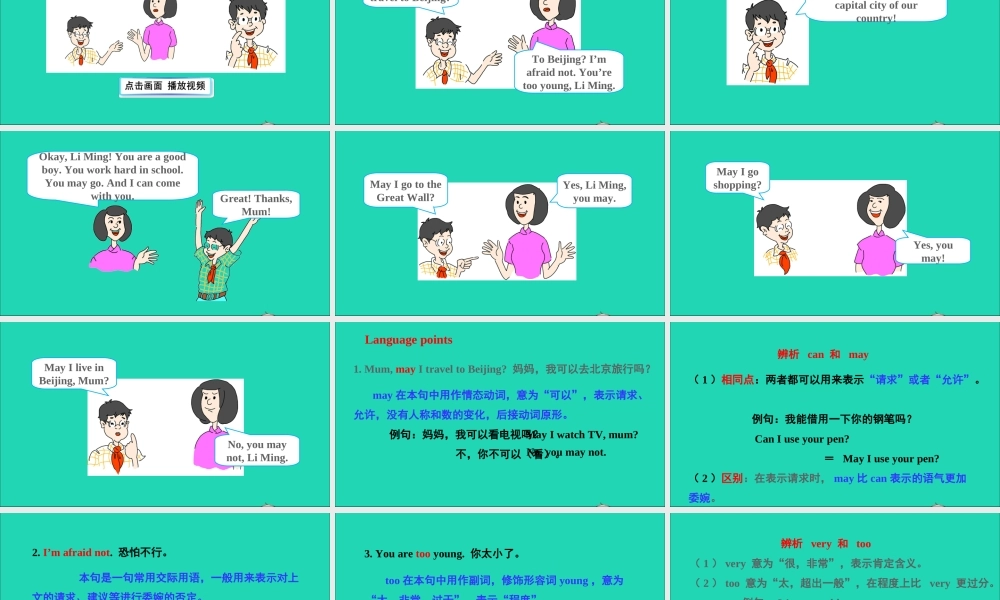
May I go to the Great Wall
Yes, Li Ming, you may
May I go shopping
Yes, you may
May I live in Beijing, Mum
No, you may not, Li Ming
Language points1
Mum, may I travel to Beijing
妈妈,我可以去北京旅行吗
may 在本句中用作情态动词,意为“可以”,表示请求、允许,没有人称和数的变化,后接动词原形
例句:妈妈,我可以看电视吗
不,你不可以(看)
No, you may not
May I watch