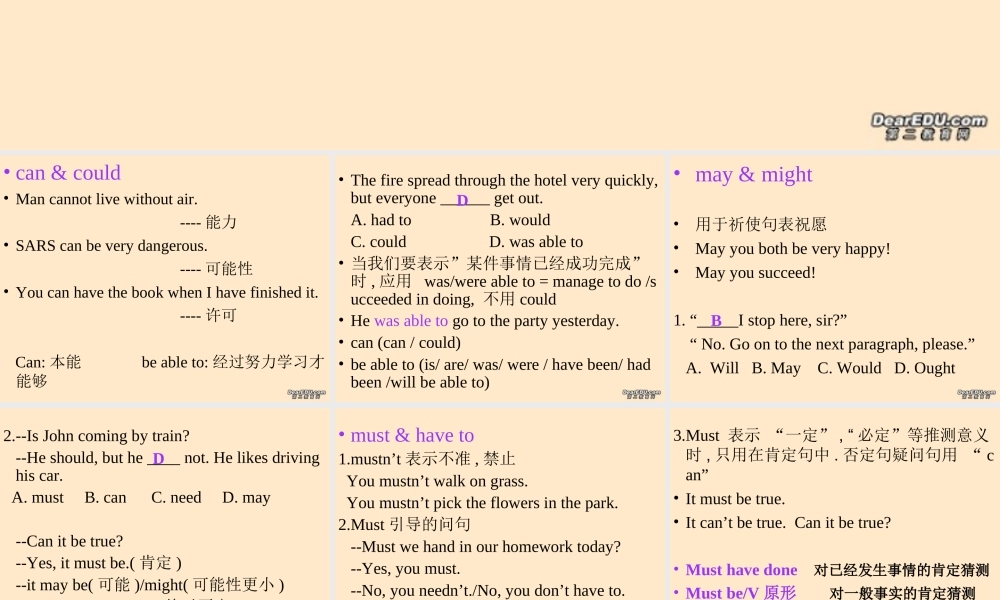
Modal Verbs• can & could• Man cannot live without air
---- 能力• SARS can be very dangerous
---- 可能性• You can have the book when I have finished it
---- 许可 Can: 本能 be able to: 经过努力学习才能够• The fire spread through the hotel very quickly, but everyone ______ get out
had to B
would C
could D
was able to • 当我们要表示”某件事情已经成功完成”时 , 应用 was/were able to = manage to do /succeeded in doing, 不用 could• He was able to go to the party yesterday
• can (can / could)• be able to (is/ are/ was/ were / have been/ had been /will be able to)D• may & might•用于祈使句表祝愿•May you both be very happy
•May you succeed
“_____I stop here, sir
” “ No
Go on to the next paragraph, please
Will B
Would D
OughtB2
--Is John coming by train
--He should, but he ____ not
He likes driving his car
must B