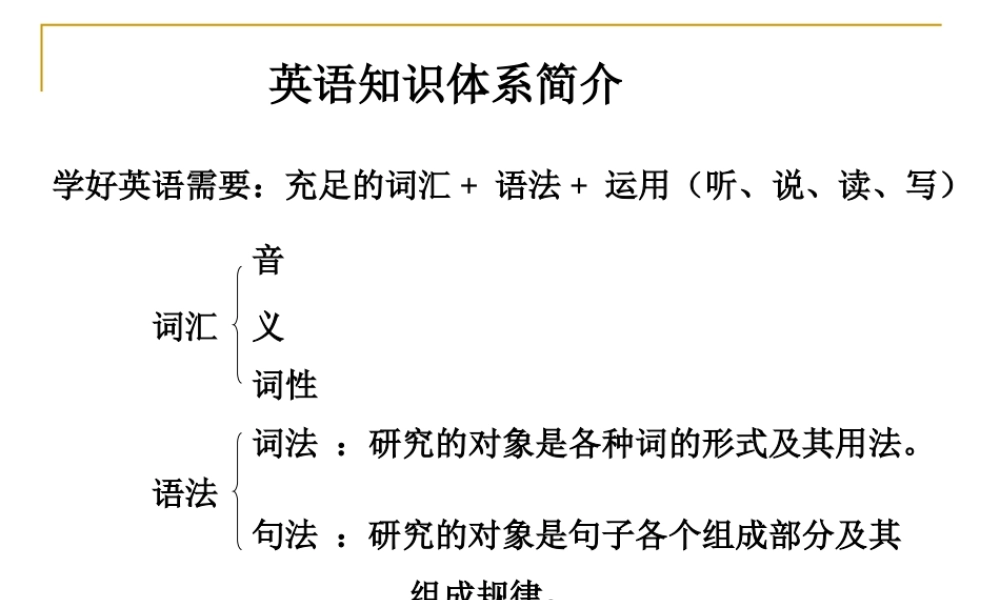
英语知识体系简介充足的词汇 + 语法 + 运用(听、说、读、写)词汇音义词性学好英语需要:语法词法句法:研究的对象是各种词的形式及其用法
:研究的对象是句子各个组成部分及其 组成规律
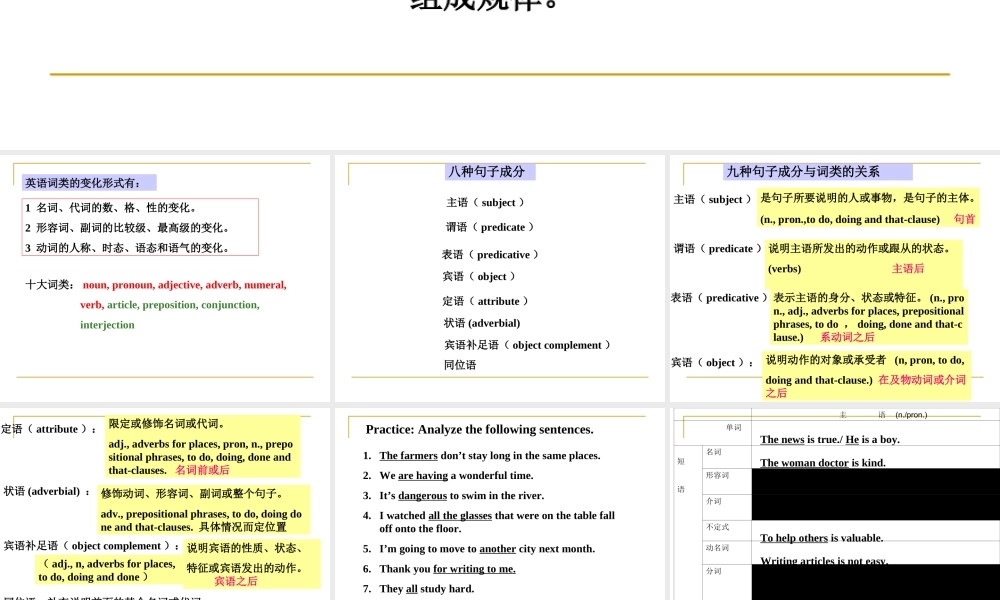
英语词类的变化形式有:1 名词、代词的数、格、性的变化
2 形容词、副词的比较级、最高级的变化
3 动词的人称、时态、语态和语气的变化
十大词类: noun, pronoun, adjective, adverb, numeral, verb, article, preposition, conjunction, interjection八种句子成分宾语补足语( object complement )主语( subject )谓语( predicate )表语( predicative )宾语( object )定语( attribute )状语 (adverbial) 同位语九种句子成分与词类的关系主语( subject ):谓语( predicate ):表语( predicative ):宾语( object ):是句子所要说明的人或事物,是句子的主体
, pron
,to do, doing and that-clause) 句首说明主语所发出的动作或跟从的状态
(verbs) 主语后 表示主语的身分、状态或特征
, pron
, adverbs for places, prepositional phrases, to do , doing, done and that-clause
) 系动词之后说明动作的对象或承受者 (n, pron, to do, doing and that-clause
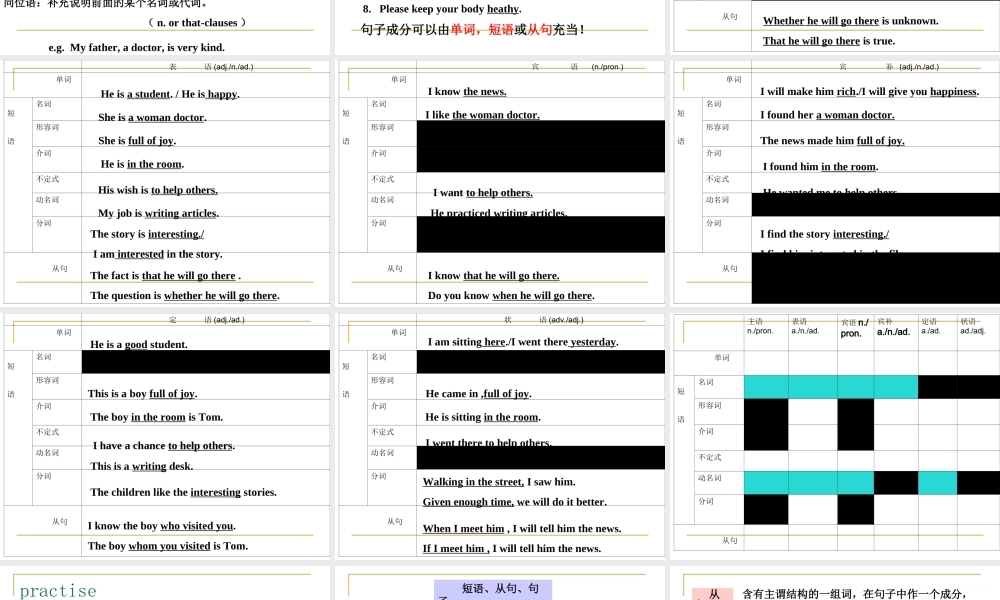
) 在及物动词或介词之后宾语补足语( object complement ):定语( attribute ):状语 (adverbial) :限定或修饰名词或代词