学习好资料-欢迎下载
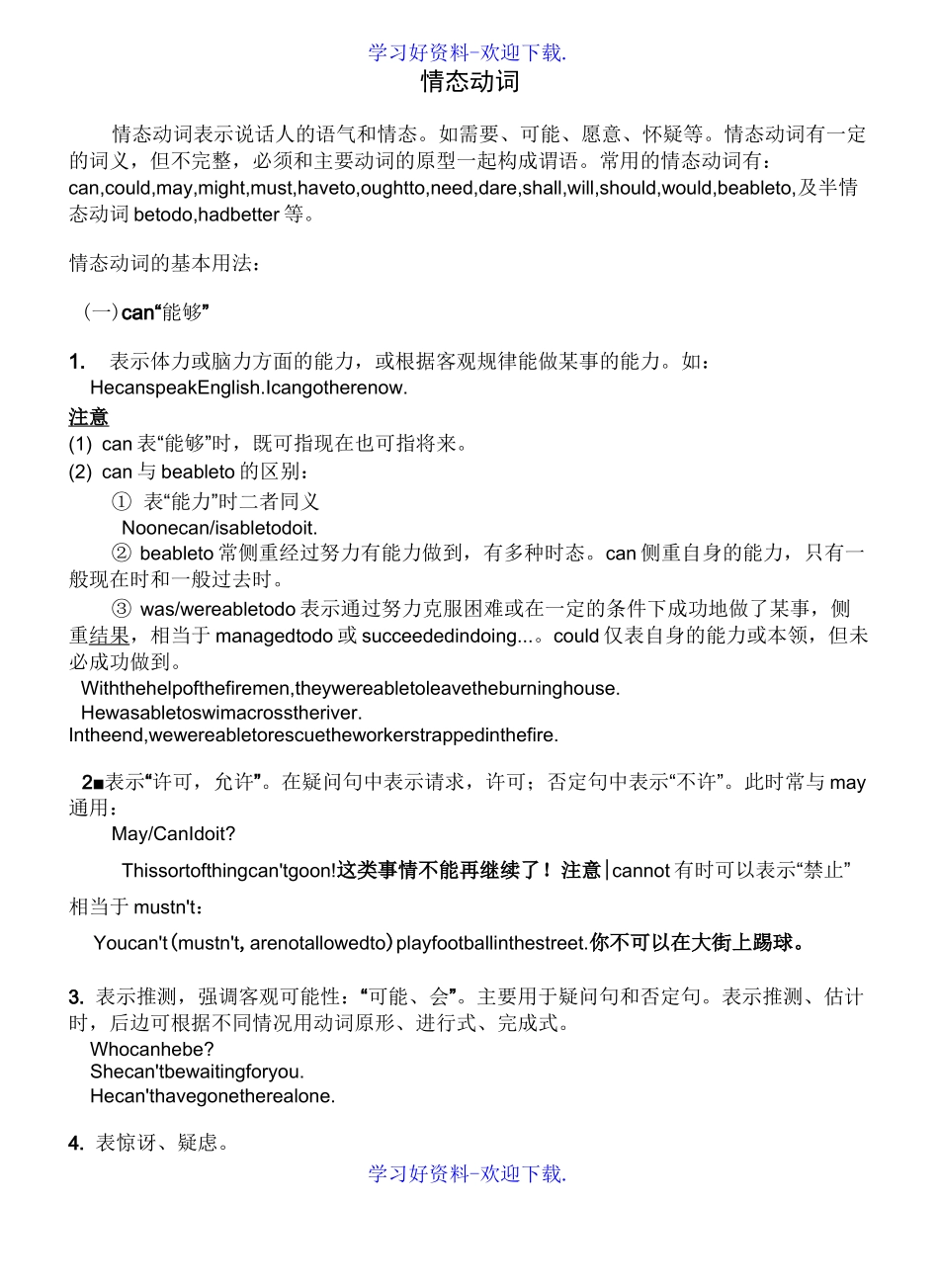
情态动词情态动词表示说话人的语气和情态
如需要、可能、愿意、怀疑等
情态动词有一定的词义,但不完整,必须和主要动词的原型一起构成谓语
常用的情态动词有:can,could,may,might,must,haveto,oughtto,need,dare,shall,will,should,would,beableto,及半情态动词 betodo,hadbetter 等
情态动词的基本用法:(一)can“能够”1
表示体力或脑力方面的能力,或根据客观规律能做某事的能力
如:HecanspeakEnglish
Icangotherenow
注意(1) can 表“能够”时,既可指现在也可指将来
(2) can 与 beableto 的区别:① 表“能力”时二者同义Noonecan/isabletodoit
② beableto 常侧重经过努力有能力做到,有多种时态
can 侧重自身的能力,只有一般现在时和一般过去时
③ was/wereabletodo 表示通过努力克服困难或在一定的条件下成功地做了某事,侧重结果,相当于 managedtodo 或 succeededindoing
could 仅表自身的能力或本领,但未必成功做到
Withthehelpofthefiremen,theywereabletoleavetheburninghouse
Hewasabletoswimacrosstheriver
Intheend,wewereabletorescuetheworkerstrappedinthefire
2■表示“许可,允许”
在疑问句中表示请求,许可;否定句中表示“不许”
此时常与 may通用:May/CanIdoit
Thissortofthingcan'tgoon
这类事情不能再继续了
注意|cannot 有时可以表示“禁止”相