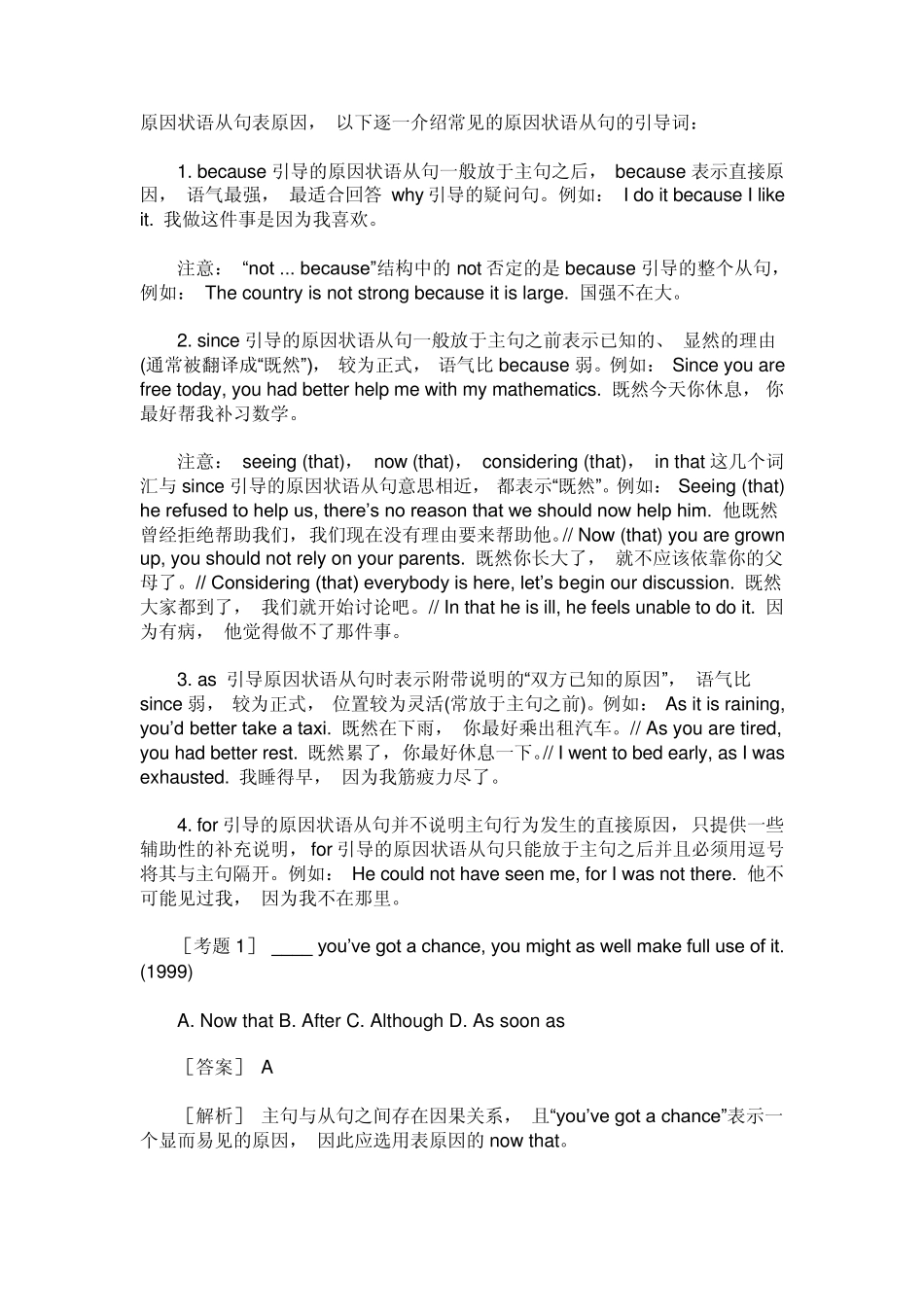
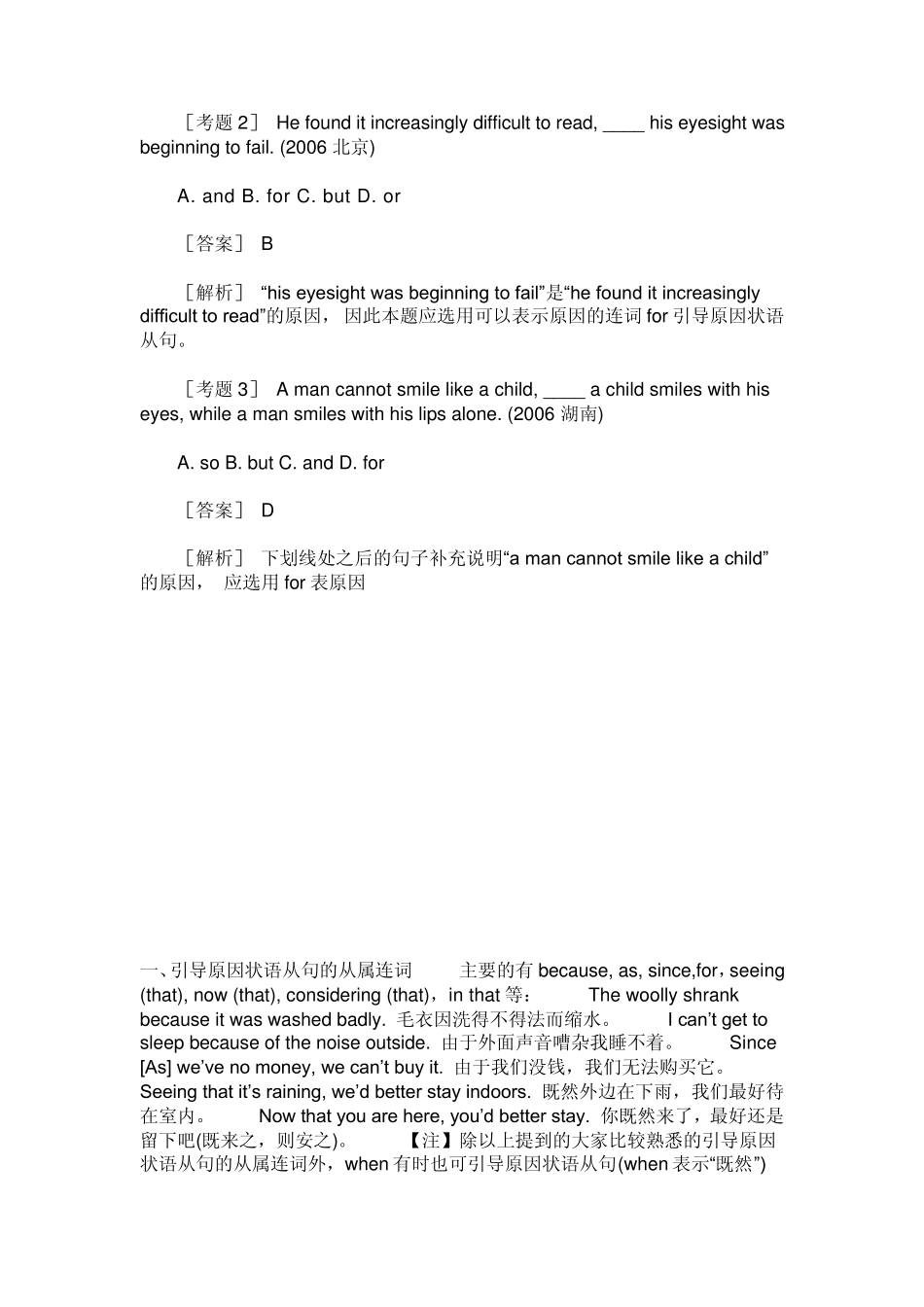
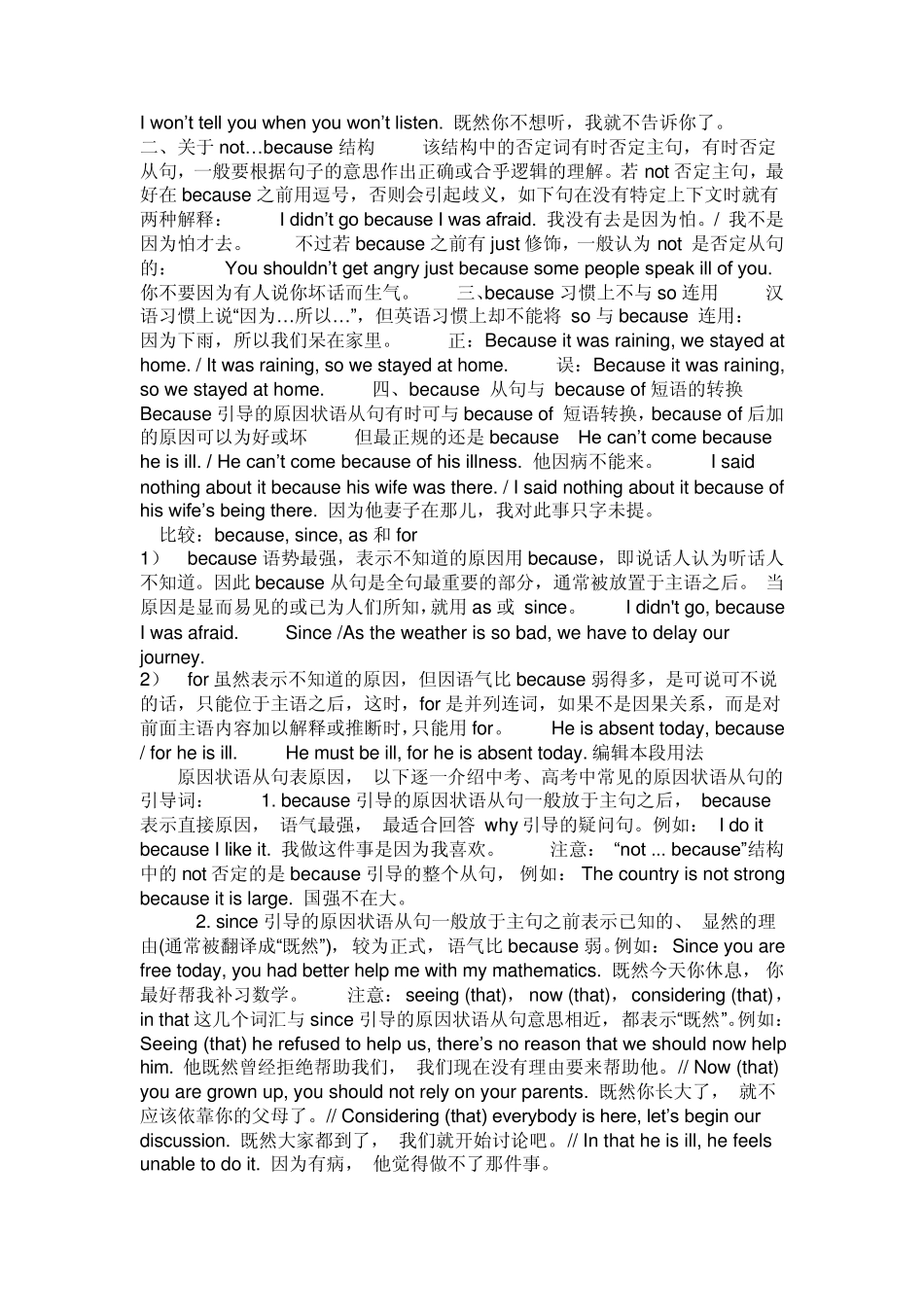
原因状语从句表原因, 以下逐一介绍常见的原因状语从句的引导词: 1
because 引导的原因状语从句一般放于主句之后, because 表示直接原因, 语气最强, 最适合回答 why引导的疑问句
例如: I do it because I like it
我做这件事是因为我喜欢
注意: “not
because” 结构中的not 否定的是because 引导的整个从句, 例如: The country is not strong because it is large
since 引导的原因状语从句一般放于主句之前表示已知的、 显然的理由(通常被翻译成“既然”), 较为正式, 语气比 because 弱
例如: Since you are free today, you had better help me with my mathematics
既然今天你休息, 你最好帮我补习数学
注意: seeing (that), now (that), considering (that), in that 这几个词汇与 since 引导的原因状语从句意思相近, 都表示“既然”
例如: Seeing (that) he refused to help us, there’s no reason that we should now help him
他既然曾经拒绝帮助我们, 我们现在没有理由要来帮助他
// Now (that) you are grown up, you should not rely on your parents
既然你长大了, 就不应该依靠你的父母了
// Considering (that) everybody is here, let’s begin our discussion
既然大家都到了, 我们就