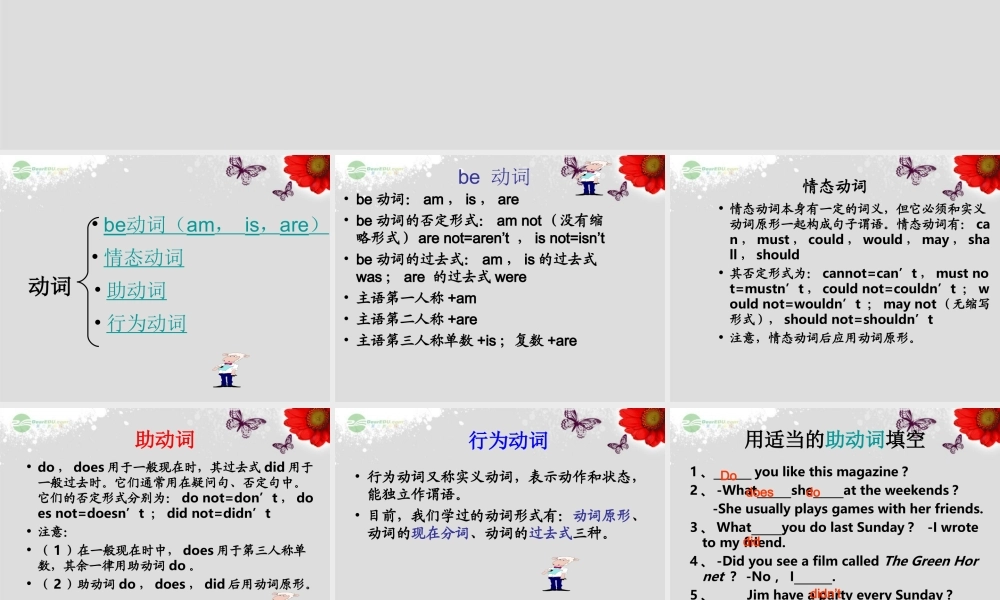
动词 • be动词(am, is,are)• 情态动词• 助动词• 行为动词be 动词• be 动词: am , is , are• be 动词的否定形式: am not (没有缩略形式) are not=aren’t , is not=isn’t• be 动词的过去式: am , is 的过去式was ; are 的过去式 were• 主语第一人称 +am• 主语第二人称 +are• 主语第三人称单数 +is ;复数 +are情态动词• 情态动词本身有一定的词义,但它必须和实义动词原形一起构成句子谓语
情态动词有: can , must , could , would , may , shall , should• 其否定形式为: cannot=can’t , must not=mustn’t , could not=couldn’t ; would not=wouldn’t ; may not (无缩写形式), should not=shouldn’t• 注意,情态动词后应用动词原形
助动词• do , does 用于一般现在时,其过去式 did 用于一般过去时
它们通常用在疑问句、否定句中
它们的否定形式分别为: do not=don’t , does not=doesn’t ; did not=didn’t• 注意:• ( 1 )在一般现在时中, does 用于第三人称单数,其余一律用助动词 do
• ( 2 )助动词 do , does , did 后用动词原形
行为动词• 行为动词又称实义动词,表示动作和状态,能独立作谓语
• 目前,我们学过的动词形式有:动词原形、动词的现在分词、动词的过去式三种
用适当的助动词填空1 、 you like this magazine
2 、 -What she at the weekends
-She usually