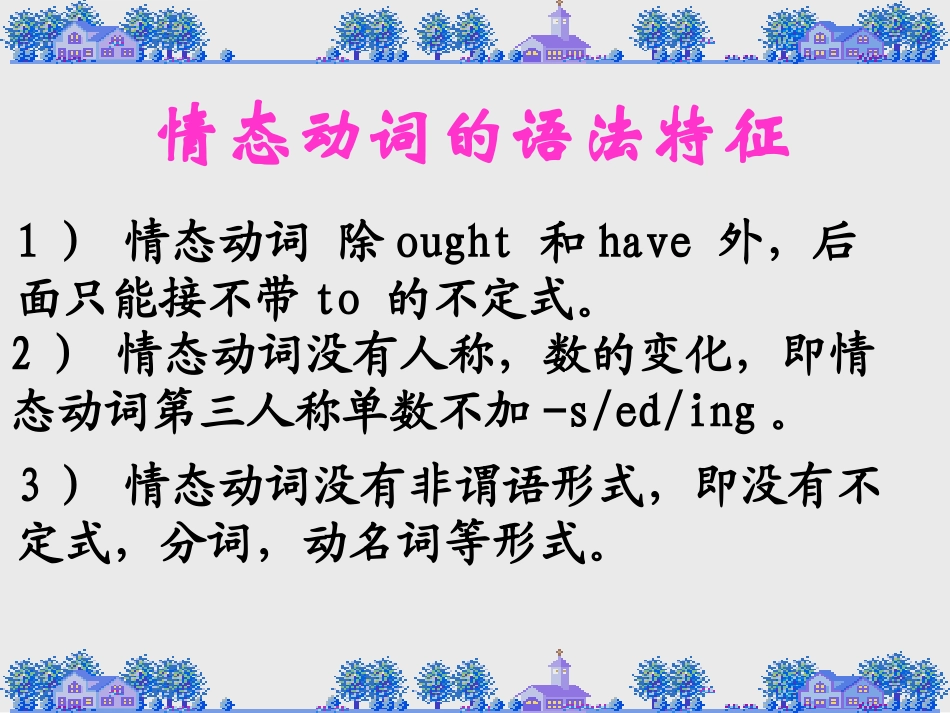
1)情态动词除ought和have外,后面只能接不带to的不定式
2)情态动词没有人称,数的变化,即情态动词第三人称单数不加-s/ed/ing
3)情态动词没有非谓语形式,即没有不定式,分词,动名词等形式
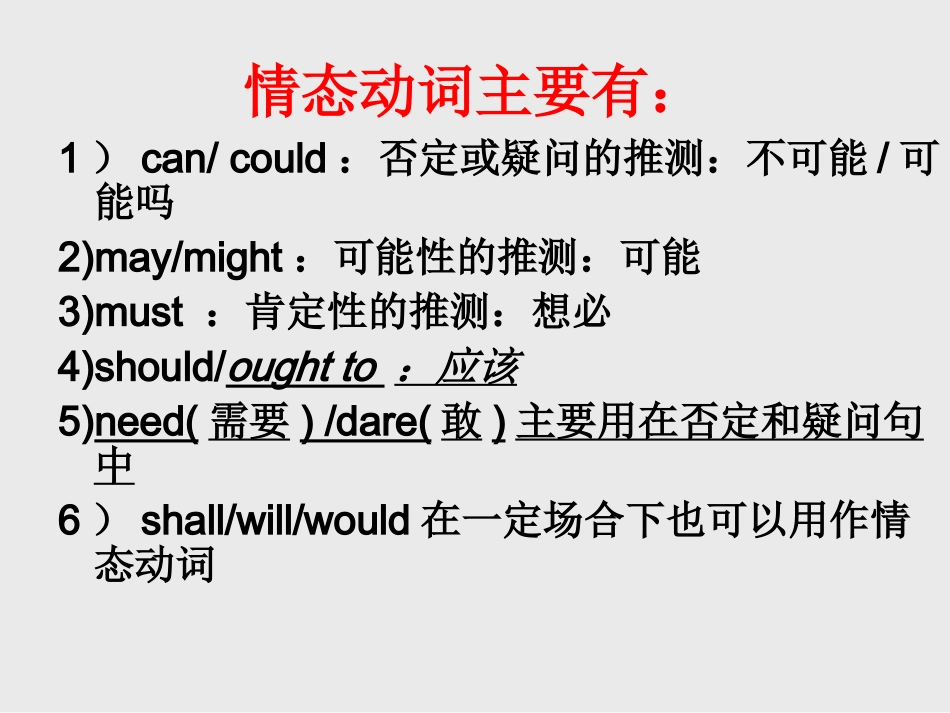
情态动词的语法特征情态动词主要有:1)can/could:否定或疑问的推测:不可能/可能吗2)may/might:可能性的推测:可能3)must:肯定性的推测:想必4)should/oughtto:应该5)need(需要)/dare(敢)主要用在否定和疑问句中6)shall/will/would在一定场合下也可以用作情态动词1
can表示能力(体力或脑力)IcanspeakEnglishwhilehecan’t
Whathesaidyesterdayafternooncouldnotbeunderstoodbyanyonepresent
表示允许CanIsithere
/Youcansithere
表怀疑(在否定句和疑问句中,表疑问、惊异、不想信等态度)Mr
Bushisontimeforeverything
Howcanitbethathewaslatefortheopeningceremony
can/could(can表现在的能力,could表过去的能力)4
表可能性(常出现在否定句中,如用在肯定句中则表示理论上的一种可能性或有时候可能会Evenanexperiencedteachercanmakemistakes
ShanghaicanbeverycoldinMarch
(1)can表示推测“可能性”时,往往用于否定句或疑问句
can’t“一定不”,can在疑问句中意思是“会、可能”Hecan’tbeathome
=Itisimpossiblethatheisathome
他一定不在家
(Thiscan’tbetrue
)Whatcanitmean