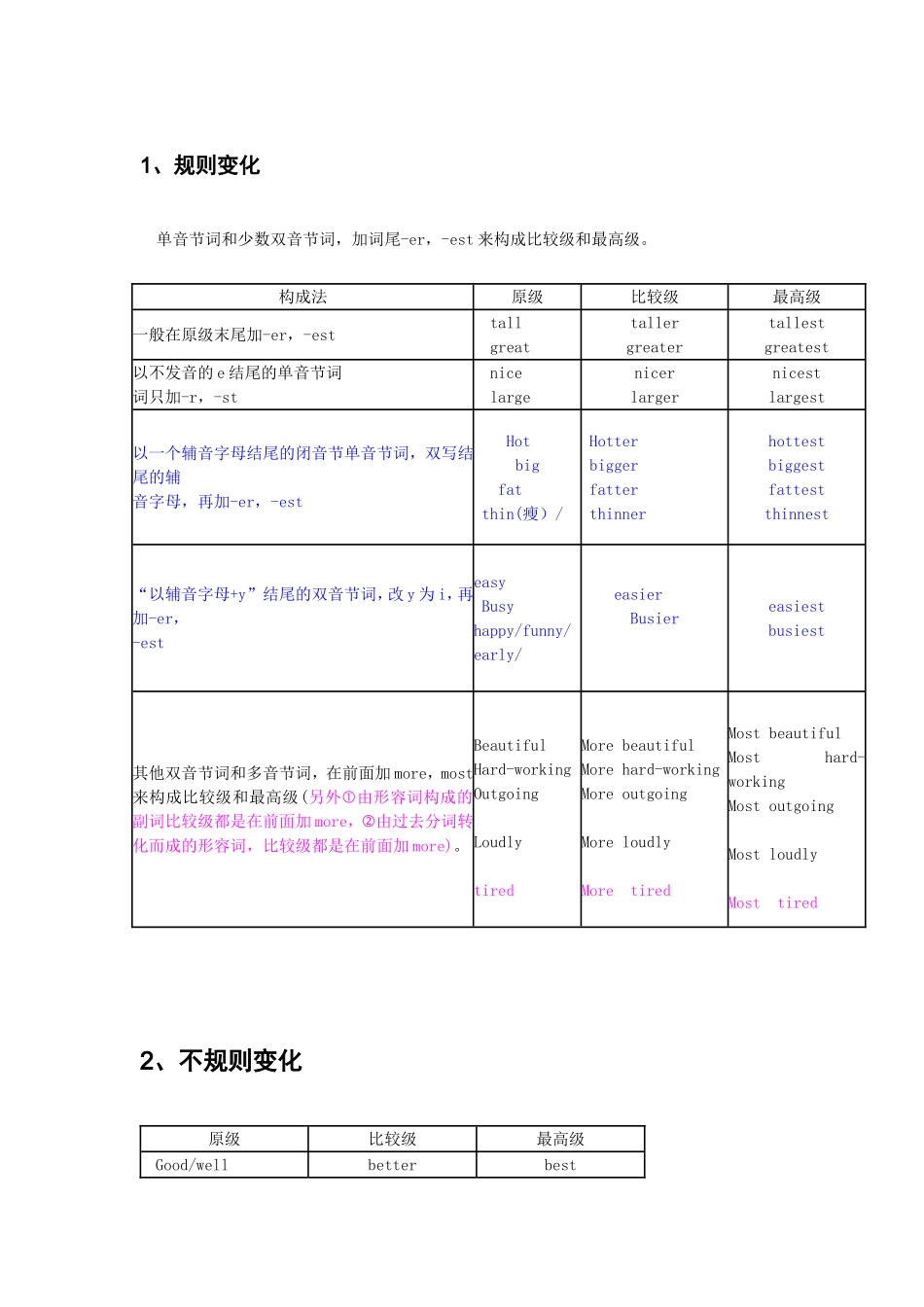
1、规则变化单音节词和少数双音节词,加词尾-er,-est来构成比较级和最高级
构成法原级比较级最高级一般在原级末尾加-er,-esttallgreattallergreatertallestgreatest以不发音的e结尾的单音节词词只加-r,-stnicelargenicerlargernicestlargest以一个辅音字母结尾的闭音节单音节词,双写结尾的辅音字母,再加-er,-estHotbigfatthin(瘦)/Hotterbiggerfatterthinnerhottestbiggestfattestthinnest“以辅音字母+y”结尾的双音节词,改y为i,再加-er,-esteasyBusyhappy/funny/early/easierBusiereasiestbusiest其他双音节词和多音节词,在前面加more,most来构成比较级和最高级(另外由形容词构成的副词比较级都是在前面加more,由过去分词转化而成的形容词,比较级都是在前面加more)
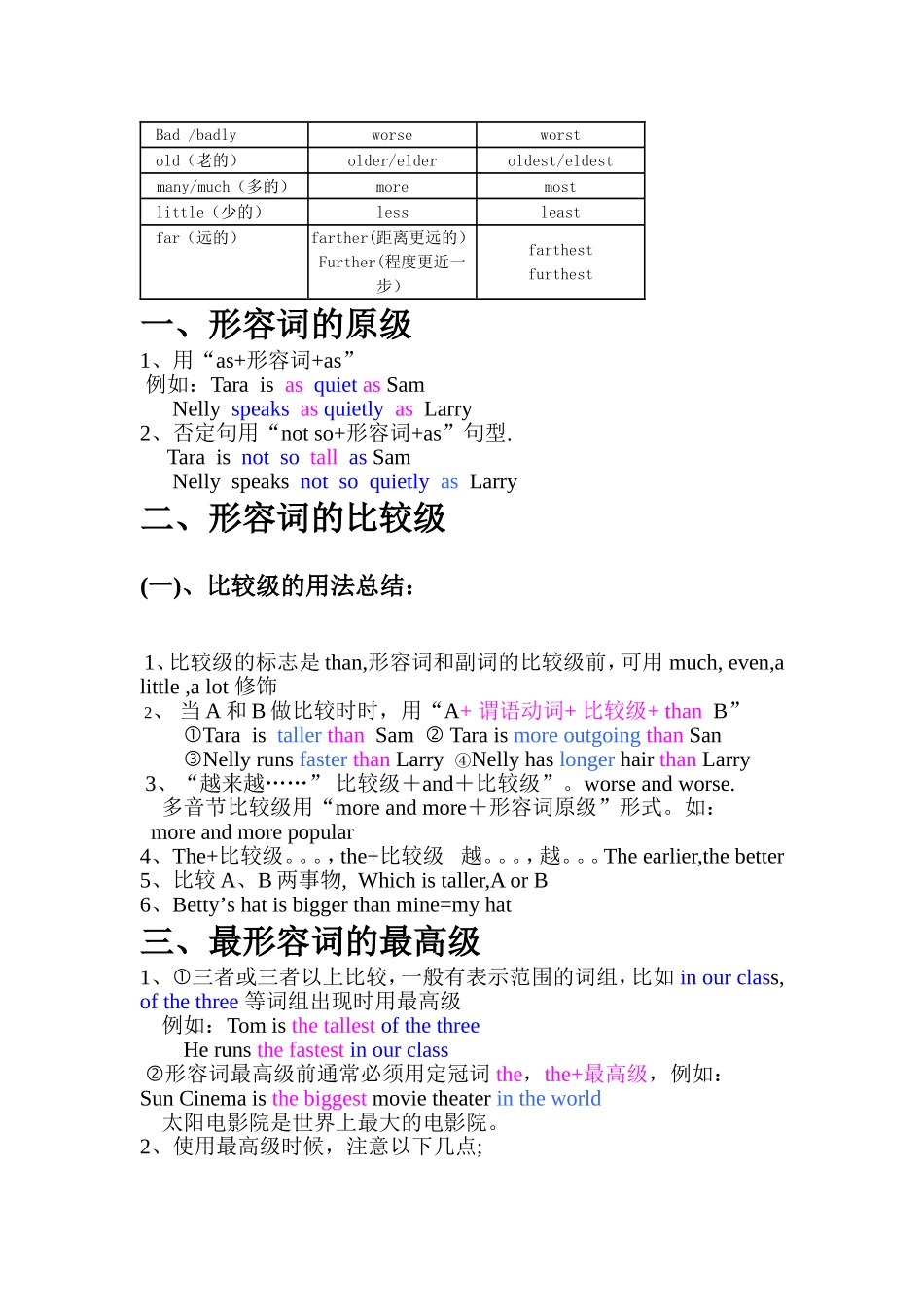
BeautifulHard-workingOutgoingLoudlytiredMorebeautifulMorehard-workingMoreoutgoingMoreloudlyMoretiredMostbeautifulMosthard-workingMostoutgoingMostloudlyMosttired2、不规则变化原级比较级最高级Good/wellbetterbestBad/badlyworseworstold(老的)older/elderoldest/eldestmany/much(多的)moremostlittle(少的)lessleastfar(远的)farther(距离更远的)Further(程度更近一步)farthestfurthest一、形容词的原级1、用“as+形容词+a