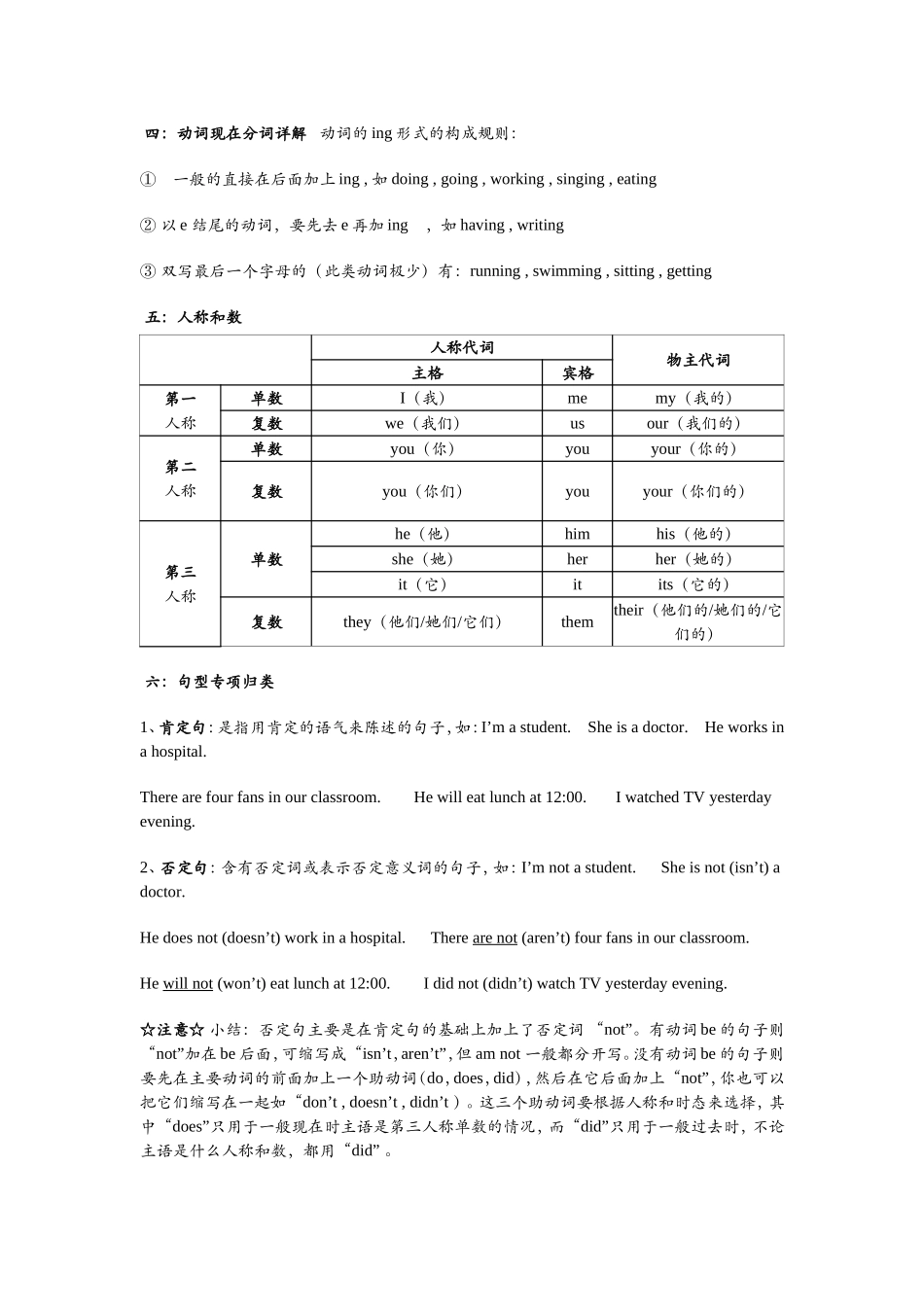
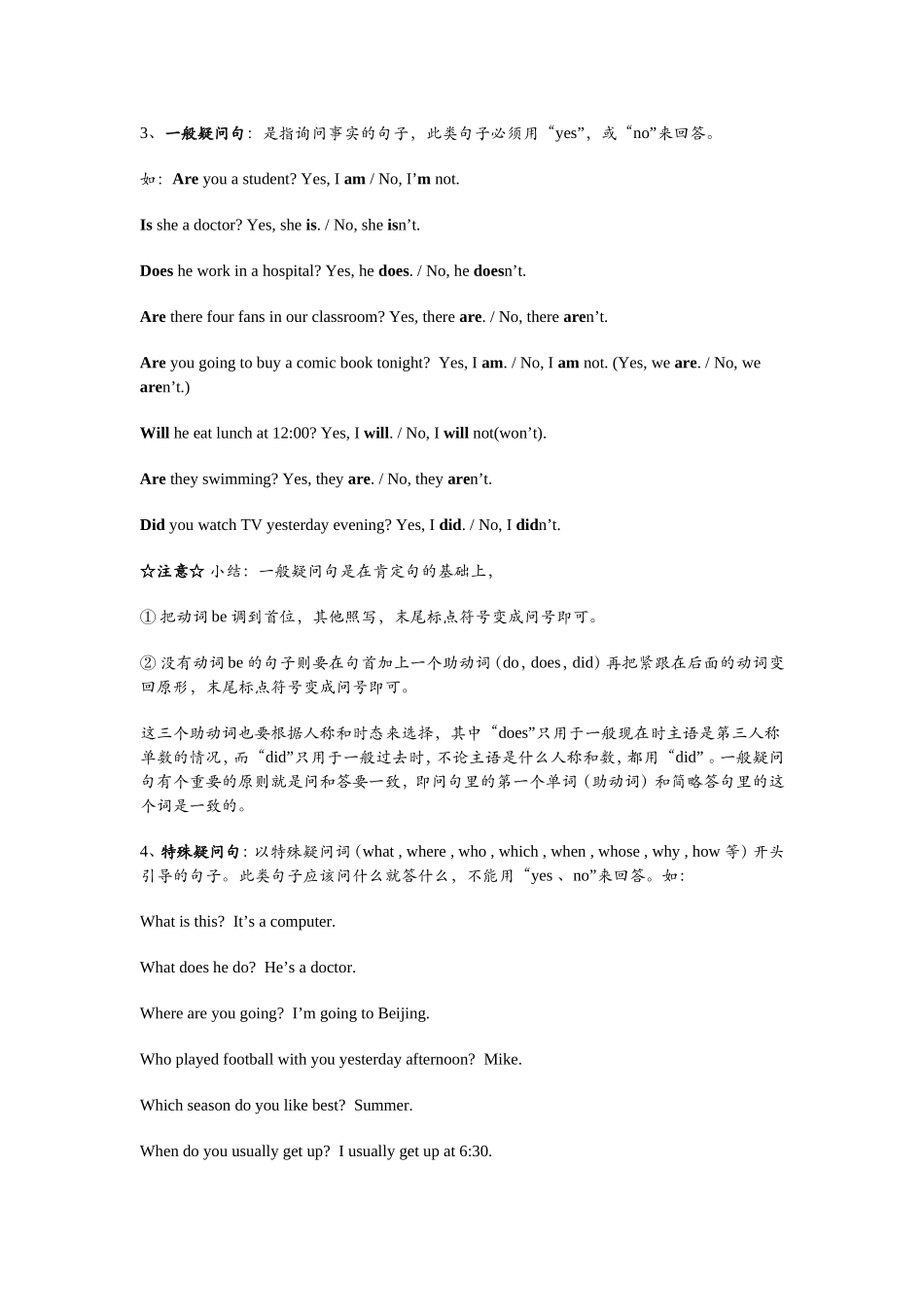
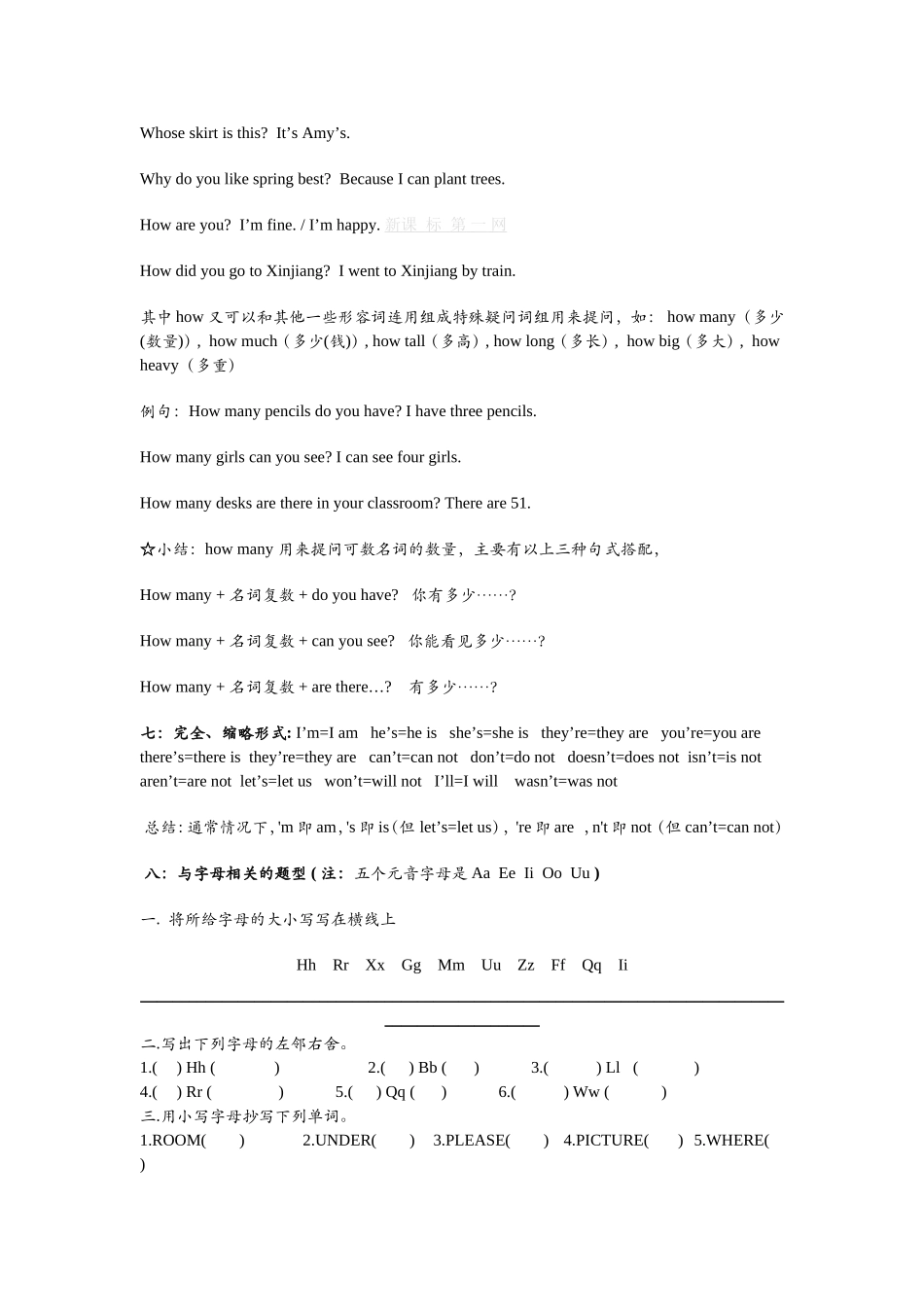
四:动词现在分词详解动词的ing形式的构成规则:①一般的直接在后面加上ing,如doing,going,working,singing,eating②以e结尾的动词,要先去e再加ing,如having,writing③双写最后一个字母的(此类动词极少)有:running,swimming,sitting,getting五:人称和数人称代词物主代词主格宾格第一人称单数I(我)memy(我的)复数we(我们)usour(我们的)第二人称单数you(你)youyour(你的)复数you(你们)youyour(你们的)第三人称单数he(他)himhis(他的)she(她)herher(她的)it(它)itits(它的)复数they(他们/她们/它们)themtheir(他们的/她们的/它们的)六:句型专项归类1、肯定句:是指用肯定的语气来陈述的句子,如:I’mastudent
Sheisadoctor
Heworksinahospital
Therearefourfansinourclassroom
Hewilleatlunchat12:00
IwatchedTVyesterdayevening
2、否定句:含有否定词或表示否定意义词的句子,如:I’mnotastudent
Sheisnot(isn’t)adoctor
Hedoesnot(doesn’t)workinahospital
Therearenot(aren’t)fourfansinourclassroom
Hewillnot(won’t)eatlunchat12:00
Ididnot(didn’t)watchTVyesterdayevening
☆注意☆小结:否定句主要是在肯定句的基础上加上了否定词“not”
有动词be的句子则“not”加在be后面,可缩写成“isn’t,aren’t”,但amnot一般都分开写