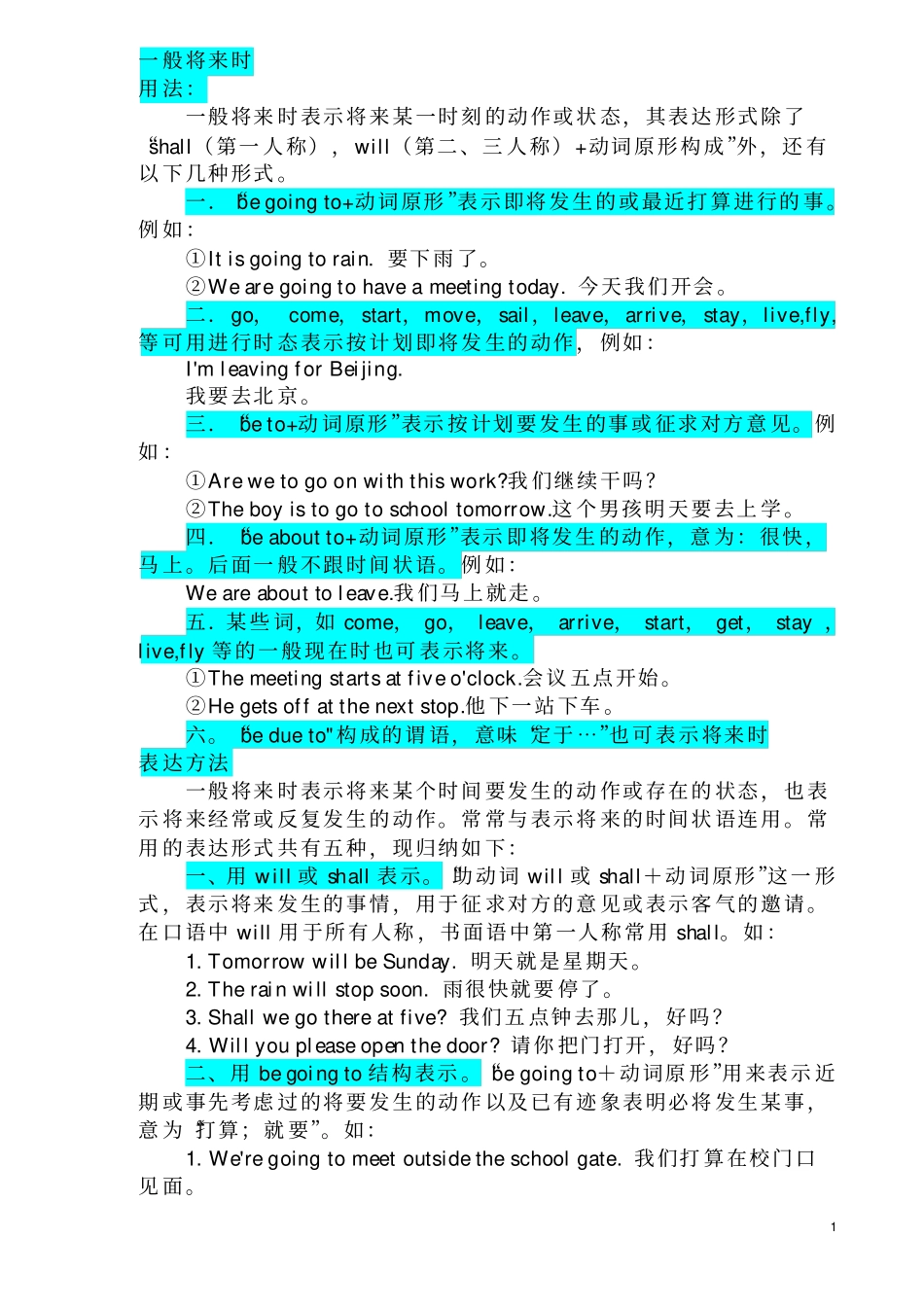
1 一 般将来时用 法:一般将来 时表示将来某一时刻 的动作或状 态,其表达 形式除了“shall(第一 人称),will(第二、三 人称)+动词原形构成”外,还 有以 下几种形式
一.“be going to+动词原形 ”表示即将发生的或最近打算进行的 事
例 如:①It is going to rain
②We are going to have a meeting today
今天我们开会
二.go, come,start,move,sail ,leave,arri ve,stay,live,fly,等 可用进行时 态表示按计划即将发 生的动作, 例如:I'm l eaving f or Bei jing
我要去北 京
三.“be to+动 词原形”表示 按计划要发生的事或 征求对方意 见
例如 :①Are we to go on wi th this work
我 们继续干吗
②The boy is to go to school tomorrow
这 个男孩明天要去上 学
四.“be about to+动词原形”表示 即将发生 的动作,意 为:很快,马 上
后面一 般不跟时间状语
例 如:We are about to l eave
我 们马上就走
五.某些 词,如 come, go, leave, arrive, start, get, stay ,l ive,f ly 等的一般现在时也可 表示将来
①The meeting starts at f ive o'clock
会议 五点开始
②He gets of f at the next stop
他 下一站下车
“be due to" 构成的谓 语,意味“定于 ⋯”也可表示将来时表 达方法一般将来 时表示将来某个时间 要发生的动 作或存在的 状态,也表示 将来经