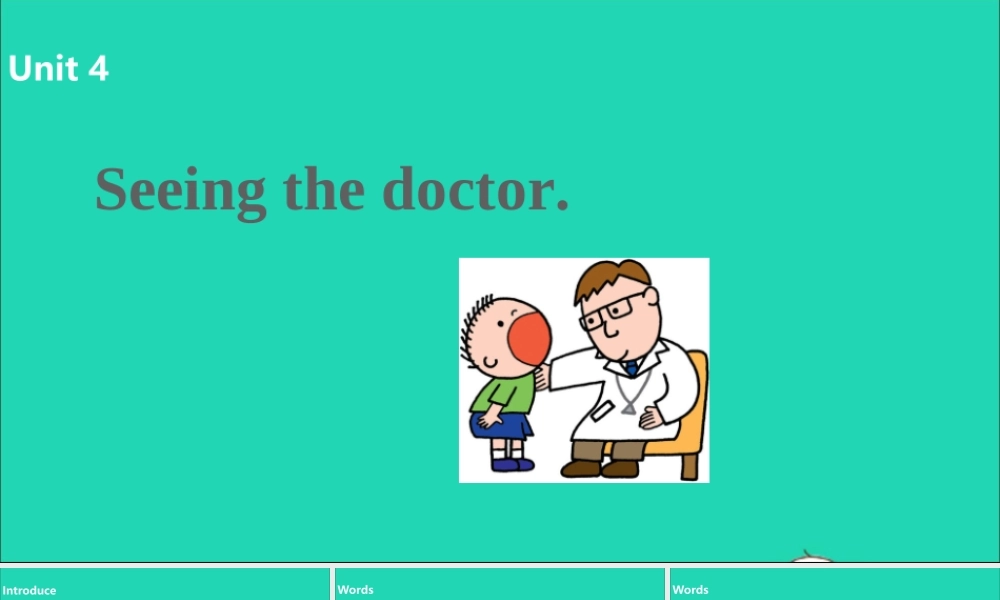
Unit 4 Seeing the doctor
Introduce--What’s wrong with you
--I have got
--What should I do
--You should
Wordssee [si:]“作动词,意为 看
”eg : I go to see the doctor
see a doctor小练习:汉译英:看医生 __________拓展:( 1 ) see + sb
+ do sth
意为看见某人做过某事 eg : I saw him sweep the floor
我见他扫过地
( 2 ) See + sb
+ doing sth
看见某人正在做某事 eg : He sees the birds dancing in the trees
他看到鸟儿在树上跳舞
Wordsanything [ˈeniθɪŋ]作代词,意为“任何东西”
常用于一般疑问句和否定句中
eg : Anything else
还要别的什么吗
小练习:单项选择: I can not do______for you A: anything B
somethingA拓展: something 意为某事 ; 常用于肯定句中
eg : There is something wrong with my ears
我的耳朵有点毛病
Wordssweet [swi:t] 作名词,意为“糖果”
eg : I like sweets, he like sweets, too
我喜欢糖果,他也喜欢糖果
小练习:汉译英:许多糖果a lot of sweets拓展:( 1“”)作形容词,意为 甜的
eg : a cup of hot sweet coffee 一杯甜甜的热咖啡
( 2 )作形容词,表示声音的甜美