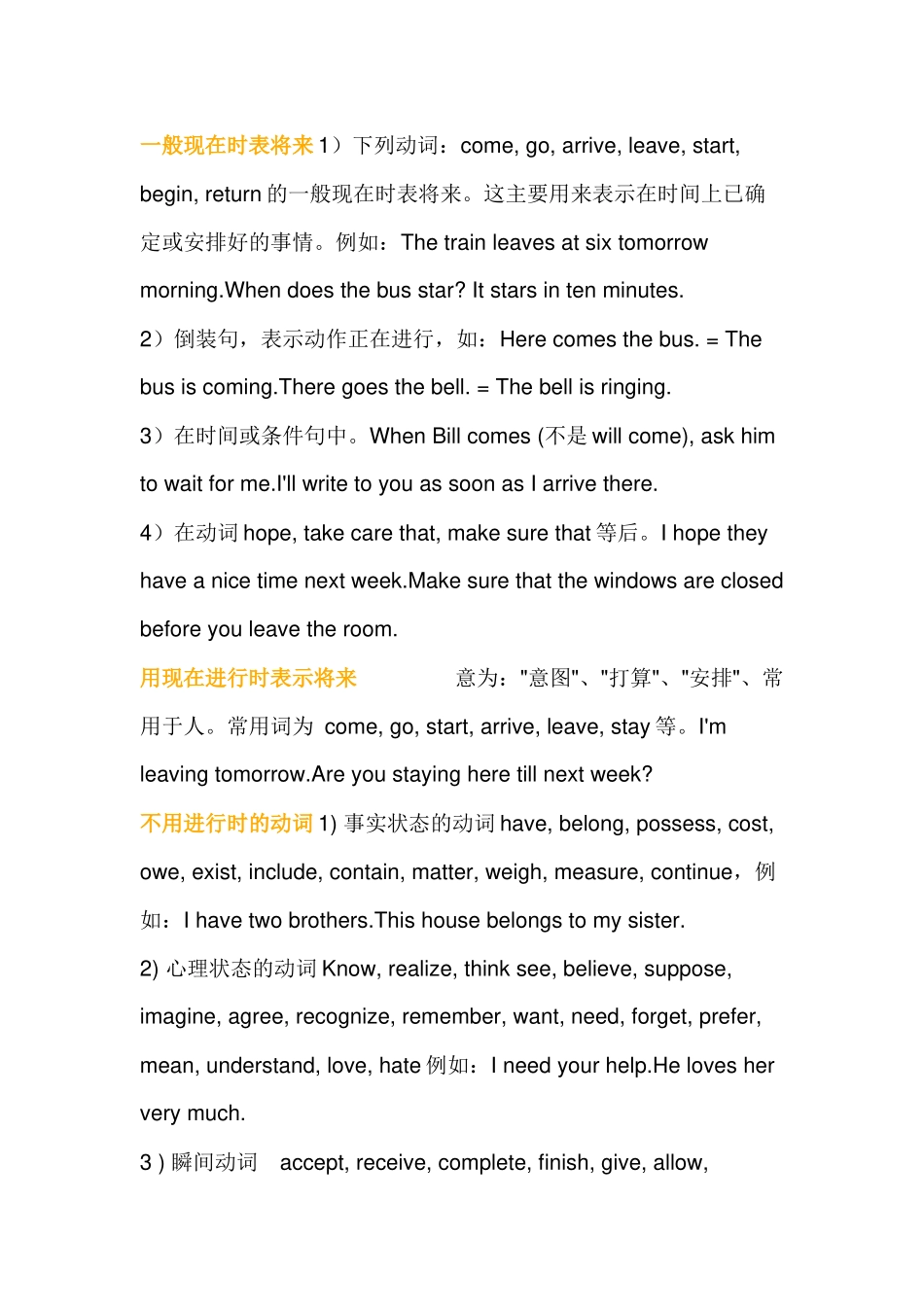
一般现在时表将来 1)下列动词:come, go, arrive, leave, start, begin, return 的一般现在时表将来
这主要用来表示在时间上已确定或安排好的事情
例如:The train leaves at six tomorrow morning
When does the bus star
It stars in ten minutes
2)倒装句,表示动作正在进行,如:Here comes the bus
= The bus is coming
There goes the bell
= The bell is ringing
3)在时间或条件句中
When Bill comes (不是 will come), ask him to wait for me
I'll write to you as soon as I arrive there
4)在动词 hope, take care that, make sure that 等后
I hope they have a nice time next week
Make sure that the windows are closed before you leave the room
用现在进行时表示将来 意为:"意图"、"打算"、"安排"、常用于人
常用词为 come, go, start, arrive, leave, stay 等
I'm leaving tomorrow
Are you staying here till next week
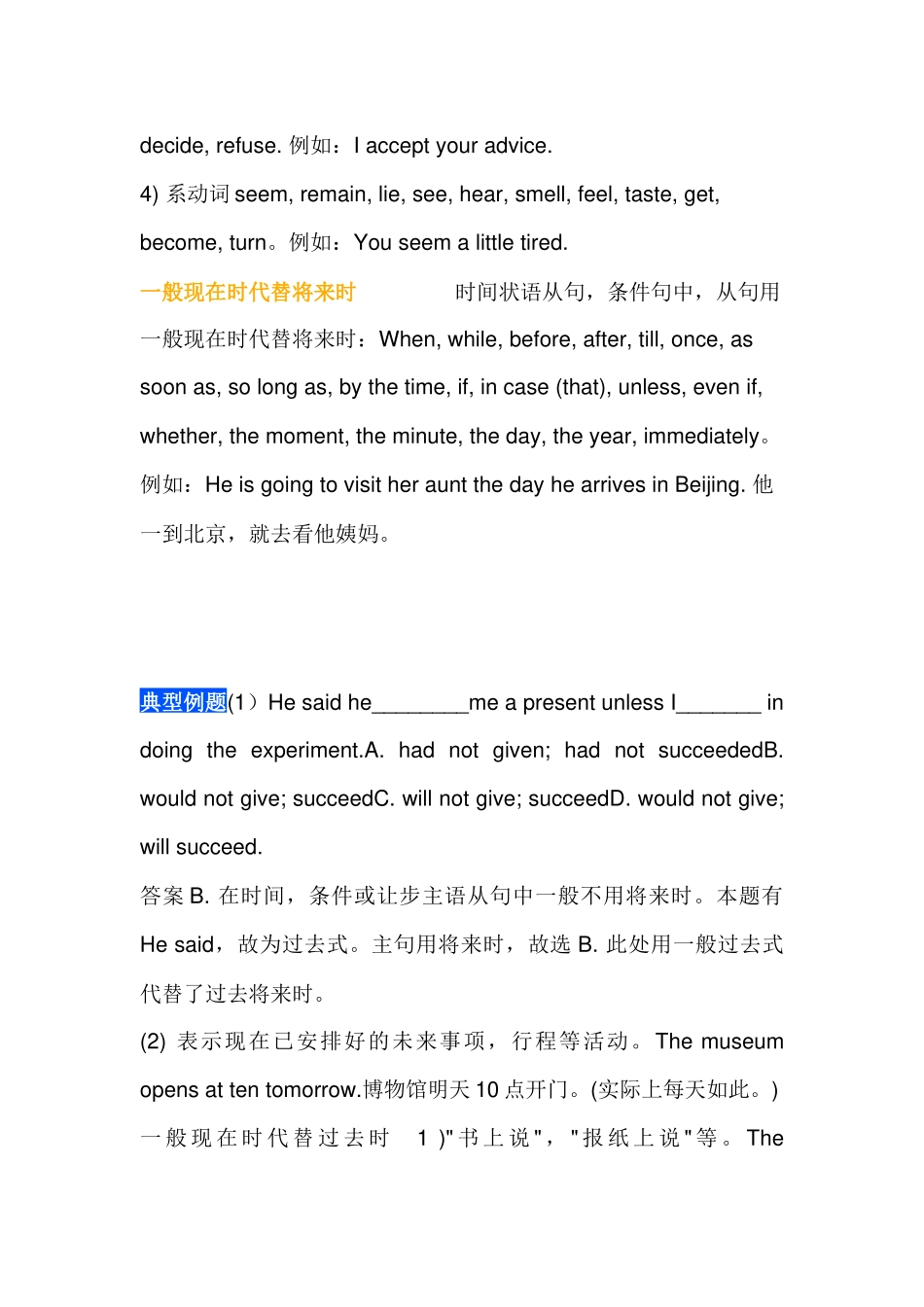
不用进行时的动词 1) 事实状态的动词 have, belong, possess, cost, owe, exist, include, contain, matter, weigh, measure, continu