RevisionofmodalverbswCompletethesentencesfromthepassage
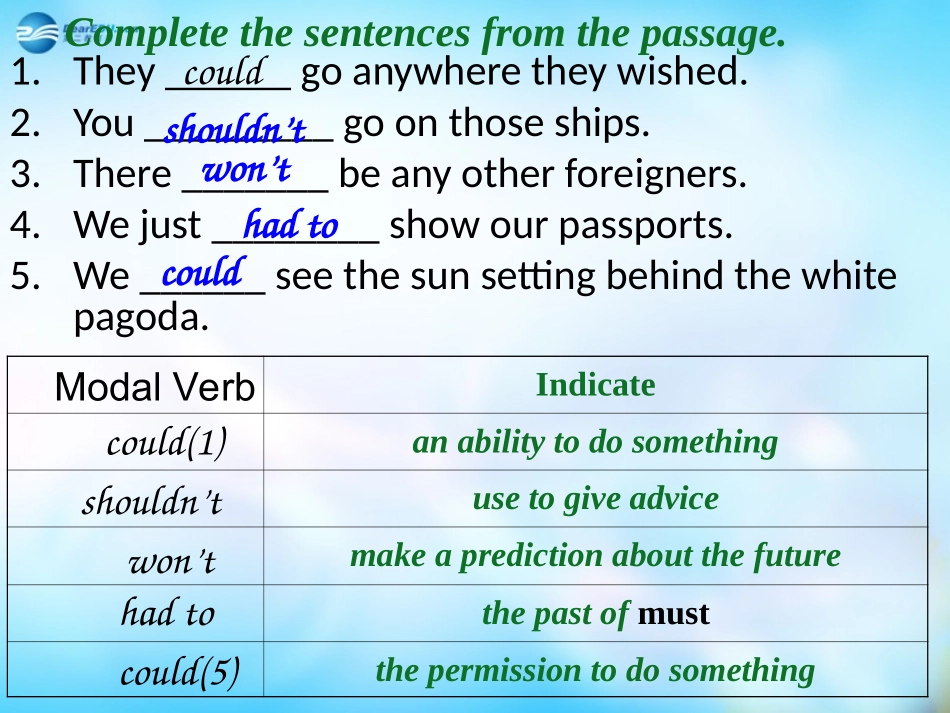
They______goanywheretheywished
You_________goonthoseships
There_______beanyotherforeigners
Wejust________showourpassports
We______seethesunsettingbehindthewhitepagoda
couldshouldn’twon’thadtocouldIndicateanabilitytodosomethingusetogiveadvicemakeapredictionaboutthefuturethepastofmustthepermissiontodosomethingcould(1)shouldn’twon’thadtocould(5)ModalVerbCorrectthemistakesandsaywhy
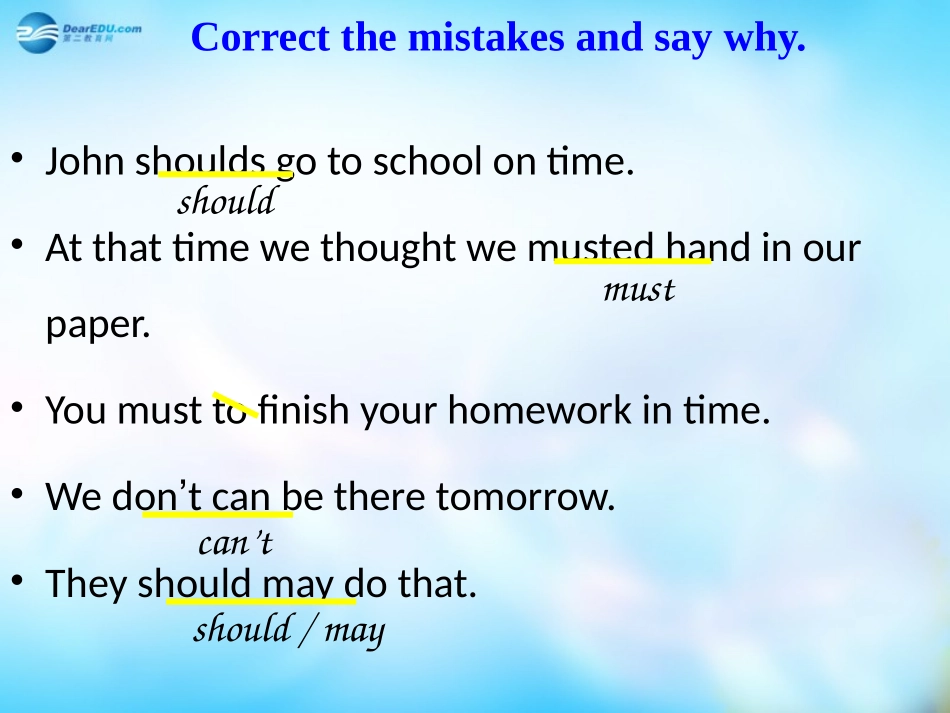
•Johnshouldsgotoschoolontime
•Atthattimewethoughtwemustedhandinourpaper
•Youmusttofinishyourhomeworkintime
•Wedon’tcanbetheretomorrow
•Theyshouldmaydothat
shouldmustcan’tshould/may情态动词的语法特征1)情态动词表示期待或估计某事的发生,或说话者对某一动作或状态的态度
带有主观或情感意味
2)情态动词除ought,have和beable外,后面只能接不带to的不定式
3)情态动除have和beable外,没有人称,数的变化,即情态动词第三人称单数不加-s
4)情态动词在构成否定形式和疑问形式时,遵循助动词的规则•Twoey