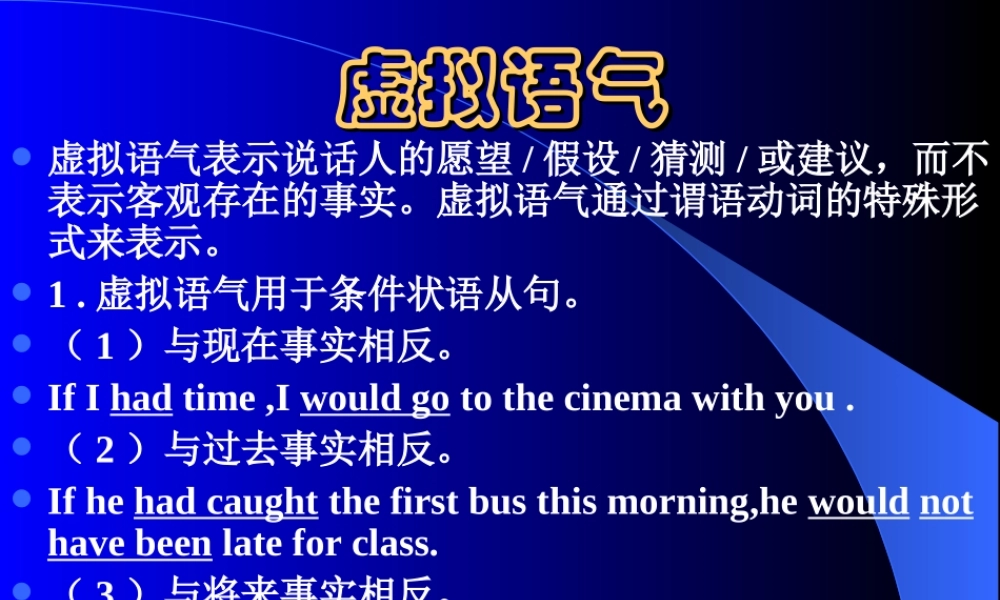
虚拟语气虚拟语气 虚拟语气表示说话人的愿望 / 假设 / 猜测 / 或建议,而不表示客观存在的事实
虚拟语气通过谓语动词的特殊形式来表示
虚拟语气用于条件状语从句
( 1 )与现在事实相反
If I had time ,I would go to the cinema with you
( 2 )与过去事实相反
If he had caught the first bus this morning,he would not have been late for class
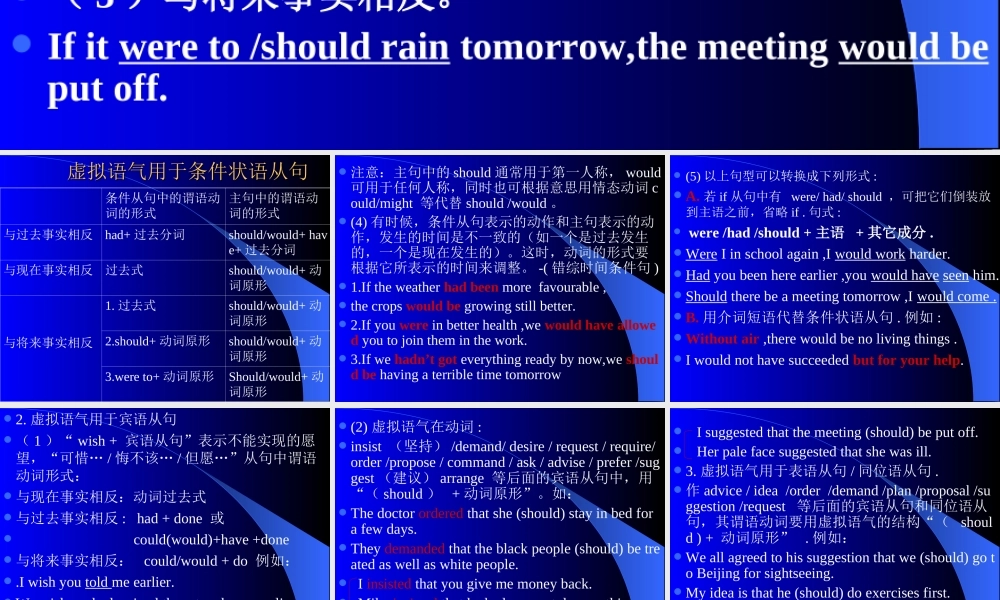
( 3 )与将来事实相反
If it were to /should rain tomorrow,the meeting would be put off
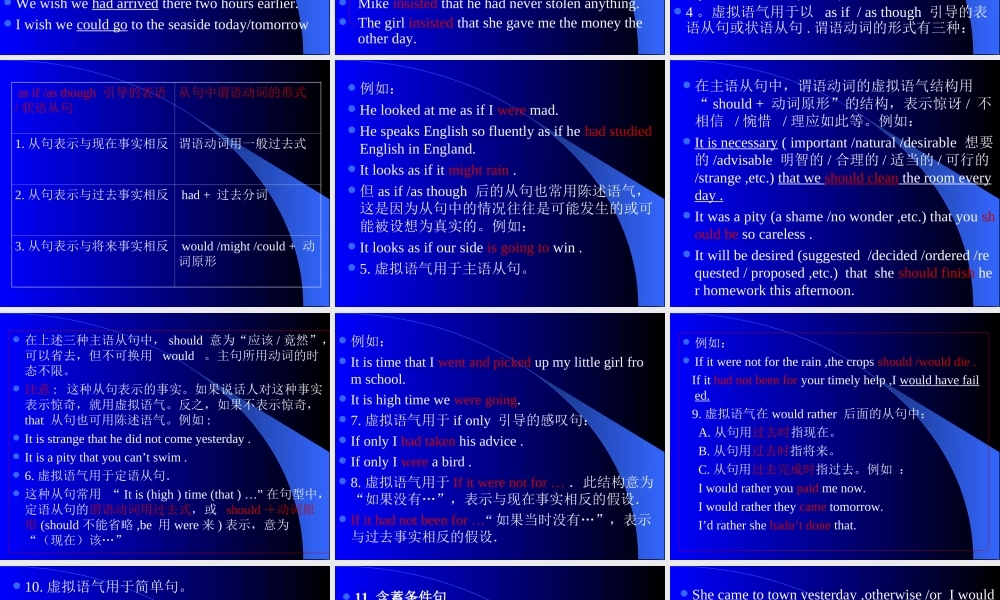
条件从句中的谓语动词的形式主句中的谓语动词的形式与过去事实相反had+ 过去分词should/would+ have+ 过去分词与现在事实相反过去式should/would+ 动词原形与将来事实相反1
过去式should/would+ 动词原形2
should+ 动词原形should/would+ 动词原形3
were to+ 动词原形Should/would+ 动词原形 虚拟语气用于条件状语从句虚拟语气用于条件状语从句 注意:主句中的 should 通常用于第一人称, would可用于任何人称,同时也可根据意思用情态动词 could/might 等代替 should /would
(4) 有时候,条件从句表示的动作和主句表示的动作,发生的时间是不一致的(如一个是过去发生的,一个是现在发生的)
这时,动词的形式要根据它所表示的时间来调整
-( 错综时间条件句 ) 1
If the weather had been more favourable , the crops would be gro